

A new AI system is transforming disease risk prediction by analyzing extensive health data and tracking changes over time. It uses explainable AI principles to provide accurate predictions for conditions like depression, hypertension, and metabolic syndrome, often reaching 85-99% accuracy. By visualizing crucial health trends and incorporating real-time biometric data, it enables early interventions and personalized care. If you want to discover how this technology could impact your health, keep exploring the details.
Key Takeaways
- Developed by University of Utah researchers, the AI system predicts multiple diseases with 85-99% accuracy, surpassing existing tools.
- It visualizes risk factor changes over time, enabling targeted early interventions before disease onset.
- Integrates real-time wearable biosensor data for continuous monitoring and proactive health management.
- Uses deep learning for opportunistic screening, detecting diseases like pancreatic cancer during routine imaging.
- Aims to embed into clinical workflows, providing personalized risk trajectories to improve early diagnosis and treatment decisions.

Advances in artificial intelligence are transforming how we predict and manage disease risks, making early detection more accurate and personalized. A new AI system developed by researchers at the University of Utah exemplifies this shift, utilizing Explainable AI (XAI) principles to improve disease prediction. This toolkit has been tested on thousands of patients across three major cohorts, accurately forecasting eight conditions, including depression, anxiety, ADHD, hypertension, and metabolic syndrome. By focusing on just about ten key health variables out of hundreds, it simplifies the prediction process, making it feasible for clinical use without sacrificing accuracy. It achieves prediction accuracy of 85-99%, surpassing current systems. Additionally, understanding the emotional support needed during the prediction process can enhance patient engagement and outcomes. What makes this system stand out is its ability to map changes in risk factors over time. You can see how specific influences, like screen time’s impact on ADHD, intensify before adolescence, revealing critical windows for intervention. This insight allows healthcare providers to target prevention efforts more precisely, potentially reducing the burden of disease later in life. The AI also generates intuitive visualizations that highlight which life periods contribute most to disease risk, helping clinicians and patients understand complex health data at a glance. This targeted approach promotes proactive health management, empowering you to make informed decisions early on. Beyond prediction, this AI toolkit enhances chronic disease management by integrating real-time monitoring and personalized intervention strategies. Wearable biosensors continuously capture biometric data—such as blood sugar levels and heart rate—allowing for early detection of warning signs and adaptive treatment plans. Virtual consultations and remote monitoring now meet up to half of patient care needs, streamlining healthcare delivery and reducing the strain on clinics. These technologies shift the focus from reactive treatment to ongoing, individualized health management, giving you greater control over your health journey. The system also leverages machine learning, especially deep learning, to improve early detection and diagnosis. Large datasets enable the training of more accurate models, which can identify diseases like pancreatic cancer incidentally during routine imaging scans. This opportunistic screening helps catch illnesses early and optimizes healthcare resources by selecting appropriate populations for further testing, reducing unnecessary procedures. Such capabilities are transforming how healthcare systems operate, making diagnostics more efficient and less invasive. Efforts are underway to integrate AI tools like RiskPath into clinical decision support systems, aiming to aid healthcare professionals by visualizing personalized risk trajectories. These tools can help identify high-risk individuals and inform timely interventions, ultimately supporting preventive care strategies. While initial applications may increase demand for follow-up testing, targeted risk stratification ensures resources are allocated to those who need them most, preventing unnecessary procedures. As AI continues to evolve, it promises to make disease risk prediction more precise, personalized, and accessible, fundamentally changing how we approach health and disease prevention.

LEVOIT Air Purifiers for Home Large Room Up to 1875 Ft² with Washable Pre-Filter, AHAM VERIFIDE, Air Quality Monitor, HEPA Sleep Mode for Allergies, Pet Hair in Bedroom, Vital 200S-P, White
𝐖𝐇𝐘 𝐂𝐇𝐎𝐎𝐒𝐄 𝐀𝐇𝐀𝐌 𝐕𝐄𝐑𝐈𝐅𝐈𝐃𝐄 𝐏𝐑𝐎𝐃𝐔𝐂𝐓𝐒: AHAM (Association of Home Appliance Manufacturers) is an ANSI-accredited organization that sets strict...
As an affiliate, we earn on qualifying purchases.
Frequently Asked Questions
How Does the AI System Handle Rare Diseases?
You rely on AI systems that use advanced pattern recognition to detect rare diseases. They analyze electronic health records for subtle signs and diagnostic errors, often identifying conditions like AHP earlier by 1.2 years. These models overcome data scarcity with techniques like natural language processing and disease hierarchies, improving accuracy even with limited info. By pooling data across centers, AI enhances detection and prediction, making rare disease diagnosis faster and more precise.
Can the AI Predict Disease Risk for Asymptomatic Individuals?
You bet it can. Think of AI as a detective with a keen eye for hidden clues—analyzing images, biomarkers, and clinical data to spot the faintest signs of disease before symptoms appear. It sifts through complex datasets, revealing risks that traditional methods might overlook. While challenges like bias and data scarcity exist, ongoing advancements make AI a powerful tool to catch health issues early, giving you a head start on prevention.
What Data Privacy Measures Are in Place for User Information?
You can be assured that multiple privacy measures protect your information. Federated learning keeps your raw data on your device, sharing only model updates. Differential privacy adds noise to mask individual details, while cryptographic techniques like secure multi-party computation and homomorphic encryption keep data encrypted during processing. These combined approaches guarantee your data stays confidential, reducing risks of leaks or re-identification, and maintaining your privacy throughout the AI’s use.
How Often Is the AI System Updated With New Research?
You might imagine a hospital updating its AI risk model every month after reviewing recent research and clinical data. Typically, the system undergoes scheduled refreshes, like monthly or quarterly updates, to incorporate new findings and emerging health trends. This approach guarantees predictions stay accurate without overwhelming computational resources. The updates often include recalibration and selective re-training, maintaining a balance between timely insights and model stability in a real-world clinical setting.
Is the AI System Accessible to Underserved or Rural Populations?
Yes, the AI system is accessible to underserved and rural populations through telemedicine and mobile health units. You can connect with specialists remotely, receive early diagnosis, and get medication reminders, all despite limited infrastructure. AI-powered tools help overcome geographic barriers, expand healthcare reach, and improve chronic disease management. However, challenges like digital literacy and internet access still need addressing to guarantee equitable access for everyone.

LEVOIT Air Purifier for Home Pets Hair Allergies in Bedroom, Covers Up to 1073 ft² by 56W High Torque Motor, AHAM VERIFIDE, 3-in-1 Filter with HEPA Sleep Mode, Remove Dust Smoke Odor, Core300-P, White
WHY CHOOSE AHAM VERIFIDE AIR PURIFIERS: AHAM (Association of Home Appliance Manufacturers) is an ANSI-accredited organization that sets...
As an affiliate, we earn on qualifying purchases.
Conclusion
You now have the power to catch health risks earlier than ever before. Imagine Sarah, a woman who learned she was at high risk for heart disease thanks to this new AI system, allowing her to start life-saving treatments sooner. This technology isn’t just about numbers—it’s about saving lives and giving you peace of mind. Embrace this innovation and take control of your health today, knowing a brighter, healthier future is within reach.
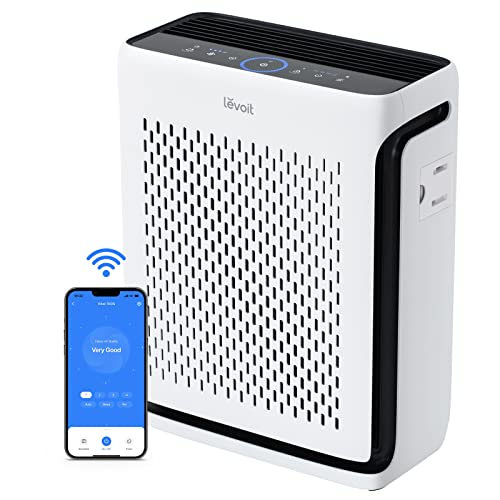
LEVOIT Air Purifier for Home Large Room Up to 1073Ft² with Air Quality Monitor, AHAM VERIFIDE, Smart WiFi, Washable Pre-Filter, HEPA Sleep Mode for Pets, Allergies, Dust, Pollen, Vital 100S-P, White
𝐖𝐇𝐘 𝐂𝐇𝐎𝐎𝐒𝐄 𝐀𝐇𝐀𝐌 𝐕𝐄𝐑𝐈𝐅𝐈𝐃𝐄 𝐀𝐈𝐑 𝐏𝐔𝐑𝐈𝐅𝐈𝐄𝐑𝐒: AHAM (Association of Home Appliance Manufacturers) is an ANSI-accredited organization that sets...
As an affiliate, we earn on qualifying purchases.

KNKA Air Purifier for Home Bedroom Large Room Up to 1,695 Ft² in 1 Hr, HEPA Sleep Mode Air Cleaner with Washable Pre-Filter, AHAM VERIFIDE, AQI Display, Pet Mode for Pets, Dust, Pollen, APH4000
𝐀𝐇𝐀𝐌 𝐕𝐞𝐫𝐢𝐟𝐢𝐞𝐝 & 𝐇𝐢𝐠𝐡 𝐂𝐀𝐃𝐑 𝐕𝐚𝐥𝐮𝐞: Certified by the Association of Home Appliance Manufacturers, this air purifier provides...
As an affiliate, we earn on qualifying purchases.