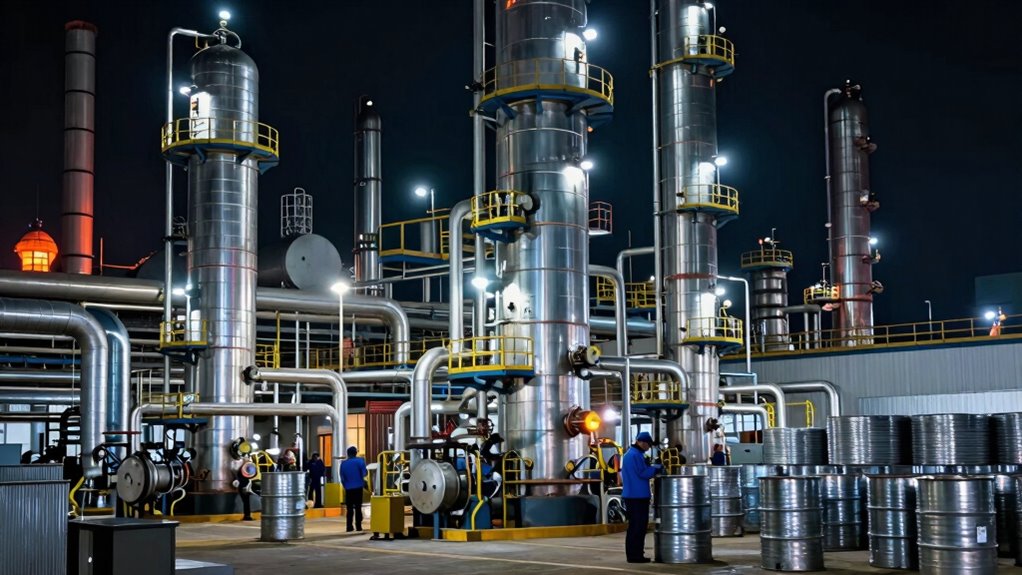

Refinery bottlenecks limit the supply of finished metals like copper, nickel, and aluminum, which can cause prices to rise quickly. When processing plants face disruptions or are outdated, the supply chain slows down, creating shortages that push prices upward and increase market volatility. Technological innovations and regulatory changes can help ease these bottlenecks, stabilizing prices. To understand how these factors influence the market and what could happen next, keep exploring further.
Key Takeaways
- Refinery bottlenecks restrict supply of finished metals, leading to upward pressure on physical metal prices.
- Disruptions at key refineries cause sudden price spikes due to reduced availability.
- Technological delays in upgrading refineries prolong supply constraints, maintaining higher prices.
- Market stability depends on how quickly new processing technologies are adopted to alleviate bottlenecks.
- Persistent processing inefficiencies increase volatility and premiums in physical metals markets.
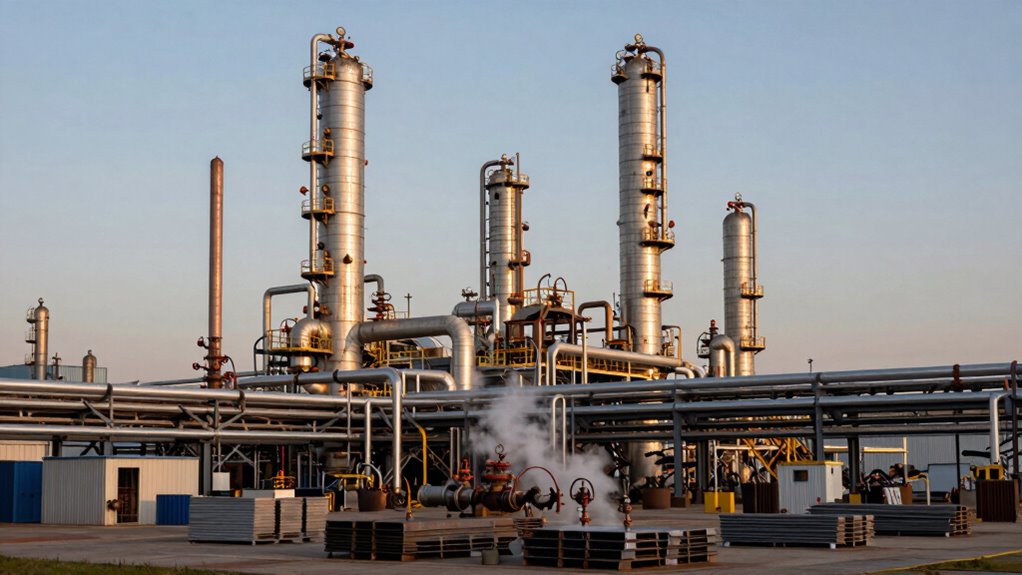
Refinery bottlenecks are increasingly influencing metals prices**, creating ripple effects across global markets. When refineries struggle to process raw materials efficiently, the immediate consequence is a limited market supply of finished metals. This reduced supply puts upward pressure on prices because fewer metals are available to meet rising demand. Whether it’s for industrial applications, electronics, or investment purposes, any disruption in refining capacity can tighten the supply chain**, making metals more expensive for buyers worldwide. You might notice that even minor delays or closures at key refineries can trigger noticeable price shifts, especially for commodities like copper, nickel, or aluminum.
Refinery delays can quickly raise metals prices, impacting global supply and demand for copper, nickel, aluminum, and more.
Technological innovation plays a critical role in either alleviating or exacerbating refinery bottlenecks. Advanced processing techniques can increase a refinery’s capacity, allowing it to handle larger volumes and improve efficiency. When new technologies are adopted, you often see a boost in market supply, which helps stabilize or even lower prices. Conversely, if aging infrastructure isn’t upgraded or replaced, bottlenecks tend to persist, constraining supply and driving prices higher. In many cases, the pace of technological innovation determines whether refiners can keep up with surging demand or fall behind, resulting in tighter market conditions. Additionally, technological advancements can enhance safety and environmental compliance, further influencing refinery operations and capacity. A regulatory environment that promotes innovation can accelerate the adoption of these technologies, further impacting supply stability.
You’ll also find that improvements in refining technology can create a more resilient supply chain, reducing the likelihood of sudden bottlenecks. As these innovations become more widespread, they enable refineries to process more materials faster and with fewer disruptions. This, in turn, helps stabilize metals prices and makes the market less volatile. Furthermore, market stability can be significantly affected by how quickly the industry adopts and integrates new technological solutions. When technological advancements are slow or absent, existing bottlenecks become entrenched, leading to prolonged supply constraints. This situation forces buyers to pay premium prices, especially during periods of heightened demand, such as in green energy sectors or technological manufacturing. Technological innovation can be a key factor in either easing or intensifying refinery bottlenecks, ultimately impacting market stability. Recognizing these technological trends is essential for market participants aiming to anticipate price movements and supply shifts.

Nelyrho 6KG Propane Melting Furnace Kit – Metal Casting Machine for Gold, Silver, Copper, Jewelry Making & Refining
Professional Casting Machine: Designed for serious jewelry makers and metalworkers, ideal for gold, silver, copper, and scrap metal…
As an affiliate, we earn on qualifying purchases.
As an affiliate, we earn on qualifying purchases.
Frequently Asked Questions
How Do Refinery Bottlenecks Impact Global Supply Chains?
Refinery bottlenecks cause significant supply chain disruptions, making it harder for you to access essential metals. These logistical challenges slow down production and delivery, leading to delays and shortages. As a result, prices can spike, and global markets become more volatile. You might notice increased costs and uncertainty in procurement, as these bottlenecks ripple through the entire supply chain, affecting industries reliant on timely metal supplies.
What Technological Advancements Can Reduce Refinery Bottlenecks?
You can reduce refinery bottlenecks by adopting advanced automation efficiency, which streamlines processes and minimizes delays. Implementing infrastructural upgrades, like modernizing equipment and expanding capacity, also helps. These technological advancements enable refineries to operate more smoothly and quickly, lowering bottleneck risks. By embracing automation and investing in infrastructure, you improve production flow, meet demand more effectively, and stabilize physical metals pricing, ensuring a more resilient supply chain.
Are Certain Metals More Affected by Refinery Delays Than Others?
You might be surprised to learn that precious metals like palladium and platinum are more affected by refinery delays, especially given their high demand in automotive catalysts. When refining capacity is limited, achieving high metal purity takes longer, causing bottlenecks. These delays can lead to significant price swings, as the supply chain struggles to meet market needs. Metals with complex refining processes are more vulnerable to disruptions, impacting their overall market stability.
How Do Regulatory Policies Influence Refinery Capacity?
Regulatory policies considerably influence refinery capacity by imposing hurdles like stricter environmental standards and safety regulations. These policy restrictions can slow down or halt refinery operations, creating bottlenecks. When regulatory hurdles become more demanding, you may notice delays in processing and refining metals, which can lead to supply shortages and impact prices. Staying informed about policy changes helps you anticipate how refinery capacity might fluctuate and affect your investments or sourcing strategies.
What Are the Long-Term Effects of Bottlenecks on Metals Markets?
You’ll notice that long-term refinery bottlenecks can reduce market liquidity, making it harder for you to buy or sell metals without impacting prices. This scarcity often leads to increased price volatility, as supply struggles to meet demand. Over time, these effects can distort market signals, driving prices higher and creating uncertainty for investors and industries relying on stable metal supplies.

Silver Satin Pothos Plant Live Plant Hanging Basket, Silver Pothos Hanging Plant Live House Plants Indoors, Real Plants Indoor Live Plants Indoor Plants Live Houseplants Live Indoor by Plants for Pets
LIVE POTHOS PLANTS: Each order contains one silver satin pothos in a 6 inch plant hanger. This houseplant…
As an affiliate, we earn on qualifying purchases.
As an affiliate, we earn on qualifying purchases.
Conclusion
You see, refinery bottlenecks can seriously shake up physical metals pricing, kind of like how a single cog in a giant clock can throw off the entire mechanism. When processing slows down, supply tightens, and prices climb—no need for a crystal ball to see that. Just as an anachronism like a steam engine disrupts modern travel, these bottlenecks remind us that even today, supply chain hiccups still hold power. Stay sharp, and keep your eye on the refinery gate.

Nelyrho 12KG Propane Smelting Furnace Kit with 2 Crucible Tongs, Full Stainless Steel Foundry Kiln Smelting Gold Silver Copper Aluminum Metal Recycle Smelting Casting Tool
Large Capacity for Serious Melting Projects: 12kg melting capacity allows for efficient handling of larger metal quantities, ideal…
As an affiliate, we earn on qualifying purchases.
As an affiliate, we earn on qualifying purchases.

SURGICAL ONLINE Metal Spatula 5 pcs Set Kit Tools – Stainless Steel Double-Sided Tools, High Mirror Finish, Built-in Finger Grips.
STAINLESS STEEL CONSTRUCTION: This 5 pcs set measures an average length of 6 inches and ensures high quality…
As an affiliate, we earn on qualifying purchases.
As an affiliate, we earn on qualifying purchases.