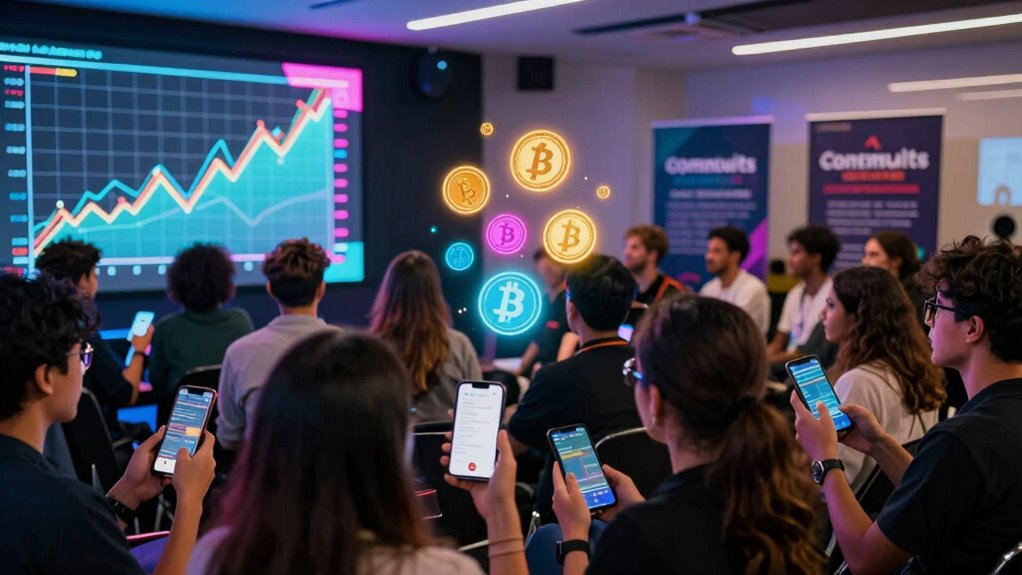

When community incentives like airdrops, staking rewards, and hype campaigns are offered, they boost demand for altcoins quickly. This creates excitement and encourages investors to buy based on short-term gains rather than long-term value. The resulting surge in trading activity inflates prices temporarily, often fueled by speculation and hype. Be cautious, though—if you stick around, you’ll discover how these incentives can mislead investors and impact long-term success.
Key Takeaways
- Community incentives attract rapid buying, creating artificial demand and short-term price spikes.
- Active engagement fosters hype, encouraging speculative trading rather than long-term investment.
- Incentives like airdrops or rewards can lead to coordinated efforts to inflate prices artificially.
- Short-term enthusiasm driven by community incentives often results in temporary valuation surges.
- Hype and social buzz can mislead investors about the project’s true long-term potential.
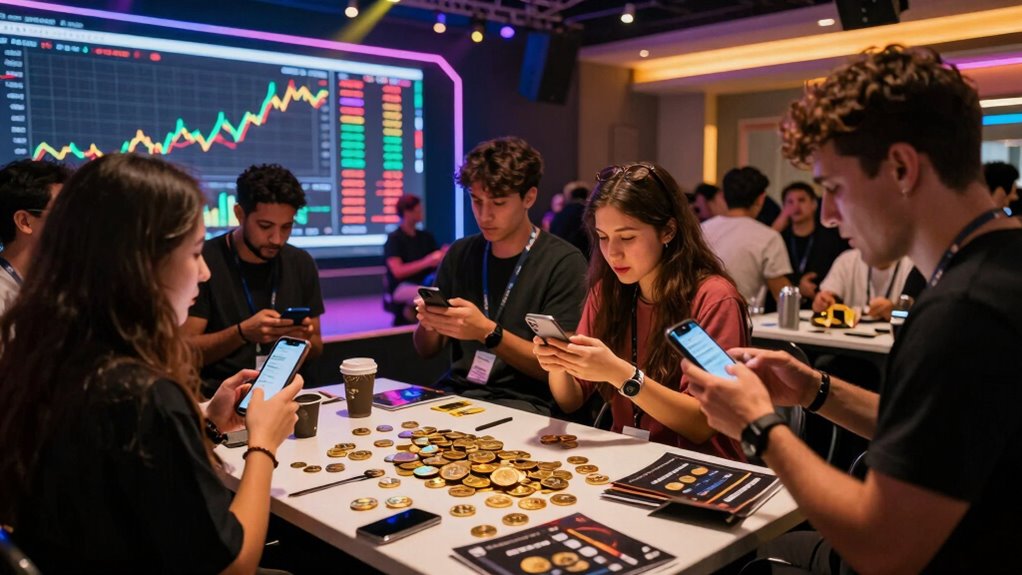
Have you ever wondered how community incentives can influence the short-term valuations of altcoins? It’s a fascinating dynamic, especially when you consider how token distribution and community engagement play pivotal roles. When new altcoins hit the market, the initial hype often revolves around how tokens are distributed. If a project releases tokens through airdrops, staking rewards, or presale events designed to reward early supporters, it immediately sparks interest. These distribution methods can generate a surge in demand, as investors see an opportunity to acquire tokens at a lower cost or to be part of a growing community. This influx of early participants not only boosts the token’s liquidity but also creates a perception of widespread support, which can inflate short-term valuations.
Community engagement acts as a catalyst in this process. When a project actively communicates with its community—through social media, forums, or live events—it fosters a sense of involvement and loyalty. This active engagement often leads to increased trading volume, as community members feel motivated to buy or hold tokens to support the project’s success. The more engaged the community, the higher the likelihood of a viral buzz that draws in new investors, further driving up the token’s price temporarily. It’s not just about the actual value or utility of the token; it’s about how community participation and incentives create a bandwagon effect. People tend to follow the herd, especially when they see others gaining quick profits or when the project’s narrative emphasizes rapid growth and short-term gains. Additionally, the presence of speculative behavior driven by community incentives can significantly amplify these short-term price swings.
You should also recognize that these incentives often lead to speculative behavior. Investors may buy tokens not based on their long-term potential but because they anticipate a quick rise in value fueled by hype and community-driven momentum. This creates a feedback loop where rising prices attract more investors eager to capitalize on the trend, pushing valuations higher in the short term. Additionally, these incentives can sometimes lead to market manipulation, as coordinated efforts may artificially inflate prices to attract naive investors. This pattern underscores how community incentives—through token distribution and engagement—can temporarily inflate altcoin valuations, but it’s rarely a reliable indicator of long-term success. Additionally, understanding the influence of initial hype can help investors recognize these short-lived price surges and avoid potential pitfalls.

Crypto Staking Ledger: Basic Crypto Transaction Journal to Record Staked Assets. Track Staking Rewards Claimed, Additional Coins Staked, and Coins … Trading, Staking, and Tracking Log Books)
As an affiliate, we earn on qualifying purchases.
As an affiliate, we earn on qualifying purchases.
Frequently Asked Questions
How Do Community Incentives Differ From Traditional Marketing Strategies?
Community incentives focus on engaging users through token distribution and social engagement, encouraging active participation and loyalty. Unlike traditional marketing, which relies on paid advertisements and promotions, this approach builds a sense of ownership and community. You’re motivated to stay involved because you see tangible rewards and connections, making the strategy more sustainable. This direct involvement often leads to short-term valuation spikes, driven by increased participation and hype.
What Psychological Factors Drive Short-Term Altcoin Speculation?
You’re driven by greed, fear, and FOMO, fueled by market psychology and investment behavior. You chase quick gains, driven by hope and hype, ignoring fundamental value. You fall prey to social proof, hype cycles, and herd mentality, which magnify volatility. The thrill of rapid profits clouds judgment, making you overvalue short-term trends and undervalue long-term potential, creating a cycle of impulsive speculation.
Can Community Incentives Lead to Long-Term Altcoin Stability?
Community incentives can support long-term altcoin stability if they focus on strong token governance and build community trust. When incentives align with transparent decision-making and reward loyal holders, your community stays engaged and committed. This fosters a resilient ecosystem where trust and shared goals help sustain value. Without proper governance, however, incentives might only boost short-term hype, risking long-term stability. You need a balanced approach to guarantee lasting success.
How Do Influencers Impact the Effectiveness of Community Incentives?
Studies show that 70% of social media users trust influencer recommendations. As you leverage influencers, their credibility boosts social validation, making community incentives more effective. Influencers can amplify hype, attract new investors, and inflate short-term valuations. However, if their credibility erodes, the community’s trust diminishes, risking the sustainability of incentives. You should choose influencers carefully, ensuring their reputation aligns with your project’s goals for lasting impact.
Are There Legal Risks Associated With Incentivizing Community Participation?
Yes, there are legal risks when you incentivize community participation. You must guarantee regulatory compliance to avoid legal liabilities, especially around securities laws and disclosure requirements. If you don’t clearly communicate the nature of incentives or mislead participants, you could face penalties or legal action. Staying transparent and consulting legal experts helps mitigate these risks, making certain your community-building efforts remain compliant and avoid potential legal complications.
altcoin airdrop participation
As an affiliate, we earn on qualifying purchases.
As an affiliate, we earn on qualifying purchases.
Conclusion
Think of community incentives as a lively garden that blooms brightly but briefly. While they can attract many bees—investors—these vibrant blossoms may fade once the nectar runs dry. Your goal should be to nurture roots that grow deep, fostering genuine value beyond temporary blooms. Otherwise, like a garden left untended, the altcoin’s short-lived sparkle will eventually wither, leaving only the echo of what once seemed a thriving, flourishing ecosystem.

Crypto Trading Mat for Desk – Crypto Mouse Pad with Candlestick Chart Patterns – Excel & Word Shortcuts – Anti-Slip Durable & Smooth Surface – Gifts for Crypto Lovers and Traders
✔【COMPLETE CRYPTO TRADING GUIDE】- Features 31 candlestick patterns, 22 chart formations, blockchain technology explanations, and cryptocurrency fundamentals. Essential…
As an affiliate, we earn on qualifying purchases.
As an affiliate, we earn on qualifying purchases.
cryptocurrency community engagement platform
As an affiliate, we earn on qualifying purchases.
As an affiliate, we earn on qualifying purchases.