TL;DR

Get home office essentials delivered free with Prime
- Fast, free delivery on millions of items
- Prime Video, Amazon Music and more included
- Member-only deals all year
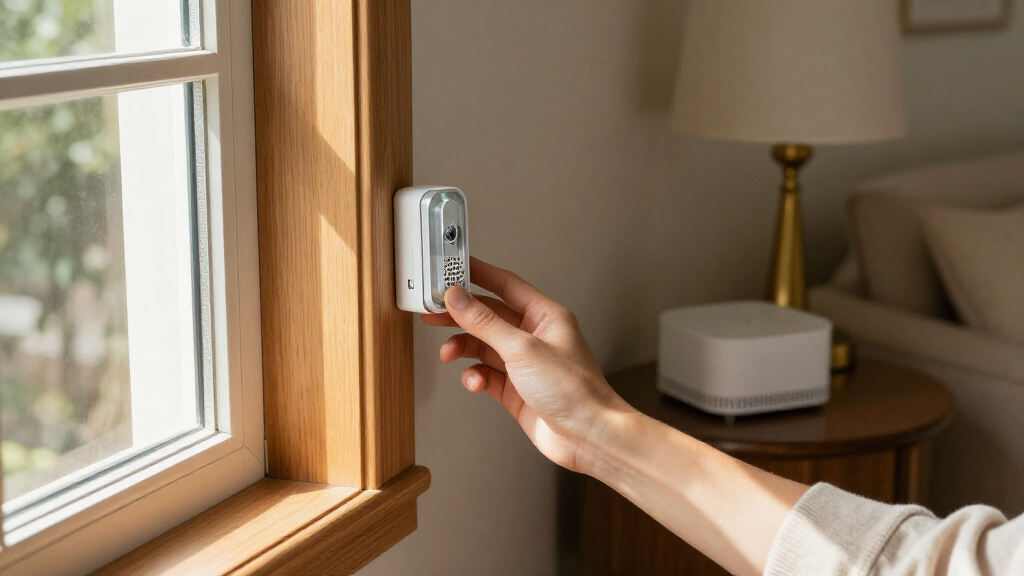
The best glass break sensor kit for home security depends on your existing alarm system and window layout. Acoustic sensors cover larger areas but require careful placement to avoid false alarms, while vibration sensors offer pinpoint accuracy for specific panes. Always verify compatibility with your hub before buying.
You’re sitting in your living room, watching a movie. The volume is low. Suddenly, a loud crash shatters the silence. Is it a burglar smashing your front window, or did your cat just knock over a heavy vase? If your home security system doesn’t have a dedicated glass break sensor, your motion detector might miss the entry, and your door sensors won’t trigger because the door never opened. You’re left vulnerable during the critical seconds between the break and the intrusion.
Many homeowners assume that a standard alarm system covers all bases. It doesn’t. Glass entry points are often the weakest link in residential security. While door and window contact sensors tell you when something is opened, they don’t tell you when something is broken. That’s where a glass break sensor kit comes in. But with the market flooded with options—and some popular models like the original Ring Glass Break Sensors becoming harder to find—choosing the right one feels like navigating a minefield of specs and compatibility warnings.
This guide cuts through the noise. We’ll explain how these sensors actually work, what to cover in your home, and how to select the best glass break sensor kit for your specific security setup. Whether you’re renting, owning, or managing a large property, you’ll learn exactly what to look for to keep intruders out without triggering false alarms every time you drop a spoon.
Acoustic sensors cover larger areas but require clear line-of-sight to sound sources, while vibration sensors offer pinpoint accuracy for individual panes.
Compatibility with your existing alarm hub is critical; ‘wireless’ does not mean universally compatible across different brands.
Proper placement on the ceiling, away from noise sources like HVAC vents, significantly reduces false alarms.
Battery life varies by model and usage; choose sensors with low-battery alerts to avoid unexpected system failures.
Glass break sensors are a supplemental layer of security, best used alongside contact sensors and motion detectors for comprehensive coverage.
Acoustic vs. Vibration: Which Sensor Type Fits Your Home?
The choice between acoustic and vibration detection is not merely a preference; it fundamentally alters your security architecture and cost structure. Acoustic sensors function as sophisticated audio analyzers, listening for the dual-tone signature of breaking glass (a low-frequency thud followed by a high-frequency shatter). This technology offers a significant strategic advantage: spatial coverage. A single acoustic sensor can monitor a 20-foot radius, meaning one device can protect an entire room with multiple windows. However, this broad coverage comes with a critical tradeoff: environmental sensitivity. Acoustic sensors rely on unobstructed sound waves. Heavy drapes, thick carpeting, or even large sectional sofas can absorb high-frequency sounds, creating “dead zones” where a break might go undetected. You aren’t just buying a sensor; you are buying a coverage radius that is contingent on your room’s acoustic properties.
Vibration sensors, conversely, operate on a physics-based principle: detecting mechanical energy transfer. By attaching directly to the pane or frame, they bypass air transmission entirely. This makes them immune to background noise like loud television or thunder, offering superior reliability in noisy environments. Yet, this precision comes at the cost of scalability and aesthetics. You must purchase and install a sensor for every single pane of glass you wish to protect. For a home with ten windows, this means ten devices, ten battery replacements, and potentially ten visible stickers or pads on your glass, which can detract from curb appeal. The implication is clear: acoustic sensors are a volume solution for open-plan living areas, while vibration sensors are a precision solution for high-risk, isolated panes.
Consider the economic implication of this choice. If you have a large sunroom with six large windows, an acoustic sensor might cost $30 and cover all six. Six vibration sensors might cost $120 and require six separate maintenance cycles. Conversely, if you have a single, small basement window that opens onto a dark alley, an acoustic sensor in the hallway might fail to detect a break due to wall attenuation. Here, a $15 vibration sensor provides guaranteed detection. The “best” choice is dictated by the ratio of risk to cost per pane. For most modern open-concept homes, acoustic sensors offer the best ROI, provided you conduct a sound test to ensure no soft furnishings block the path.
One deeper misconception is that vibration sensors are inherently “smarter.” They are not; they are simply more deterministic. Acoustic sensors require algorithmic interpretation of ambiguous data, which introduces the risk of false negatives (missing a break) or false positives (triggering on a dropped book). Vibration sensors are binary: the glass vibrates, or it doesn’t. However, they can still be fooled by high-amplitude low-frequency vibrations, such as those from heavy traffic or subwoofers, if not properly calibrated. Understanding this distinction helps you manage expectations: acoustic sensors require environmental management, while vibration sensors require installation precision.
Products Worth Considering

Logitech MX Mechanical Mini Mac Wireless Keyboard Low-Profile – Space Grey

Logitech MX Keys S Wireless Keyboard, Graphite

HP Sprocket Photo Booth Machine Instant Color Photo Printer with 10.1 Touchscreen, LED Ring Light, 250+ Frames, 3×4 ZINK Paper, QR Code Shar
As an affiliate, we earn on qualifying purchases.
Why Compatibility Matters More Than Brand Loyalty
Compatibility is not just a technical checkbox; it is the foundational constraint that determines whether your security system functions as a cohesive unit or a collection of isolated gadgets. A sensor that cannot communicate with your hub is functionally useless, regardless of its hardware quality. This issue stems from the fragmented nature of IoT protocols. Manufacturers use proprietary radio frequencies and encryption standards to lock users into their ecosystems. For instance, Ring sensors utilize a combination of Z-Wave and proprietary protocols optimized for the Ring Base Station. Attempting to force a Ring sensor to pair with a non-Ring hub often fails because the handshake protocol is encrypted and specific to Ring’s cloud infrastructure.
The implication of ignoring compatibility is severe: you may end up with “dumb” sensors. Some sensors can operate in a standalone mode, sending alerts via Bluetooth or Wi-Fi, but this bypasses the centralized monitoring and automation features that make a security system effective. You lose the ability to trigger lights, lock smart locks, or notify a monitoring center automatically. Furthermore, mixing brands can lead to latency issues. If your hub expects a specific polling interval from a sensor and the third-party device communicates on a different schedule, you may experience delays in alert delivery, turning a real-time security system into a retrospective notification service.
Here’s a quick comparison of common connectivity types to help you navigate the specs:
| Connectivity Type | Best For | Limitations |
|---|---|---|
| Z-Wave | Large homes with multiple floors; robust mesh networks. | Requires a compatible Z-Wave hub; can be slower than Wi-Fi. |
| Proprietary RF | Ecosystem-specific setups (e.g., Ring, SimpliSafe). | Only works with that brand’s hub; no third-party integration. |
| Wi-Fi | Standalone devices without a central hub. | Drains batteries faster; dependent on home Wi-Fi stability. |
| Amazon Sidewalk | Extended range using neighboring devices. | Requires Amazon devices in range; privacy considerations. |
For instance, the Qolsys IQ Wireless S-Line sensor is designed for Qolsys panels, while the eufy E10 is built for the eufy ecosystem. Mixing and matching across brands rarely works without complex workarounds. If you’re renting, look for standalone sensors that send alerts directly to your phone via Wi-Fi or Bluetooth, bypassing the need for a permanent hub installation. However, be aware that standalone Wi-Fi sensors often sacrifice battery life for connectivity, requiring more frequent maintenance. The strategic takeaway is to buy the hub first, then select sensors that are explicitly listed as compatible by the hub manufacturer, rather than vice versa.
How to Place Sensors to Avoid False Alarms
False alarms are not just an annoyance; they are a security vulnerability. Frequent false triggers lead to “alarm fatigue,” where users begin to ignore notifications or disable the system entirely, leaving the home unprotected. More critically, repeated false alarms can result in fines from local municipalities or cause your monitoring service to suspend your account. Acoustic sensors are sophisticated, using algorithms to analyze the frequency and duration of sounds, but they are not infallible. They rely on statistical probability to distinguish glass breaking from other noises. Understanding the acoustic environment is therefore more important than the sensor’s brand.
Placement strategy must account for sound reflection and absorption. Sound waves bounce off hard surfaces like tile floors, glass, and bare walls, creating echoes that can confuse the sensor’s algorithm. Conversely, soft materials like rugs, curtains, and upholstery absorb high-frequency sounds, potentially masking the shatter noise. Mounting acoustic sensors on the ceiling is recommended not just for aesthetics, but because it places the microphone in the “sweet spot” of the room’s acoustic field, minimizing interference from floor-level furniture and foot traffic. However, you must avoid “acoustic shadows” created by large bookshelves or partitions. If the sensor cannot “hear” the window directly, the effective range drops dramatically.
Consider a practical example. You have a kitchen with a large window above the sink. You install an acoustic sensor on the ceiling directly above the sink. It works well. But you also have a dishwasher that runs at night. The noise from the dishwasher might trigger the sensor if it’s too close. Instead, mount the sensor on the opposite side of the kitchen, closer to the window but farther from the appliance. Test the sensor after installation. Most kits include a test mode or a sound generator app that simulates breaking glass. Walk around the room with your phone playing a glass-break sound to ensure the sensor detects it from all angles. This testing phase is crucial because it reveals the actual effective coverage area, which is often smaller than the manufacturer’s theoretical maximum.
Also, consider the material of your windows. Tempered glass, used in shower doors and some patio doors, shatters differently than annealed glass. It breaks into small cubes rather than sharp shards, producing a different acoustic signature. Some sensors are tuned for standard window glass and may miss tempered glass breaks. Check your window types and confirm the sensor’s compatibility with tempered glass if necessary. Ignoring this material difference can lead to a false sense of security, as the sensor may simply not recognize the sound of the break.
Battery Life and Maintenance: The Hidden Costs of Security
Battery life is often marketed as a static spec, but in reality, it is a dynamic variable influenced by environmental conditions and usage patterns. Most acoustic sensors run on AA or CR123A batteries, with lifespans ranging from 1 to 2 years. However, this range assumes optimal conditions: moderate temperatures, low interference, and infrequent connectivity checks. In reality, cold weather significantly reduces lithium battery efficiency, potentially halving the lifespan in winter. Furthermore, if your home has poor Wi-Fi or Z-Wave signal strength, the sensor must work harder to maintain a connection, draining the battery faster. This creates a hidden cost: frequent maintenance and the risk of system failure at critical moments.
The implication of battery failure is not just inconvenience; it is a security gap. If a sensor dies, it becomes invisible to your hub. You will not receive an alert if a window breaks. This is why low-battery alerts are a non-negotiable feature. A robust system should notify you when the battery is at 20%, providing a sufficient window to replace it. Systems that only alert when the battery is critically low (e.g., under 5%) are poorly designed for reliability. For homeowners who travel frequently, this risk is amplified. A dead sensor during a vacation means no protection for that specific entry point.
Here’s a simple maintenance checklist to keep your system reliable:
- Test Quarterly: Use the manufacturer’s test mode to ensure the sensor is communicating with the hub.
- Clean the Microphone: Dust can accumulate on the sensor’s mic, dampening sound. Wipe it gently with a dry cloth every few months.
- Check Placement: Ensure furniture hasn’t been moved in front of the sensor’s line of sight.
- Replace Batteries Annually: Even if the battery isn’t dead, replace it yearly to prevent unexpected failures.
Vibration sensors may have different power requirements. Some are passive and only transmit when triggered, extending battery life. Others require constant power to monitor vibrations. Always check the specific product’s documentation. If you’re buying a multi-pack, consider buying extra batteries upfront. It’s a small cost that saves hassle later. The deeper takeaway is that battery management is a logistical challenge. For large homes, consider centralizing sensor locations or choosing models with easier battery access to reduce the friction of maintenance.
Top Alternatives When Popular Kits Are Unavailable
The home security market is volatile, with products frequently discontinued or rebranded. The scarcity of certain models, such as the original Ring Glass Break Sensors, highlights a critical risk: ecosystem lock-in. If you rely on a specific sensor model and it disappears, you may be forced to upgrade your entire hub or switch brands, incurring significant cost and hassle. Understanding the landscape of alternatives allows you to build a resilient system that can adapt to market changes without compromising security.
When the best glass break sensor kit for home security isn’t available, look for devices with comparable features. For Ring users, the Ring Glass Break Sensor (B0FP6FV2XX) is the direct successor, sharing the same dimensions, battery type, and connectivity options. It’s the safest bet for maintaining ecosystem consistency. For users of other systems, the Qolsys QS1431-840 IQ Wireless S-Line Encrypted sensor is a solid choice, especially if you use a Qolsys panel. It uses CR123A batteries and offers encrypted communication, which is a plus for privacy-conscious buyers. The tradeoff here is availability; Qolsys sensors are often sold through professional installers, making them less accessible for DIY users.
If you’re looking for a standalone option or use eufy devices, the eufy Security Glass Break Sensor E10 is a strong contender. It offers similar battery life and integrates seamlessly with the eufy app. For budget-conscious buyers, the WSDCAM Window Alarm is a different beast. It’s a standalone vibration sensor with a loud 125dB siren. It doesn’t connect to a hub or send phone alerts. It just screams if the glass breaks. This can be effective for renters or as a deterrent, but it lacks the remote monitoring capabilities of smart sensors. The implication is that you are trading intelligence for simplicity and cost. A standalone alarm alerts the intruder and neighbors, but not you, unless you are home.
| Product | Best For | Key Feature | Connectivity |
|---|---|---|---|
| Ring Glass Break Sensor | Ring Alarm Users | Seamless app integration | Amazon Sidewalk / Z-Wave |
| Qolsys IQ Wireless S-Line | Qolsys Panel Users | Encrypted communication | Proprietary RF |
| eufy Security E10 | eufy Ecosystem | Long battery life | Proprietary RF |
| WSDCAM Window Alarm | Renters / Budget | Loud local siren | None (Standalone) |
Always verify current availability and compatibility before purchasing. Product lineups change, and older reviews may reference discontinued features. The strategic approach is to choose sensors that are part of a larger, actively supported ecosystem, reducing the risk of obsolescence.
Do You Actually Need a Glass Break Sensor?
Not every home needs a glass break sensor, and adding one without a strategic reason can waste resources. Security is about risk mitigation, not blanket coverage. If you live in an apartment with reinforced doors and no ground-floor windows, your primary risk is forced entry through the door, not glass. In this case, investing in a high-quality door sensor and a video doorbell provides a higher return on security investment. Glass break sensors are specialized tools for specific vulnerabilities: large, accessible windows that are difficult to secure with contact sensors.
However, if you have large picture windows, sliding glass doors, or windows that are difficult to reach for contact sensors, a glass break sensor adds valuable coverage. It detects the event of breaking, which is often the first sign of an intrusion. Without it, an intruder could break a window, climb in, and trigger a motion sensor only after they’re already inside. With a glass break sensor, the alarm sounds the moment the glass shatters, potentially scaring off the intruder before they enter. The key implication here is timing: glass break sensors provide early warning, whereas motion sensors provide late-stage confirmation. Early warning allows for deterrence; late-stage confirmation only allows for police dispatch.
Consider the cost-benefit analysis. A basic glass break sensor kit might cost $50 to $100. Professional monitoring might add $15 to $30 per month. Is it worth it? For many homeowners, yes. The peace of mind and the potential to prevent a break-in are significant. But for others, it’s an unnecessary expense. Assess your home’s vulnerabilities. Walk around your property at night. Look for dark, secluded windows. If they’re accessible and large, a glass break sensor is a smart investment. If they’re high up or barred, you might be better off investing in better lighting or a video doorbell. The tradeoff is resource allocation: every dollar spent on a low-risk sensor is a dollar not spent on a high-risk mitigation.
Remember, security is about layers. No single device protects your home. A glass break sensor is one piece of the puzzle. Combine it with other measures for a comprehensive defense. The ultimate goal is to create a system where each layer compensates for the weaknesses of the others, ensuring that no single point of failure compromises your safety.
Frequently Asked Questions
How does a glass break sensor actually work?
Most residential sensors are acoustic, meaning they use a microphone to listen for the specific high-frequency sound pattern associated with breaking glass. When the sensor detects this pattern, it sends a signal to your alarm hub or app. Vibration sensors, conversely, attach to the glass and detect physical impact.Can a loud TV or music trigger a false alarm?
Yes, it is possible. Modern sensors use algorithms to distinguish glass-break sounds from other noises, but loud, sharp sounds can still trigger them. Proper placement away from speakers and testing after installation help minimize false alarms.Do I need a subscription for a glass break sensor?
Not always. Many sensors can send local alerts to your phone or sound a local siren without a subscription. However, professional monitoring services, which dispatch police, usually require a monthly fee. Check the specific product’s terms.Will a glass break sensor work through walls?
Generally, no. Acoustic sensors rely on sound traveling through the air. Walls, doors, and heavy furnishings block sound, reducing detection range. Place the sensor in the same room as the windows you want to protect.What is the difference between a glass break sensor and a window contact sensor?
A contact sensor detects when a window or door is opened. A glass break sensor detects when the glass itself is shattered. Using both provides more complete coverage, as a contact sensor won’t trigger if an intruder breaks the glass but doesn’t open the window.Conclusion
Choosing the best glass break sensor kit for home security isn’t about finding the most expensive or popular model. It’s about matching the technology to your home’s unique layout and your existing security ecosystem. Acoustic sensors offer broad coverage for open spaces, while vibration sensors provide precise detection for individual windows. By prioritizing compatibility, strategic placement, and ongoing maintenance, you can significantly enhance your home’s defense against glass-entry intrusions.
Don’t let a shattered window be the first warning you get. Invest in the right sensor, place it wisely, and test it regularly. Your peace of mind is worth the effort.