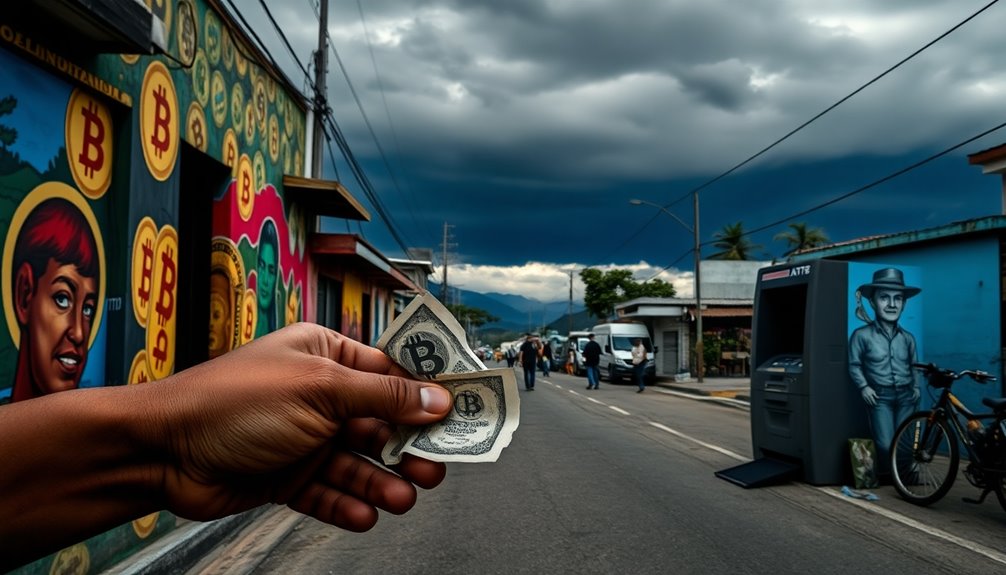

You might have heard that El Salvador has reversed its decision on Bitcoin, no longer recognizing it as legal tender. This change comes after a series of economic challenges and pushback from global financial institutions. The initial push for Bitcoin aimed to enhance financial inclusion, but now it raises questions about the viability of cryptocurrencies in national economies. What led to this significant shift, and what could it mean for the future of digital currencies?
Open a free Amazon Business account
Business pricing, bulk buying and tax-exempt orders.
As an affiliate, we earn on qualifying purchases.

Since June 2021, when El Salvador became the first country to adopt Bitcoin as legal tender, the move has sparked intense debate and scrutiny worldwide. Initially, this bold decision aimed to revolutionize the economy by reducing remittance costs and fostering financial inclusion for the unbanked population. However, recent developments show a significant shift in this strategy, as Bitcoin is no longer considered legal tender in the country.
The law that made Bitcoin legal tender took effect on September 7, 2021, and was touted as a groundbreaking initiative. Yet, it faced immediate backlash from international financial institutions like the World Bank and the IMF. Their concerns primarily revolved around the volatility of Bitcoin and its potential to destabilize the already fragile economy of El Salvador. The IMF consistently urged the government to reconsider its Bitcoin policies, emphasizing the associated financial risks and macroeconomic instability.
You might've followed how the international community watched closely as El Salvador navigated this unprecedented experiment. While the government launched the Chivo Wallet to facilitate Bitcoin transactions, technological challenges emerged, including user adoption and infrastructure issues. Initially, the law mandated businesses to accept Bitcoin, but recent reforms have made its use voluntary, reflecting a growing recognition of the difficulties involved. The recent amendments to the Bitcoin Law show that the government is now aligning its policies with IMF recommendations for economic reform.
Financial stability risks became a pressing issue, especially given that El Salvador's economy relies heavily on remittances. The hope was that Bitcoin would lower transaction costs for these money transfers, but the volatility of the currency created uncertainty. Consequently, the decision to reform the legal status of Bitcoin reflects the complexities of implementing such a radical economic strategy.
Moreover, the implications for taxation and capital markets remained unclear. Initially, capital gains from Bitcoin weren't taxed, and taxes could be paid in Bitcoin. However, as the government reevaluated its approach, a more cautious stance emerged.
Observing El Salvador's experience, other countries have been weighing the potential benefits and pitfalls of adopting cryptocurrencies. Ultimately, the move to no longer consider Bitcoin as legal tender signals a pivotal moment in El Salvador's economic strategy.
It underscores the challenges of integrating a highly volatile asset into a nation's monetary system and serves as a cautionary tale for others contemplating similar paths. The world continues to watch and learn from El Salvador's evolving relationship with Bitcoin.
Fall Picks
fall essentials
As an affiliate, we earn on qualifying purchases.