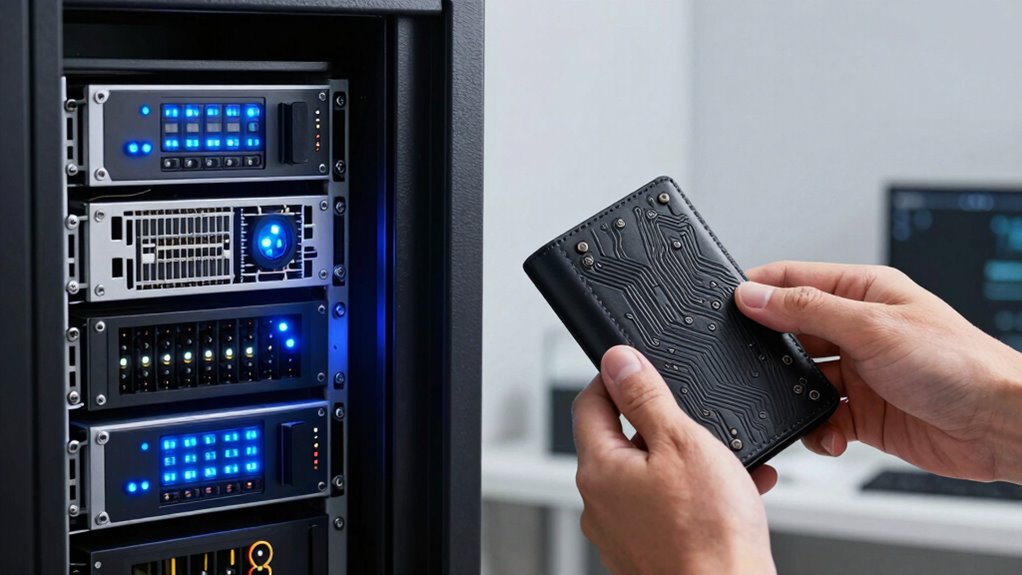

Exchange security relies on the platform’s protocols and third-party trust to protect your assets, but it’s vulnerable if they’re hacked or compromised. Self-custody puts the responsibility in your hands, giving you full control but also requiring strict security measures like hardware wallets and proper key management. While self-custody can offer better security with careful handling, understanding their differences helps you make smarter choices. Keep exploring to learn more about safeguarding your assets effectively.

Get home office essentials delivered free — and shop member deals
- Fast, free delivery on millions of items
- Access to Prime Big Deal Days deals on October 6–7
- Prime Video, Amazon Music and more included
Key Takeaways
- Exchange security depends on third-party protocols, while self-custody relies on individual security measures and key management.
- Trust in an exchange’s security is necessary, whereas self-custody grants full control but increases personal responsibility.
- Exchanges implement advanced protections like cold storage; self-custody requires manual security practices such as hardware wallets.
- A breach in an exchange can result in total asset loss, but self-custody risks include key loss or theft due to user error.
- Both methods involve risks, but self-custody offers higher security potential when proper precautions are maintained.

When it comes to safeguarding your cryptocurrency, understanding the differences between exchange security and self-custody security is essential. Your choice impacts how well your assets are protected and the risks you face. Exchange security involves trusting a third party—like a crypto exchange—to hold and manage your funds. While many exchanges implement strong security protocols, they are still vulnerable to Custody Risks. These risks include hacking, insider threats, or even exchange insolvency. If an exchange gets compromised, you might lose access to your funds entirely, especially if they don’t have adequate security measures in place. Many platforms deploy advanced Security Protocols such as two-factor authentication, cold storage, and regular audits, but no system is completely immune. When you rely on an exchange, you’re trusting their ability to secure your assets, which introduces a level of vulnerability since you don’t hold the private keys yourself. Understanding the Custody Risks involved is crucial for making informed decisions about asset storage. Self-custody, on the other hand, shifts the responsibility directly into your hands. By controlling your private keys, you eliminate many Custody Risks associated with third-party platforms. This approach means you’re solely responsible for securing your assets, but it also gives you the advantage of complete control. You are the one implementing your Security Protocols—using hardware wallets, strong passwords, encryption, and secure offline storage—reducing the chances of theft or loss. However, this also means that if you neglect proper security measures or lose your private keys, your assets could become irretrievable. Proper key management is essential to ensure the safety of your assets in self-custody. Self-custody requires discipline, knowledge, and diligence. Your security depends on your ability to follow best practices and keep your private keys safe from theft, damage, or accidental loss. In essence, exchange security provides a layer of convenience and some built-in safeguards, but it doesn’t eliminate risk entirely. Your assets are only as secure as the exchange’s Security Protocols and their ability to protect against breaches. Conversely, self-custody offers more control and potentially greater security—if you take the necessary precautions—yet it demands a higher level of personal responsibility. Each approach has its trade-offs, and understanding these differences helps you make informed decisions about how to store your cryptocurrency securely. No matter which you choose, staying aware of potential Custody Risks and maintaining robust security practices is key to safeguarding your digital assets effectively.
As an affiliate, we earn on qualifying purchases.
Frequently Asked Questions
Can You Switch Between Exchange Security and Self-Custody Easily?
You can switch between exchange security and self-custody, but it requires a custody transfer process. Moving your assets from an exchange involves following specific security protocols, like verifying your identity and securely transferring private keys. This shift isn’t always seamless, and it’s vital to understand the security measures involved. Make sure you follow best practices during custody transfer to keep your assets safe and avoid potential vulnerabilities.
What Are the Costs Associated With Self-Custody Compared to Exchanges?
Did you know that self-custody costs can average around $300 annually in custody fees and security audits? Unlike exchanges, where security is managed for you, self-custody requires you to handle these costs yourself. You’ll need to invest in secure storage solutions, conduct regular security audits, and potentially hire experts. While self-custody offers control, it’s important to budget for these expenses to maintain your crypto’s safety.
How Do Recovery Options Differ Between the Two Security Types?
You’ll find that recovery options differ markedly between exchange security and self-custody. With exchanges, recovery protocols often involve customer support and custodial transfer procedures, which can be slow or risky if the platform faces issues. In self-custody, recovery depends on your private keys and backup methods—if you lose them, custody transfer isn’t possible, making secure backups critical for quick recovery and control over your assets.
What Are Common User Mistakes That Compromise Each Security Method?
Like leaving your treasure chest unbarred, you might mistake exchange security for foolproof safety, ignoring custody misconceptions. You often overlook strong passwords, falling into security oversights, or neglect to enable two-factor authentication. With self-custody, misplacing your private keys risks losing everything, while on exchanges, poor account management invites hacks. Always stay vigilant, understand each method’s vulnerabilities, and never underestimate the importance of proper security measures to protect your assets.
Are There Specific Cryptocurrencies Better Suited for Self-Custody?
You’ll find that cryptocurrencies like Bitcoin and Ethereum are well-suited for self-custody, especially when you follow custody best practices. These assets tend to have robust security features and widespread support for secure wallets. However, be aware of potential security vulnerabilities, such as phishing attacks or hardware wallet mishandling. By understanding these risks and employing best practices, you can better protect your holdings in self-custody setups.
As an affiliate, we earn on qualifying purchases.
Conclusion
Think of exchange security as trusting a busy, bustling bank—it’s convenient but vulnerable to the chaos around it. Self-custody, on the other hand, is like guarding your treasure in your own vault—closer, but requiring vigilance. You’re the captain of your ship, steering through stormy seas. Whether you choose the crowded marketplace or the solitary island, understanding the risks keeps your digital riches safe in your hands. Your security, your voyage—choose wisely.
As an affiliate, we earn on qualifying purchases.
As an affiliate, we earn on qualifying purchases.
Fall Picks
fall essentials
As an affiliate, we earn on qualifying purchases.