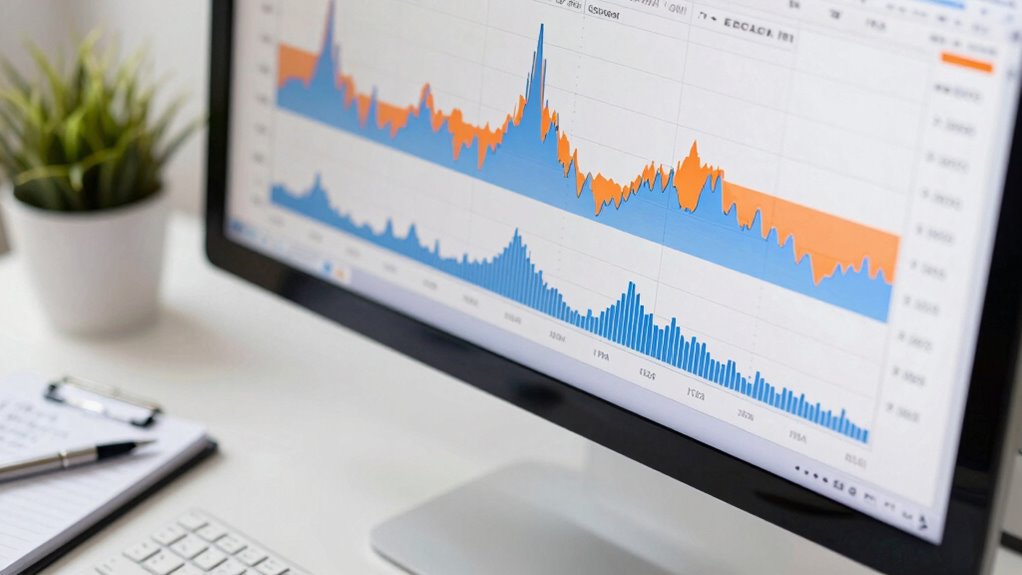

To control risk in your self-directed IRA with volatility bands, monitor the asset prices in relation to the bands. When prices approach the upper band, consider trimming your positions or tightening stop-loss orders to lock in gains. If prices near the lower band, evaluate adding to your holdings cautiously. Adjust the bands’ settings based on your risk tolerance and investment horizon for better results. Keep exploring strategies to make smarter decisions with volatility bands.

Get home office essentials delivered free — and shop member deals
- Fast, free delivery on millions of items
- Access to Prime Big Deal Days deals on October 6–7
- Prime Video, Amazon Music and more included
Key Takeaways
- Set volatility bands around asset prices to identify overbought or oversold conditions for timely adjustments.
- Use upper bands to trim positions and lower bands to consider adding to holdings, managing downside and upside risk.
- Adjust band parameters based on your investment horizon and risk tolerance for better risk control.
- Combine volatility signals with stop-loss orders to lock in gains and limit potential losses.
- Regularly review and customize bands to reflect current market volatility, ensuring proactive risk management within your IRA.

Managing risk is essential when investing within a self-directed IRA, especially since you want to protect your retirement savings from market volatility. Market volatility can cause sudden and unpredictable swings in asset prices, which can threaten your investment goals if you’re not careful. That’s where risk management tools like volatility bands come into play. These bands help you visualize and respond to market fluctuations more effectively, giving you a way to set boundaries and avoid emotional reactions to sudden price movements.
Volatility bands work by calculating the standard deviation of an asset’s price over a specific period, then creating upper and lower boundaries around its moving average. When prices approach the upper band, it signals that the asset may be overbought, indicating a potential reversal or slowdown. Conversely, when prices near the lower band, it suggests the asset might be oversold, hinting at a possible bounce or upward move. Using these signals, you can make more informed decisions about when to buy, sell, or hold, helping you manage risk proactively rather than reactively. Understanding market volatility can further enhance your ability to use these bands effectively. Additionally, staying aware of market conditions can help you interpret volatility signals in the context of current economic trends. Recognizing the appropriate settings for your bands allows for better customization based on your investment horizon and risk tolerance. Being familiar with volatility measurement techniques can also improve your interpretation of band signals and overall risk assessment.
To implement this effectively in your self-directed IRA, you need to stay disciplined. When prices hit the upper volatility band, consider trimming your positions or tightening your stop-loss orders to lock in gains and prevent potential losses if the market turns. Conversely, when prices approach the lower band, it might be a good opportunity to add to your holdings, assuming the fundamentals support it. This approach aligns with sound risk management by controlling downside exposure while capitalizing on potential upside movements. Adjusting the period or standard deviation settings of the bands allows you to tailor them to the specific assets in your IRA, whether stocks, commodities, or real estate investments.
As an affiliate, we earn on qualifying purchases.
Frequently Asked Questions
Can Volatility Bands Predict Exact Market Reversals?
Volatility bands can’t predict exact market reversals, but they can improve your market timing. These bands act as an indicator of potential price moves, helping you spot when volatility is high or low. While they enhance indicator reliability, you should use them alongside other tools for better accuracy. Relying solely on volatility bands isn’t enough, but they’re valuable for understanding risk and making more informed investment decisions.
Are Volatility Bands Effective for All Asset Classes?
Volatility bands are effective across various asset classes because they provide a dynamic volatility measurement, helping you identify potential risk levels. They work well with stocks, commodities, and cryptocurrencies, offering insights into market stability. By using volatility bands, you can enhance your asset diversification strategy, adjusting your investments based on changing volatility. This approach helps you manage risk more effectively, regardless of the asset class you’re trading or investing in.
How Often Should I Adjust My IRA Based on Volatility Bands?
In the age of dial-up, you’d check your watch often—today, you should regularly monitor your volatility bands for prudent investment timing. Adjust your IRA when volatility signals a significant shift, typically every few weeks or as market conditions change. This proactive approach enhances risk management, helping you stay aligned with your financial goals and avoid unnecessary exposure during turbulent periods. Regular revisions guarantee your strategy remains responsive and disciplined.
Do Volatility Bands Work Better in Trending or Sideways Markets?
Volatility bands work better in trending markets because market momentum helps you identify clear directions, making bands more effective for entry and exit points. In sideways markets, low trading volume and fluctuating volatility can cause false signals, reducing their reliability. To maximize their usefulness, monitor market momentum and trading volume, modifying your strategy accordingly. This approach guarantees you’re better positioned to manage risk and capitalize on trends or sideways movements.
What Are the Best Settings for Volatility Bands in an IRA?
Imagine your IRA as a ship steering unpredictable seas—setting the right volatility bands is your guiding lighthouse. For risk management, start with a 20-period setting and a 2 standard deviation for the bands; this balances sensitivity and stability. Customize the indicator based on your risk appetite, ensuring you stay alert during storms and calm waters alike. Proper settings help you steer confidently through market ups and downs.
As an affiliate, we earn on qualifying purchases.
Conclusion
By mastering volatility bands, you hold the key to steering your Self-Directed IRA with confidence. Think of these bands as your financial compass, guiding you through turbulent markets and helping you avoid costly pitfalls. Don’t let fear be your steering wheel—use volatility bands to stay disciplined and in control. Remember, in investing as in life, those who adapt and anticipate the storms often find the clearest skies ahead.
investment risk management software
As an affiliate, we earn on qualifying purchases.
As an affiliate, we earn on qualifying purchases.
self-directed IRA investment tools
As an affiliate, we earn on qualifying purchases.
As an affiliate, we earn on qualifying purchases.
Halloween Picks
halloween
As an affiliate, we earn on qualifying purchases.