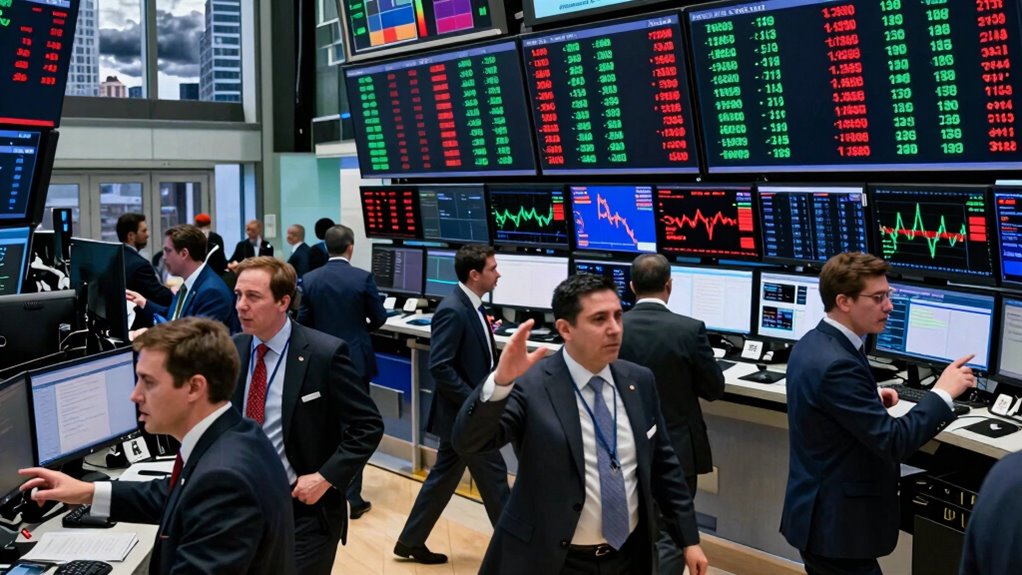

Tactical rebalancing can help you stick to your desired asset mix and manage risk during volatile markets by locking in gains and adjusting your portfolio. However, it can’t eliminate all risks or fix emotional biases like loss aversion or overconfidence that may influence your decisions. Liquidity constraints and unpredictable market swings also limit its effectiveness. To understand how to navigate these challenges better, you’ll find valuable insights if you explore further.

Get home office essentials delivered free with Prime
- Fast, free delivery on millions of items
- Prime Video, Amazon Music and more included
- Member-only deals all year
Key Takeaways
- Rebalancing maintains target asset allocations but cannot eliminate all market risks or sudden downturns.
- It helps discipline emotional responses but cannot fully address behavioral biases like loss aversion.
- Rebalancing cannot guarantee perfect timing or protection during unpredictable market volatility.
- Liquidity constraints may hinder timely adjustments, limiting rebalancing effectiveness in volatile markets.
- It is a risk management tool, but not a comprehensive solution against market declines or psychological pitfalls.

Have you ever wondered how investors maintain their desired asset allocation amid sudden market swings? It’s a common challenge, especially in volatile markets, where prices can shift dramatically in short periods. Tactical rebalancing is often seen as a way to manage these fluctuations, but it’s important to understand what it can and cannot fix. At its core, tactical rebalancing involves adjusting your portfolio periodically to keep your target asset mix intact, but it doesn’t eliminate all risks or behavioral pitfalls.
One of the main issues that tactical rebalancing addresses is the deviation caused by market volatility itself. When stocks surge or dip, your portfolio can drift away from your intended allocation, exposing you to unintended risks. By rebalancing, you realign your holdings, potentially locking in gains or buying undervalued assets. However, this process can’t fix deeper psychological tendencies like behavioral biases. For instance, if you’re prone to loss aversion, you might hesitate to sell assets when they’re down, hoping they’ll bounce back. Rebalancing won’t change your emotional responses; it only provides a disciplined framework to act objectively. Similarly, overconfidence might lead you to ignore signals to rebalance or to believe you can outsmart the market, making rebalancing less effective.
Rebalancing helps realign portfolios but can’t overcome emotional biases like loss aversion or overconfidence.
Liquidity constraints also play a pivotal role in what tactical rebalancing can achieve. If your portfolio includes assets that are hard to sell quickly—like real estate or certain private investments—you might find it difficult or costly to rebalance precisely when you want. In volatile markets, this can force you into suboptimal decisions or cause delays that diminish the benefits of rebalancing. These constraints mean that even with a well-planned rebalancing schedule, you might not be able to execute your desired adjustments promptly, leaving your portfolio exposed to risk longer than intended. Moreover, understanding the limitations of market timing is essential, since attempting to predict short-term swings often leads to poor outcomes. Recognizing the impact of liquidity on rebalancing strategies can help investors set more realistic expectations and plan accordingly. Additionally, understanding the costs of frequent rebalancing can prevent unnecessary transaction costs that erode returns.
Another consideration is that market volatility itself can be unpredictable and may sometimes require more active management than rebalancing alone can provide. Furthermore, tactical rebalancing isn’t a guarantee against losses or market downturns. It can help maintain discipline and prevent your portfolio from becoming overly risky, but it doesn’t prevent all downside risk. During sharp declines, rebalancing might require selling assets at lower prices, which can be emotionally challenging and financially unwise if done impulsively. Ultimately, rebalancing is a tool that supports disciplined investing, but it’s not a magic fix for behavioral biases or liquidity issues. It’s up to you to recognize these limitations and combine rebalancing with other strategies, like setting clear investment goals and maintaining patience, to navigate volatile markets more effectively.
As an affiliate, we earn on qualifying purchases.
Frequently Asked Questions
How Often Should I Rebalance During Extreme Market Volatility?
During extreme market volatility, you should rebalance your portfolio only when your allocation drifts considerably from your target—say, 5% or more. Avoid trying to time the market; instead, focus on sticking to your plan. Rebalancing too often can lead to emotional reactions and poor decisions, so maintain emotional discipline. This approach helps you stay aligned with your long-term goals without overreacting to short-term fluctuations.
Does Tactical Rebalancing Guarantee Higher Returns?
Tactical rebalancing doesn’t guarantee higher returns because market timing is unpredictable. It helps you maintain desired risk levels and guarantees your portfolio stays diversified, but it can’t prevent losses during downturns. By actively adjusting your investments based on market conditions, you might capitalize on opportunities, yet there’s always a risk of missing gains or misjudging market moves. Remember, consistent diversification and long-term planning are key to overall investment success.
Can Rebalancing Prevent Losses in Sudden Market Crashes?
Can rebalancing prevent losses during sudden market crashes? Not entirely. While tactical rebalancing can help manage your risk, it isn’t a guarantee against losses, especially in unpredictable crashes. Do you have the emotional discipline to stick with your plan? Market timing is nearly impossible, but consistent rebalancing helps you stay aligned with your long-term goals, reducing the impact of sudden downturns and avoiding panic-driven decisions.
What Are the Tax Implications of Frequent Rebalancing?
Frequent rebalancing can impact your tax efficiency by triggering capital gains taxes, especially if assets appreciate considerably. Each time you rebalance, you might sell assets at a profit, which could lead to higher tax bills. To minimize this, consider strategies like tax-loss harvesting or rebalancing within tax-advantaged accounts. Being mindful of these implications helps you manage your investments more effectively while avoiding unnecessary tax burdens.
How Do Transaction Costs Impact Rebalancing Strategies?
Research shows that high transaction costs can profoundly influence your rebalancing strategy. If you rebalance too frequently, these costs add up, eroding returns over time. Conversely, infrequent rebalancing might keep costs low but can cause your portfolio to drift from your target allocation. Striking the right balance involves considering transaction costs carefully, tailoring your rebalancing frequency to minimize expenses while maintaining your desired risk profile.
As an affiliate, we earn on qualifying purchases.
Conclusion
While tactical rebalancing can help you stay on track during turbulent markets, it’s not a silver bullet. It won’t eliminate all risks or turn a market downturn into a smooth ride. Think of it as a tool to keep you steady, but don’t rely on it to do all the heavy lifting. Remember, you can’t control the storm, only how you weather it. Stay disciplined, and keep your eyes on your long-term goals.
risk management investment books
As an affiliate, we earn on qualifying purchases.
As an affiliate, we earn on qualifying purchases.
As an affiliate, we earn on qualifying purchases.
Halloween Picks
halloween
As an affiliate, we earn on qualifying purchases.