
To tame altcoin volatility as a retiree investor, focus on diversification by balancing stablecoins with established altcoins like Ethereum or Solana. Use support and resistance levels to identify safe entry and exit points, and set stop-loss orders just below key support zones to protect your gains. Monitor market indicators like the Altcoin Season Index and futures volumes to gauge market trends. Staying cautious and strategic helps manage risks while still capturing potential growth—continue exploring to learn more.
Key Takeaways
- Diversify your portfolio with stablecoins and reputable altcoins like Ethereum or Solana to reduce exposure to high volatility.
- Use support and resistance levels to identify safe entry and exit points, minimizing risky trades during sudden swings.
- Set pre-defined stop-loss orders below key support levels to protect gains and limit potential losses in volatile markets.
- Avoid investing in meme coins or micro-cap altcoins, which are prone to extreme, unpredictable price swings.
- Monitor market indicators such as altcoin season index and market volatility to time investments and manage risks effectively.
Understanding the Nature of Altcoin Price Swings in 2025

In 2025, altcoin prices experience dramatic swings driven by a combination of market speculation, institutional activity, and shifting investor sentiment. You’ll notice that altcoins can fluctuate over 20% in just a few days, making them highly unpredictable. For example, newer tokens can see gains exceeding 1000% quickly, while established coins like Ethereum or Solana can also suffer sharp corrections—ETH lost nearly 70% early this year. Meme coins and micro-cap altcoins are especially volatile, often rising or falling by over 1000% in a short time due to speculative trading. These swings reflect the high-risk, high-reward nature of altcoins. As a retiree, understanding this volatility helps you recognize why prices jump so wildly and why caution is essential when investing in these digital assets. Incorporating an understanding of market dynamics can help you better navigate these fluctuations.
Key Indicators to Track for Managing Altcoin Risks

To effectively manage altcoin risks, you need to monitor key indicators that reveal market conditions and potential price movements. These indicators help you make informed decisions and avoid unexpected losses. Keep an eye on:
- The Altcoin Season Index, which shows if altcoins outperform Bitcoin, signaling a potential entry point.
- Support and resistance levels for major altcoins like ETH and SOL to identify safe buy and sell zones.
- Volatility indexes that measure recent percentage price swings, indicating current risk levels.
- Futures contracts volume, revealing institutional interest and possible upcoming trends.
- Stablecoin transaction volumes, reflecting liquidity flow and market stability during volatile periods.
- Power supply considerations, such as backup power options and safety measures, are also important to ensure your investment process remains uninterrupted during market disruptions.
Tracking these indicators allows you to gauge the market’s health, anticipate swings, and adjust your holdings accordingly—crucial for retiree investors seeking to manage risk.
How the Altcoin Season Index Can Guide Investment Timing

The Altcoin Season Index provides a valuable signal for timing your crypto investments, especially for retirees seeking to minimize risk. When the index reads above 75, it indicates that altcoins are outperforming Bitcoin, signaling a potential altcoin season. During these periods, you might consider gradually increasing your exposure to established altcoins like Ethereum or Solana, but only if your risk tolerance allows. Conversely, when the index drops below 25, it suggests altcoins are underperforming, and it’s wise to reduce risk by focusing on more stable assets or cash. Using this index helps you avoid chasing hype during volatile surges and exit before sharp downturns. It’s a simple, data-driven tool to align your investment timing with broader market cycles. Additionally, understanding market cycles can help you make more informed decisions in the ever-changing crypto landscape.
Using Support and Resistance Levels to Your Advantage
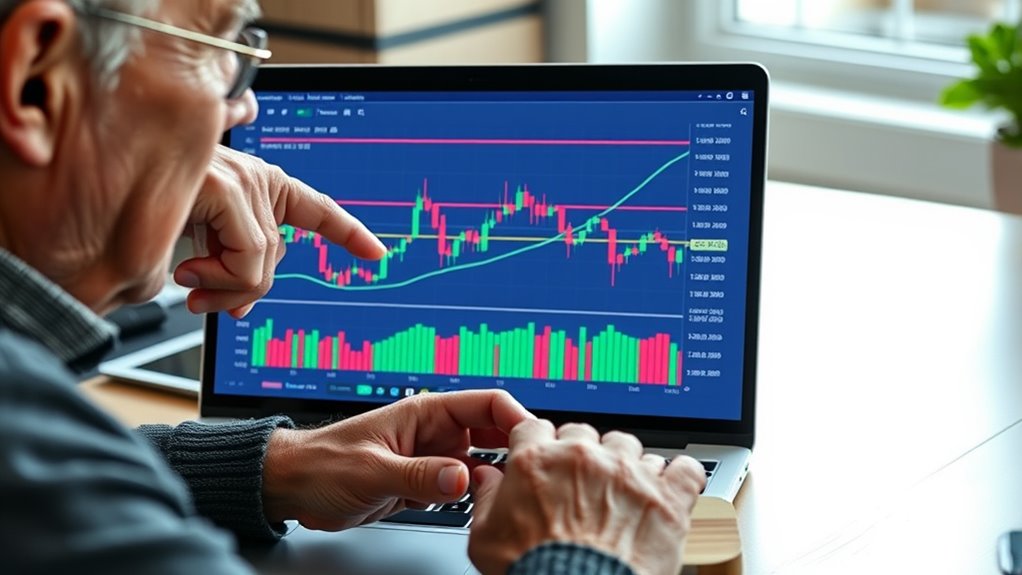
Support and resistance levels are essential tools to help you time your entries and exits in the volatile crypto market. By recognizing key price zones, you can better manage market fluctuations and reduce risks. Using these levels effectively allows you to make more informed decisions and protect your investments. Incorporating expert voice actors and immersive soundscapes into your analysis can further enhance your understanding of market dynamics.
Identifying Key Price Zones
Identifying key price zones is essential for managing risk and maximizing gains in volatile altcoins. Support and resistance levels highlight where prices tend to pause, reverse, or accelerate. Recognizing these zones helps you set realistic entry and exit points, reducing emotional decision-making. Additionally, understanding how HEPA filtration and other air purification technologies work can improve your awareness of environmental factors that affect health and well-being, similar to how recognizing support and resistance levels can improve your trading strategy.
Timing Entry and Exit
Using support and resistance levels effectively can considerably improve your timing when entering or exiting altcoin trades. These levels indicate where prices tend to reverse or pause, helping you avoid premature entries or exits. For example, buying near support zones and selling at resistance can maximize gains and minimize losses. Keep an eye on key levels for major coins like ETH and SOL to guide your decisions. Additionally, monitoring market trends can provide further insight into potential breakout or breakdown points, enhancing your strategic planning.
Managing Market Fluctuations
Market fluctuations can be challenging for retiree investors in crypto, but you can turn them to your advantage by effectively leveraging support and resistance levels. These levels act as key indicators of potential price reversals or breakouts, helping you plan your trades carefully. When prices approach support levels, consider it a good entry point to buy, as the price may rebound. Conversely, resistance levels signal when to sell or tighten stops before a potential downturn. Keep an eye on:
- Support zones like ETH at $1,700–$2,525
- Resistance points such as ETH at $3,000
- Price bounces near support levels
- Breakouts above resistance levels
- Confirmation from volatility indexes
Utilizing mindful decluttering strategies can help you stay organized and focused on your investment goals during volatile market conditions. Using these levels, you can better manage your risk and make smarter decisions amidst market swings.
Quantifying Volatility With Indexes and Data Tools

Quantifying volatility in the altcoin market relies on a variety of indexes and data tools that provide clear, measurable insights. The Altcoin Season Index helps you identify whether altcoins are outperforming Bitcoin, signaling potential entry or exit points. Support and resistance levels for coins like ETH and SOL offer concrete price zones to guide your trading decisions and limit losses. Volatility indexes track average price changes over the past 30 days, giving you a quantitative measure of risk. Monitoring futures contract volumes reveals institutional activity and possible market shifts, especially during high-volume periods. Stablecoin transaction volumes indicate liquidity levels, helping you assess market stability. Additionally, hydrocolloid patches can be used to soothe skin irritation caused by frequent touch or breakout treatments. Using these tools together allows you to better gauge market conditions, manage risk, and make more informed decisions in the volatile altcoin environment.
The Role of Futures and Stablecoin Volumes in Market Movements

Futures and stablecoin volumes play a crucial role in signaling potential market movements, especially during volatile periods. When futures trading volume spikes, it often indicates increased institutional interest or hedging activity that can precede sharp price swings. Similarly, high stablecoin transaction volumes suggest liquidity is flowing into or out of the market, impacting altcoin prices. To interpret these signals, watch for:
- Sudden increases in futures contracts, hinting at possible trend reversals
- Large stablecoin inflows, signaling buying pressure
- Elevated futures open interest, indicating market sentiment shifts
- Rising stablecoin outflows, implying profit-taking or liquidity withdrawal
- Divergences between futures and spot markets, hinting at upcoming volatility
Diversification Strategies for Risk Mitigation in Retirement Portfolios

To effectively manage risk in your retirement crypto portfolio, diversifying your investments is essential. You should include a mix of stablecoins and established altcoins like Ethereum or Solana, which tend to be less volatile than newer tokens. This approach helps cushion against sudden swings and preserves capital during market downturns. Avoid putting too much into meme coins or micro-cap altcoins, as their prices can spike or drop over 1000% rapidly, increasing your risk. Consider balancing high-risk, high-reward tokens with more stable assets. Monitoring support and resistance levels can guide your entry and exit points, while allocating across various tokens reduces exposure to individual asset volatility. Incorporating diversification strategies from investment principles helps you enjoy potential gains without exposing your retirement savings to unnecessary risk.
Setting Effective Stop-Loss Orders to Protect Your Investments

Setting effective stop-loss orders is a crucial strategy for retiree investors to limit potential losses during sudden market downturns. By pre-setting a sell point, you protect your investments from rapid declines. To choose the right level, consider support zones and recent lows. Incorporating mental clarity techniques into your decision-making process can help prevent emotional reactions that might lead to poor timing. Place stop-losses just below key support levels to avoid premature sales. Adjust your stop-loss as the market moves to lock in gains. Use trailing stop-losses to follow price increases without risking too much. Keep stop-loss distances narrow for highly volatile altcoins. Avoid setting stops too tight, which can trigger unnecessary sales during normal fluctuations.
Avoiding the Pitfalls of Ultra-Volatile Tokens and Meme Coins

Ultra-volatile tokens and meme coins can seem tempting due to their rapid price swings and potential for quick gains, but they carry significant risks that retirees should avoid. These assets often experience extreme fluctuations, sometimes exceeding 1000% in a short period, making them unpredictable and difficult to time. Meme coins, driven by hype and social media trends, lack intrinsic value and liquidity, increasing the chance of sudden crashes. Micro-cap altcoins are equally risky, with low liquidity amplifying potential losses. Instead, focus on established altcoins like Ethereum or Bitcoin, which, despite volatility, have more stable histories. Avoid chasing quick profits in these risky tokens. Your best bet is a diversified portfolio emphasizing stability and proven assets, reducing exposure to unpredictable, ultra-volatile tokens.
Frequently Asked Questions
How Can Retirees Identify the Most Stable Altcoins for Long-Term Holding?
You can identify stable altcoins by focusing on large-cap options like Ethereum and Solana, which tend to have lower volatility compared to smaller tokens. Use tools like the Altcoin Season Index and support/resistance levels to gauge market trends and entry points. Diversify your holdings with stablecoins and established altcoins, set stop-loss orders to limit losses, and avoid ultra-volatile meme coins and micro-caps to protect your long-term investments.
What Are the Signs of an Impending Altcoin Market Correction or Crash?
You’ll notice signs of an impending altcoin correction when the Altcoin Season Index drops below 75, signaling a shift away from altcoins. Watch for sharp declines in major coins like ETH and SOL, especially if support levels break. Increasing volatility indexes and high futures contract volumes can also indicate rising risk. Additionally, a sudden surge in meme coin trading or liquidity drops in stablecoins may foreshadow a market downturn.
How Often Should Retirees Review and Adjust Their Crypto Portfolios?
Like a seasoned sailor checks the horizon regularly, you should review your crypto portfolio at least quarterly. This helps you stay ahead of market swings and volatility, especially with altcoins. Adjust your holdings based on performance, market trends, and your risk tolerance. If you notice heightened volatility or significant price drops, consider rebalancing sooner. Staying proactive guarantees your investments align with your retirement goals and risk comfort.
Are There Any Specific Tools to Predict Short-Term Altcoin Price Spikes?
Yes, you can use tools like the Altcoin Season Index to gauge when altcoins outperform Bitcoin, signaling potential price spikes. Support and resistance levels help identify entry points before rapid moves. Volatility indexes track recent price swings, giving you a quantitative sense of risk. Monitoring futures contract volumes also reveals institutional activity that often precedes price surges. Combining these tools improves your ability to predict short-term altcoin spikes effectively.
How Does Macroeconomic News Influence Altcoin Volatility in Retirement Planning?
Imagine macroeconomic news as a gust of wind shaking a delicate tree; it causes sudden swings in altcoin prices. When economic indicators or policy changes signal uncertainty, altcoins become more volatile, risking your retirement savings. You need to stay alert, monitor news closely, and adjust your portfolio proactively. This way, you can weather the storm and keep your crypto journey steady, even amid unpredictable economic weather.
Conclusion
While altcoin volatility can seem intimidating, you don’t have to avoid crypto altogether. By understanding market indicators, setting clear stop-losses, and diversifying your portfolio, you can manage risks effectively. Some might think timing the market is impossible, but using tools like the Altcoin Season Index and support levels can improve your chances. With careful planning, you can enjoy potential growth without exposing your retirement savings to unnecessary danger.