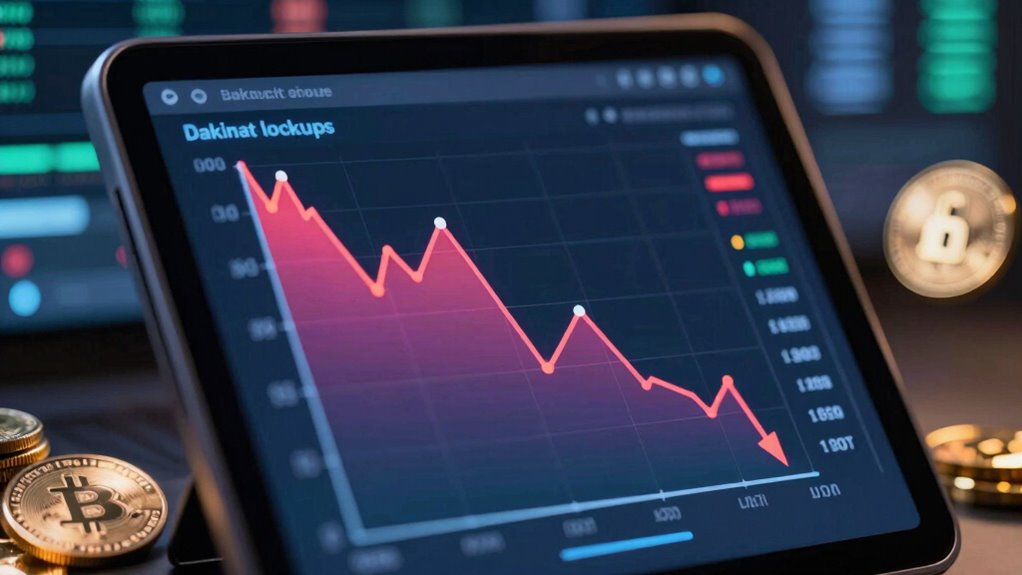

Staking lockups limit your ability to react swiftly to market changes, making small losses potentially grow into large ones. When assets are locked, you can’t sell quickly during downturns or capitalize on surges, increasing your exposure to volatility. Security vulnerabilities or platform issues can add to your risks, worsening losses unexpectedly. The longer your assets stay locked, the more you miss essential opportunities and put your investment at greater risk. If you explore further, you’ll discover how to better manage these dangers.

Get home office essentials delivered free — and shop member deals
- Fast, free delivery on millions of items
- Access to Prime Big Deal Days deals on October 6–7
- Prime Video, Amazon Music and more included
Key Takeaways
- Lockup periods prevent asset sales during downturns, causing small losses to deepen into larger ones.
- Inability to react swiftly to market drops can result in prolonged exposure and amplified losses.
- Extended lockups increase vulnerability to market volatility, turning minor declines into significant declines.
- Platform security risks or technical failures during lockups can lead to substantial asset losses.
- Sudden market crashes while assets are locked hinder quick recovery, worsening initial small losses.

Staking lockups can seem like a straightforward way to earn passive income with cryptocurrencies, but they come with considerable risks that you need to understand. When you commit your tokens to a staking contract, you often face liquidity constraints, meaning you can’t access or sell your assets during the lockup period. This restriction can turn into a major problem if the market moves against you or if an unexpected opportunity arises elsewhere. You might find yourself unable to capitalize on sudden price surges or to cut losses quickly, leading to larger-than-expected losses.
Lockup periods limit access, preventing quick reactions to market changes and increasing risks of missed opportunities and larger losses.
Opportunity costs are another key risk. While your tokens are locked up, you miss out on other potentially profitable investments or trades. If the market shifts in a way that makes other assets more attractive, you can’t reposition your funds without incurring penalties or waiting until the lockup ends. This delay can markedly diminish your earnings, especially in a volatile environment. What starts as a small loss—say, a slightly declining token value—can snowball into a larger one if you’re forced to hold during a downturn or miss better opportunities elsewhere. Additionally, the potential for market volatility to impact your holdings increases with longer lockup periods, adding another layer of risk to consider.
Furthermore, the longer your tokens are locked, the more exposed you are to market fluctuations. A temporary dip might seem manageable at first, but if the lockup extends during a sustained decline, your position could deteriorate further. Since you can’t withdraw early without penalties, you might end up holding a depreciating asset for longer than you anticipated, magnifying small initial losses into substantial ones. The inability to adapt quickly puts you at a disadvantage compared to active traders who can react to market changes. Plus, market manipulation can sometimes artificially inflate or deflate token prices, which locked-in investors are unable to respond to promptly, heightening the risk of unexpected losses. This makes it crucial to assess the security measures and overall reliability of the staking platform before committing your assets. A lack of transparency or weak safeguards can further increase your vulnerability to theft or fraud.
Market conditions are unpredictable, and staking lockups can amplify this uncertainty. A sudden market crash or network issue can cause the value of your staked tokens to plummet, but you’re stuck until the lockup period ends. Small losses at the outset, which might seem manageable, can grow into significant financial setbacks because you can’t react as swiftly as you would in a liquid market. Additionally, if the staking platform faces technical problems or security breaches, your staked assets could be at risk of loss or theft, further increasing your exposure. This emphasizes the importance of understanding staking platform security and its impact on your investments. Being aware of the platform’s security measures and history can help mitigate some of these risks.
In essence, what might look like a modest, manageable loss at first can easily escalate into a larger one due to liquidity constraints and opportunity costs. Lockups limit your flexibility, making it harder to respond to market changes. This rigidity can turn small, temporary setbacks into substantial financial hits, especially when market volatility is high. Staying aware of these risks helps you make smarter decisions about when and where to stake your crypto assets. Recognizing the risks of lockup periods is essential for protecting your investments and avoiding unexpected losses.
cryptocurrency staking lockup period
As an affiliate, we earn on qualifying purchases.
As an affiliate, we earn on qualifying purchases.
Frequently Asked Questions
Can Staking Lockups Affect My Tax Obligations?
Staking lockups can indeed affect your tax obligations. When you stake your crypto, you may face specific tax implications, like recognizing income when rewards are earned or when you withdraw. You also have reporting requirements to take into account, as you need to document your staking activity accurately. Failing to track these transactions correctly could lead to misreported income, resulting in penalties or legal issues. Stay informed and consult a tax professional for guidance.
Are There Any Trusted Platforms With Minimal Lockup Periods?
Yes, some trusted platforms offer minimal lockup periods, balancing platform security with a positive user experience. You should look for platforms that prioritize security features like multi-factor authentication and cold storage. These platforms often provide flexible staking options, making it easier for you to manage your assets without long-term commitments. Always research user reviews and security protocols to guarantee your investments stay safe while enjoying a smooth staking process.
How Do Lockups Impact Liquidity During Market Downturns?
During market downturns, lockups can dramatically impact your liquidity and expose you to rising price volatility. As your assets are restricted, you can’t quickly respond to sudden dips, risking larger losses. Limited market liquidity means fewer opportunities to sell at favorable prices, intensifying the downturn’s effects. You’ll feel trapped, unable to adapt swiftly, which could turn small declines into significant financial setbacks. Stay alert—lockups shape your ability to navigate volatile markets.
Can I Withdraw Staked Assets Before the Lockup Ends?
You generally can’t withdraw staked assets before the lockup ends, as many protocols impose strict early withdrawal restrictions. Attempting early withdrawal might lead to liquidation risks, where your staked assets could be forfeited or penalized. These rules are in place to maintain network stability, so it’s vital to plan your staking accordingly. If you need liquidity sooner, consider options like liquid staking or wait until the lockup period concludes.
What Are the Best Strategies to Mitigate Lockup Risks?
To mitigate lockup risks, focus on liquidity management by avoiding over-concentrating your assets in a single staking pool. Diversify your investments across multiple tokens and platforms to spread risk. Keep some assets liquid to respond quickly to market changes, reducing potential losses during lockup periods. Regularly reassess your staking strategy to make certain it aligns with your risk tolerance, helping you protect your holdings from unexpected downturns.
crypto staking platform security
As an affiliate, we earn on qualifying purchases.
As an affiliate, we earn on qualifying purchases.
Conclusion
Just remember, staking lockups are like holding a delicate lantern in a storm—they can either illuminate your path or shatter unexpectedly. While the glow might seem steady, a sudden gust of market turbulence can turn that small flicker into a flickering shadow of loss. Stay vigilant; treat your staked assets as precious flames. Guard them wisely, because what’s meant to guide you could just as easily be snuffed out by unseen tempests.
As an affiliate, we earn on qualifying purchases.
As an affiliate, we earn on qualifying purchases.
Fall Picks
fall essentials
As an affiliate, we earn on qualifying purchases.