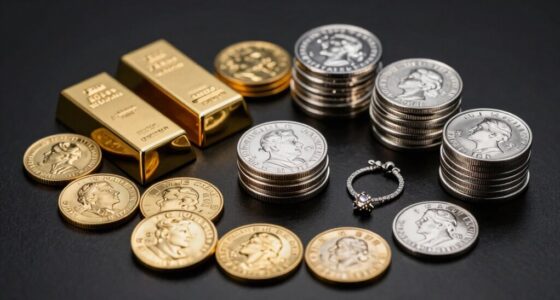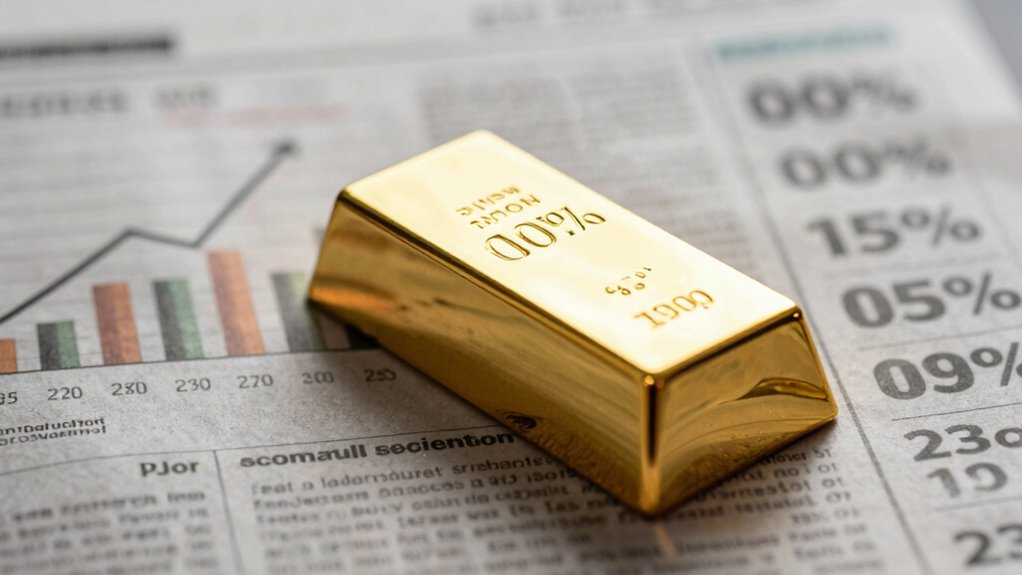

As inflation expectations grow, you’ll notice gold prices tend to increase gradually, as investors seek safety from currency devaluation. When inflation fears rise, you might see a shift in portfolios toward gold, boosting demand. Market perceptions adjust over time, causing steady price movements rather than sudden jumps. This relationship is influenced by central bank policies and broader economic signals, which shape how inflation expectations impact gold’s value. Continuing further will reveal how these factors interact more deeply.

Get home office essentials delivered free — and shop member deals
- Fast, free delivery on millions of items
- Access to Prime Big Deal Days deals on October 6–7
- Prime Video, Amazon Music and more included
Key Takeaways
- Rising inflation expectations increase demand for gold as a hedge, gradually pushing up its price over time.
- Central bank signals on interest rates influence market inflation outlooks, affecting gold’s long-term valuation.
- Market perception adjustments lead to steady gold price increases as inflation fears persist.
- Expectation of currency devaluation due to inflation enhances gold’s attractiveness, raising its price gradually.
- Broader economic indicators shape inflation sentiment, driving sustained gold price movements over time.
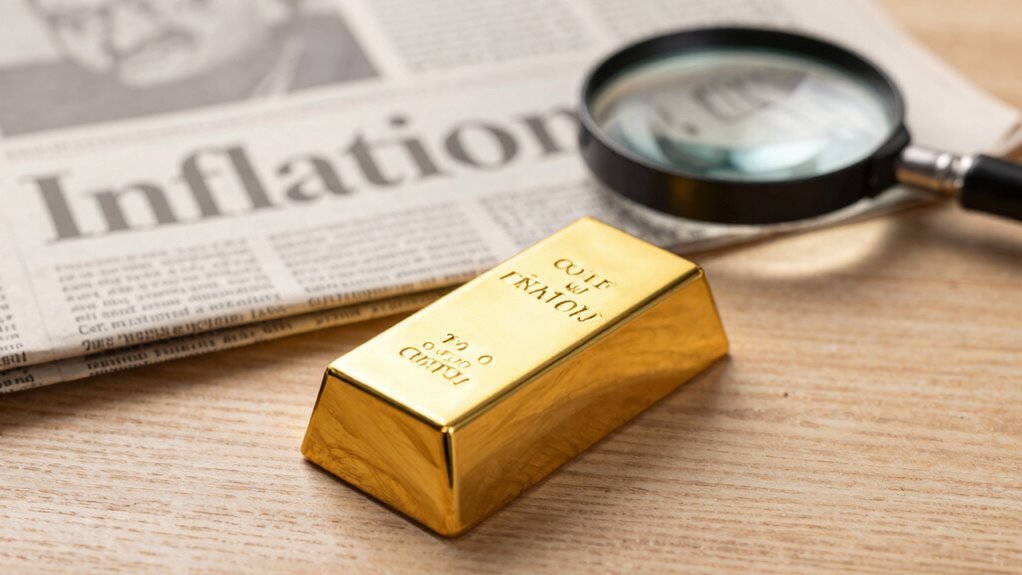
Have you ever wondered how rising inflation expectations influence gold prices? When people start to believe that prices will keep climbing, they often turn to gold as a safe haven. This shift happens because inflation expectations can lead to currency devaluation, making paper money less valuable in the long run. When the value of a currency drops, investors look for assets that can hold their worth, and gold has historically been a reliable store of value. As inflation expectations grow, the demand for gold tends to increase, pushing its price higher.
Central banks’ monetary policy plays a crucial role in shaping these expectations. If policymakers signal that they plan to keep interest rates low or even cut them, it can suggest that they are willing to tolerate higher inflation to boost economic growth. These signals often lead markets to anticipate future inflation, which then influences gold prices. When investors sense that monetary policy might lead to currency devaluation, they often buy more gold to hedge against the decreasing purchasing power of fiat currencies. This behavior can cause a gradual rise in gold prices over time.
The relationship between inflation expectations and gold isn’t always immediate; it develops as market perceptions adjust to new information. If inflation fears become widespread, investors might start reallocating their portfolios toward gold, causing prices to climb steadily. Conversely, if monetary authorities take steps to curb inflation, such as raising interest rates, it can dampen gold’s appeal temporarily, causing prices to stabilize or decline. But if inflation expectations persist, gold often remains a favored hedge, and prices stay elevated. Additionally, market sentiment can amplify these effects, leading to more pronounced fluctuations in gold prices.
Recognizing how inflation expectations influence currency devaluation helps investors understand the underlying factors driving gold’s value. A deeper understanding of economic indicators can help anticipate shifts in inflation sentiment and how they might impact gold prices. Furthermore, understanding these dynamics can provide insights into how inflation expectations are formed and how they can be influenced by broader economic indicators, ultimately assisting investors in making more informed decisions. In essence, as your understanding deepens, you’ll see how inflation expectations act as a lens through which gold prices are filtered over time. They shape investor behavior, influence central bank policies, and ultimately determine how valuable gold remains as an asset in uncertain economic climates. Recognizing these dynamics helps you anticipate potential movements in gold prices based on prevailing inflation sentiments.
As an affiliate, we earn on qualifying purchases.
Frequently Asked Questions
How Do Central Banks Influence Inflation Expectations?
Central banks influence inflation expectations through their monetary policy and inflation targeting strategies. When they signal a commitment to keep inflation around a specific rate, you understand that they’ll adjust interest rates or other tools to meet this goal. This communication shapes your expectations about future inflation, which in turn impacts gold prices. If you believe inflation will stay stable, you might see less demand for gold as a hedge against rising prices.
What Role Do Geopolitical Events Play in Gold Prices?
Geopolitical events considerably impact gold prices because they threaten geopolitical stability and often lead to economic sanctions, which increase uncertainty. When conflicts or sanctions emerge, you’ll likely see gold’s appeal rise as a safe haven investment. These events make investors seek stability, pushing gold prices upward. Conversely, resolution or easing tensions can decrease gold’s appeal, causing prices to fall. In this way, geopolitical events directly influence gold’s market value.
How Does Currency Strength Affect Gold Investment?
When currency fluctuations shake the exchange rate, your gold investment can skyrocket or plummet like a roller coaster. A weaker currency makes gold more expensive globally, boosting its price as investors rush in. Conversely, a stronger currency suppresses gold prices, making your holdings less valuable. So, keep a close eye on currency strength, because it wields enormous power over your gold’s value, transforming your investment’s fate overnight.
Are Inflation Expectations More Impactful in Certain Economic Cycles?
Yes, inflation expectations are more impactful during specific economic cycles, especially during periods of economic uncertainty or recovery. When inflation psychology shifts and consumer sentiment turns cautious, people often turn to gold as a hedge. These changes influence gold prices more considerably, as investors seek safety. During boom periods, inflation expectations tend to have less effect, since confidence in the economy keeps investor focus elsewhere.
How Do Alternative Assets Compare to Gold During Inflation Periods?
During inflation periods, you see alternative assets like cryptocurrencies and real estate acting as shields, much like a fortress amid stormy seas. Compared to gold, these assets often show higher commodity volatility, which can either amplify gains or deepen losses. Investor sentiment plays a vital role, sometimes favoring these alternatives for quick growth, but it can also cause sudden swings. Gold remains the steady lighthouse, guiding your portfolio through turbulent economic waters.
As an affiliate, we earn on qualifying purchases.
Conclusion
Understanding how inflation expectations influence gold prices reveals just how sensitive markets are to future economic fears. Did you know that during periods of rising inflation expectations, gold prices have historically surged by an average of 15% within six months? This shows how your anticipation of inflation can profoundly impact your investments. Keep an eye on those expectations—they’re like a secret signal guiding gold’s movement, helping you stay ahead in the ever-changing financial landscape.
As an affiliate, we earn on qualifying purchases.
As an affiliate, we earn on qualifying purchases.
Fall Picks
fall essentials
As an affiliate, we earn on qualifying purchases.