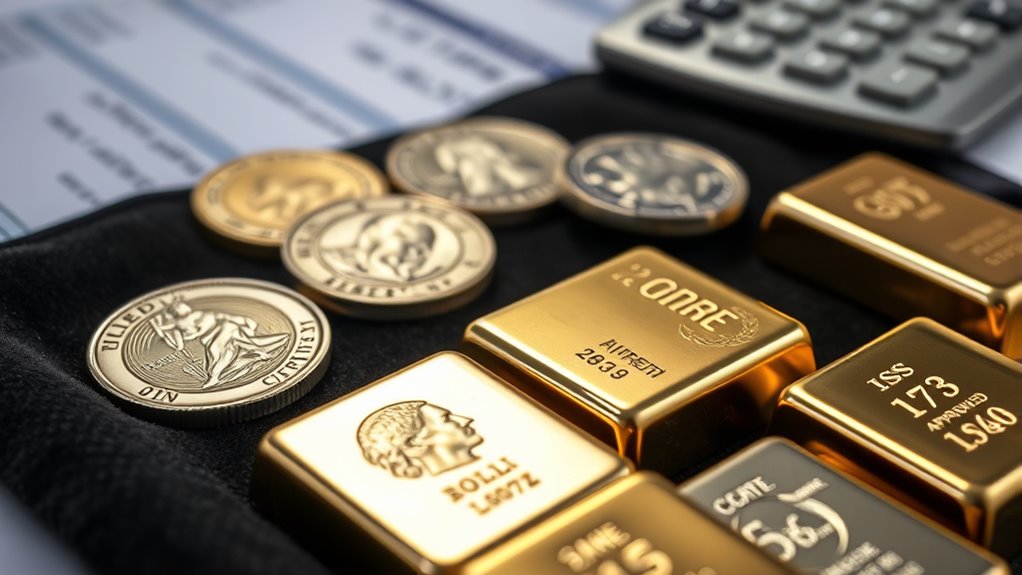

IRS-approved precious metals for IRAs include government-minted coins like American Gold Eagles, Canadian Maple Leafs, and Austrian Philharmonics, which meet purity and authenticity standards. Bars and rounds must also adhere to strict purity levels, be produced by recognized refiners, and stored in IRS-approved depositories. Knowing the specific size, purity, and storage requirements helps guarantee your investment stays compliant. Continue here to uncover detailed guidelines and ensure your metals qualify for tax-advantaged IRAs.
Key Takeaways
- Eligible coins include American Gold and Silver Eagles, Canadian Maple Leafs, and Austrian Philharmonics, meeting purity and condition standards.
- Approved bars and rounds must have minimum purity of 99.5% for gold and 99.9% for silver, and be in uncirculated condition.
- Coins and bars must be produced by recognized authorities or accredited refiners to qualify for IRAs.
- All metals must meet specific size and purity standards, such as 1/10 to 1-ounce coins and bars up to 400 ounces for gold.
- Metals must be stored in IRS-approved depositories; home storage is not permitted for IRA-eligible assets.
Eligible Precious Metal Coins for IRAs
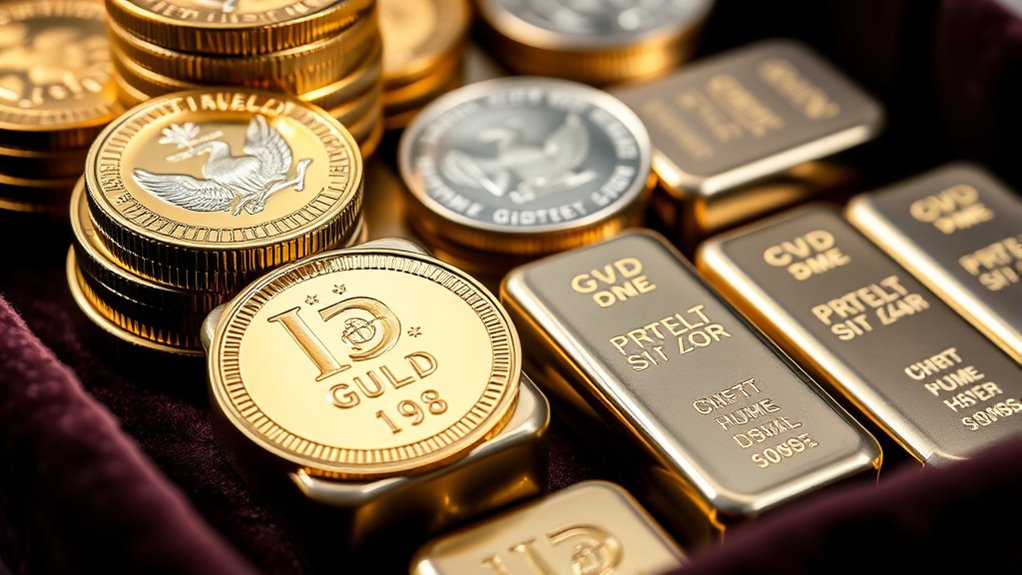
Eligible precious metal coins for IRAs include government-minted options like American Gold and Silver Eagles, Canadian Maple Leafs, and Austrian Philharmonics. These coins meet the IRS standards for purity and authenticity, making them suitable for retirement accounts. American Gold Eagles are popular despite their slightly lower purity (91.67%) but are explicitly approved by the IRS. Canadian Maple Leafs and Austrian Philharmonics must meet purity requirements—99.9% for silver and 99.95% for platinum, for example—and are produced by reputable mints. Coins must be in excellent, uncirculated condition, free from damage or wear. Additionally, proof versions are allowed if they remain in original packaging with certification. These coins are widely recognized, liquid, and easy to verify, making them ideal choices for IRA investments. Authenticity standards ensure that coins meet IRS requirements and maintain their value over time.
Approved Precious Metal Bars and Rounds
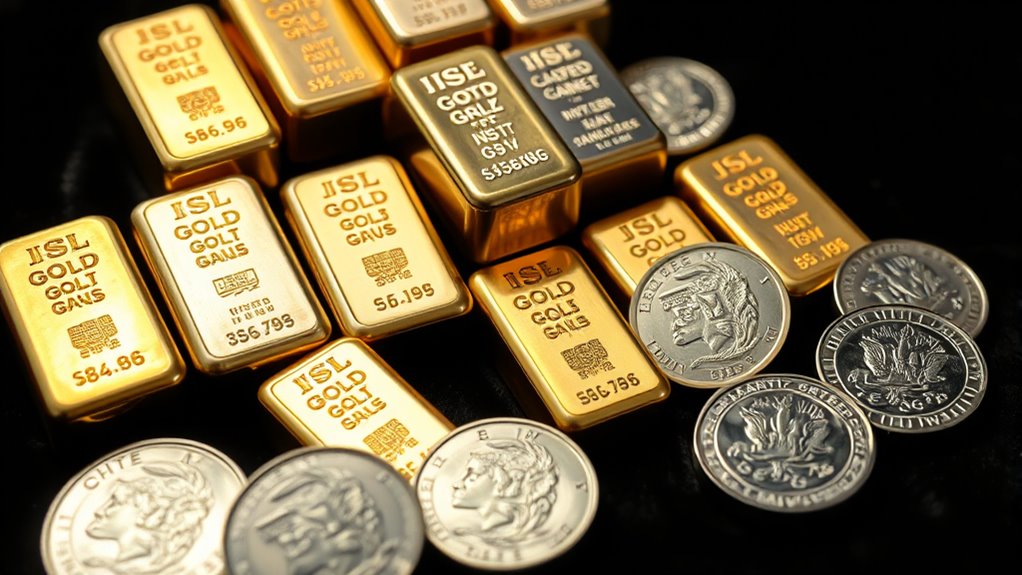
Precious metal bars and rounds can be a cost-effective way to diversify your IRA holdings, provided they meet specific IRS standards. To qualify, they must adhere to strict purity and manufacturing criteria. These products are usually produced by accredited refiners or government mints, ensuring authenticity and quality. When selecting bars or rounds, keep in mind that:
Precious metal bars and rounds must meet IRS purity and manufacturing standards for IRA inclusion.
- They must meet purity standards (e.g., gold 99.5%, silver 99.9%, platinum 99.95%, palladium 99.95%).
- They should be in brilliant uncirculated condition, free from damage or blemishes.
- Bars are typically larger, with maximum weights of 400 oz for gold and 1,000 oz for silver.
- Rounds are coin-like but non-government issued, yet must meet purity and producer accreditation.
- All products must be stored in an IRS-approved depository, not at home.
- Proper storage and maintenance are essential to keep your IRA assets compliant and secure.
Following these guidelines helps guarantee your IRA assets remain compliant and secure.
Producer Standards and Authenticity Requirements

To qualify for an IRA, your precious metals must be produced by a recognized authority or an accredited refiner. The IRS requires coins, bars, and rounds to be minted by a sovereign government or an entity accredited by major exchanges like NYMEX, COMEX, or the LBMA. Foreign coins are eligible if they meet purity standards and are produced by reputable authorities, such as Canadian or Austrian mints. Your bullion must be in excellent, undamaged condition—proof coins should remain sealed in original packaging with certificates. South African Krugerrands, however, are excluded due to purity issues. Verify the producer’s accreditation and authenticity are verifiable, as products lacking proper certification or produced by unrecognized sources won’t meet IRS standards for IRA inclusion. Additionally, adherence to industry standards ensures the coins or bars meet the security and authenticity requirements set forth by recognized authorities.
Purity and Size Specifications for IRA Metals
When investing in precious metals for your IRA, strict purity and size standards guarantee your assets meet IRS requirements. These criteria verify your metals are genuine, high-quality, and eligible for tax-advantaged growth. To qualify, metals must meet minimum purity standards, such as 99.5% for gold and 99.9% for silver, with certain exceptions like the American Gold Eagle. Size specifications include specific weights: coins in 1/10 to 1-ounce denominations and bars up to 400 ounces. Be mindful that fractional coins are allowed if minted to standards. Additionally, irregular sizes or custom products are not permitted unless they meet all other criteria. Proper adherence guarantees your metals qualify for IRA inclusion and maintain their tax-advantaged status. Ensuring your metals are vetted for safety and compliance is essential for a successful investment.
Storage and Regulatory Compliance for IRA Metals
Are you aware that IRS regulations strictly require your IRA metals to be stored in approved depositories? You cannot keep them at home or in personal possession. The metals must be held by a qualified bank or an IRS-approved nonbank trustee, ensuring they’re stored securely and in compliance with federal rules. These approved depositories provide insured, segregated storage, protecting your assets from theft or damage. You won’t be able to access the physical metals while they’re in the IRA, so you must coordinate with your custodian for any transfers or distributions. Failure to comply with storage requirements can disqualify your IRA, leading to taxes and penalties. Always verify that your chosen depository is IRS-approved to maintain the tax-advantaged status of your precious metals investment. Numerous storage options are available to meet IRS standards and safeguard your assets.
Frequently Asked Questions
Can I Include Collectible or Numismatic Coins in My IRA?
You can’t include collectible or numismatic coins in your IRA. The IRS restricts eligible metals to those meeting specific purity standards and produced by approved mints or refiners. Collectible coins usually don’t meet these purity requirements or aren’t produced by authorized sources, so they’re excluded. To stay compliant and avoid penalties, stick with government-minted bullion coins, bars, or rounds that meet the IRS standards for IRAs.
Are Foreign Coins Automatically Eligible for IRA Inclusion?
Think of foreign coins as international travelers trying to find a home in your IRA. They’re not automatically eligible; they must meet strict standards like purity (at least 99.9%) and be produced by reputable mints. Think of these coins as passport holders—they need proper documentation and certification. If they pass muster, they can join your IRA’s treasure chest; if not, they’re left at customs.
What Happens if My Metals Are Stored Improperly?
If your metals are stored improperly, your IRA could be disqualified, leading to significant tax penalties. You might face IRS audits, and the IRS could treat your metals as a distribution, triggering taxes and potential early withdrawal penalties. To avoid this, make certain your metals are stored in an IRS-approved depository with a qualified trustee. Proper storage protects your assets, maintains tax advantages, and keeps your IRA compliant with regulations.
Are All Government-Minted Coins Ira-Eligible Regardless of Condition?
Not all government-minted coins qualify for IRAs regardless of condition. To be eligible, coins must meet specific purity standards and be in excellent, uncirculated condition without damage. Proof coins are acceptable if they remain sealed in their original packaging with certification. Coins that are damaged, heavily circulated, or not in pristine condition typically don’t meet the IRS requirements, so you should verify your coins are properly preserved.
Can I Convert My Physical Precious Metals Into an IRA Directly?
Over 80% of investors prefer converting their physical precious metals into an IRA to benefit from tax advantages. Yes, you can directly convert your metals into an IRA by working with a custodian and a depository. You’ll need to make certain your metals meet IRS standards and transfer ownership properly, avoiding penalties. This process involves a rollover or transfer, making it seamless if you follow the right procedures.
Conclusion
So, while it might seem complicated to find IRS-approved precious metals, remember, sticking to the approved coins and bars keeps your IRA compliant—no surprises there. It’s almost ironic how the government’s strict standards aim to protect investors, yet they make it so easy to get caught up in the details. Ultimately, following the rules may be the simplest way to guarantee your precious metals grow securely—without any unexpected “ironic” hurdles along the way.