When outages strike, having a reliable, expandable solar power station can keep your essential devices running. The Jackery HomePower 3600 Plus stands out as the overall best due to its balance of capacity and portability, while the EF ECOFLOW DELTA Pro offers unmatched power with extensive expandability. Another key consideration is how easily these units can grow to meet future needs, but tradeoffs often involve size, price, or complexity. Continue reading for a detailed comparison of the top options and what makes each suitable for different needs.

Get home office essentials delivered free with Prime
- Fast, free delivery on millions of items
- Prime Video, Amazon Music and more included
- Member-only deals all year
Complete the kit


Key Takeaways
- The top picks combine high capacity with straightforward expandability, ensuring they can grow with your outage needs.
- Battery chemistry and build quality significantly impact longevity and performance during prolonged outages.
- Ease of expansion varies: some units allow plug-and-play modules, while others require more setup and investment.
- Power output capacity is a major differentiator—higher wattage models support more appliances simultaneously.
- Tradeoffs often involve size, weight, and price—more expandable units tend to be bulkier and more expensive.
| Jackery HomePower 3600 Plus Portable Power Station with Two 200W Solar Panels |  | Best Overall for High Capacity and Versatility | Battery capacity: 3,584Wh | AC output: 3,600W | Expandable capacity: Up to 21kWh per unit | VIEW LATEST PRICE | See Our Full Breakdown |
| AFERIY 3840Wh Portable Power Station, Expandable Solar Generator to 11520Wh |  | Best for Affordable, Long-Term Home Backup | Battery capacity: 3840Wh | Expandable capacity: Up to 11.5kWh | UPS transfer time: <10ms | VIEW LATEST PRICE | See Our Full Breakdown |
| EF ECOFLOW DELTA Pro Portable Power Station, 3600Wh, 3600W AC Output | 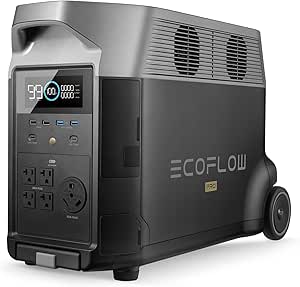 | Best for High Power and Smart Integration | Battery capacity: 3600Wh | Expandable capacity: Up to 25kWh | Maximum output: 4500W | VIEW LATEST PRICE | See Our Full Breakdown |
| Jackery Solar Generator 1000 V2 with 200W Solar Panel |  | Best for Compact, Portable Power with Solar Flexibility | Battery capacity: 1,070Wh | Peak surge: 3,000W | Recharging time: 1.7 hours (with mode enabled) | VIEW LATEST PRICE | See Our Full Breakdown |
| ABOK Ark3600 Portable Power Station with 3×200W Solar Panels |  | Best for Long-Lasting, Expandable Home Backup | Battery capacity: 3840Wh | Expandable capacity: Up to 11520Wh | Peak power: 7200W | VIEW LATEST PRICE | See Our Full Breakdown |
| GROWATT HELIOS 3600 Portable Power Station, 3600Wh LFP Solar Generator |  | Best Overall for Long-Duration Home Backup | Wattage: 3600 watts | Battery Capacity: 3600Wh | Expandability: up to 36kWh | VIEW LATEST PRICE | See Our Full Breakdown |
| EF ECOFLOW DELTA Pro 3 Portable Power Station, 4096Wh, 4000W AC Output |  | Best for Versatile, Fast-Response Backup | Watt-hours: 4096Wh | Max Output: 12,000W with X-Boost | Battery Type: Lithium Iron Phosphate (LFP) | VIEW LATEST PRICE | See Our Full Breakdown |
| expandable solar power station for outage | Weight | Battery capacity | Expandable capacity |
|---|---|---|---|
| Jackery HomePower 3600 Plus Po | 77.2 lb | 3,584Wh | Up to 21kWh per unit |
| AFERIY 3840Wh Portable Power S | 80.46 lb | 3840Wh | Up to 11.5kWh |
| EF ECOFLOW DELTA Pro Portable | 99 lb | 3600Wh | Up to 25kWh |
| Jackery Solar Generator 1000 V | 23.8 lbs | 1,070Wh | — |
| ABOK Ark3600 Portable Power St | 92 lb | 3840Wh | Up to 11520Wh |
| GROWATT HELIOS 3600 Portable P | 51 pounds | 3600Wh | — |
| EF ECOFLOW DELTA Pro 3 Portabl | 115 pounds | — | — |
More Details on Our Top Picks
Jackery HomePower 3600 Plus Portable Power Station with Two 200W Solar Panels
The Jackery HomePower 3600 Plus stands out for its impressive 3,584Wh capacity and 3,600W continuous output, making it well-suited for heavy-duty outage needs. Its ability to expand up to 21kWh with multiple units offers scalable power for larger homes or prolonged outages. Compared to the EF ECOFLOW DELTA Pro, it provides similar capacity but adds hybrid charging options including gas generator support, which is advantageous in off-grid scenarios. However, its weight of over 77 pounds and separate shipment of panels can be a drawback for those needing a truly portable, quick-to-set-up solution. The inclusion of an LFP battery rated for 6,000 cycles means durability and longevity are assured, but the bulk and weight limit its convenience for frequent transport.
Pros:- High 3,584Wh capacity with expandable options up to 21kWh
- Supports hybrid charging including gas generator for off-grid independence
- LFP battery rated for 6,000 cycles ensures long-term durability
- Wheeled design with telescopic handle for easier mobility
Cons:- Heavy at 77.2 pounds, making it less portable for frequent transport
- Power station and solar panels may arrive separately, complicating setup
Best for: Homeowners seeking a robust, expandable power solution capable of supporting large appliances during extended outages.
Not ideal for: Individuals needing a lightweight, portable unit for frequent moves or small space storage, due to its heavy weight and size.
- Battery capacity:3,584Wh
- AC output:3,600W
- Expandable capacity:Up to 21kWh per unit
- Battery type:LFP
- Charging options:Hybrid AC+DC, AC, solar, gas generator
- Weight:77.2 lb
- Dimensions:19.3 × 15.2 × 12.2 in
Our verdict“This model is ideal for users who prioritize high capacity and expandability over portability, suitable for serious home backup needs.”
AFERIY 3840Wh Portable Power Station, Expandable Solar Generator to 11520Wh
The AFERIY 3840Wh stands out for its combination of a solid 3,840Wh capacity and the ability to expand up to 11.5kWh, making it a practical choice for those needing reliable home backup during outages. Its built-in UPS with <10ms transfer time provides seamless switching, which is a key advantage over the less sophisticated switching methods of the Jackery HomePower. Compared to the EF ECOFLOW DELTA Pro, it offers a more affordable entry point with comparable capacity and expansion potential, but it is slightly heavier and lacks the same extensive app control. Its support for multiple recharging methods, including solar, car, and AC, makes it flexible for off-grid use, though the need for separate solar panels and the heavier weight may limit portability.
Pros:- Expandable capacity up to 11.5kWh for longer outage support
- Seamless UPS <10ms transfer for critical devices
- Multiple recharging options including solar, car, and AC
- Built-in app control for remote monitoring and scheduling
Cons:- Relatively heavy at over 80 pounds, limiting portability
- Power station and panels ship separately, adding to setup complexity
Best for: Budget-conscious homeowners who want a reliable, expandable backup system with seamless transition features.
Not ideal for: People looking for the lightest, most portable units for frequent outdoor use or travel, due to its weight and bulk.
- Battery capacity:3840Wh
- Expandable capacity:Up to 11.5kWh
- UPS transfer time:<10ms
- Weight:80.46 lb
- Recharging methods:AC, solar, car
- Number of ports:15
Our verdict“Ideal for users seeking an affordable, expandable backup with seamless power transfer, especially for home use during outages.”
EF ECOFLOW DELTA Pro Portable Power Station, 3600Wh, 3600W AC Output
The EF ECOFLOW DELTA Pro is a leading choice for those wanting a highly expandable power station, with a base capacity of 3,600Wh and the ability to grow up to 25kWh with extra batteries or compatible generators. Its 15 output ports and app control via Wi-Fi or Bluetooth make it highly versatile for managing multiple devices. Compared to the Jackery model, the DELTA Pro offers slightly more refined app features and a wider array of charging options, including EV stations, which can be advantageous for EV owners or those with solar setups. Its weight of 99 pounds is significant, but its robust design and extensive expandability make it suitable for serious backup scenarios where power needs are substantial. The full recharge times, depending on the method, can be lengthy, which is a tradeoff for its high capacity.
Pros:- Expandable capacity up to 25kWh with additional batteries
- 15 output ports and app control for comprehensive device management
- Supports multiple charging methods including solar and EV stations
- 4500W peak output with X-Boost technology for heavy appliances
Cons:- Heavy at nearly 100 pounds, less suitable for frequent portability
- Recharge times can be slow depending on the input method
Best for: Tech-savvy users seeking a highly expandable, smart-controlled power station for long-term outages or off-grid living.
Not ideal for: Individuals needing a lightweight, portable unit for camping or quick outdoor setups, due to its weight and size.
- Battery capacity:3600Wh
- Expandable capacity:Up to 25kWh
- Maximum output:4500W
- Number of ports:15
- Weight:99 lb
- Recharging options:Wall, solar, EV station, car
Our verdict“Best suited for users who require a high-capacity, expandable system with smart app control for long-term backup needs.”
Jackery Solar Generator 1000 V2 with 200W Solar Panel
The Jackery Solar Generator 1000 V2 offers a portable solution with 1,070Wh capacity and a 1,500W AC output, ideal for camping, road trips, or small backup needs. Its 200W solar panel allows for recharging in sunny conditions, but the unit’s relatively modest capacity limits its usefulness for larger appliances or extended outages. Compared to the larger models like the EF ECOFLOW DELTA Pro or Ark3600, it excels in portability and ease of setup, yet requires longer recharge times and additional units for higher power demands. The need to enable emergency charging mode for one-hour fast charging can be inconvenient. Still, the battery’s LiFePO4 chemistry ensures over 4,000 charge cycles, providing durability over many years of use.
Pros:- High 1,070Wh capacity with 1,500W output and surge up to 3,000W
- Includes a 200W solar panel for flexible recharging
- LiFePO4 battery with over 4,000 cycles for durability
- Multiple USB and AC ports with app control
Cons:- One-hour fast charge requires enabling a specific mode in the app
- Generator and solar panel ship separately, adding complexity
Best for: Campers and small household users needing a lightweight, solar-compatible backup for brief outages or outdoor adventures.
Not ideal for: Households seeking a comprehensive backup system for extended outages or powering large appliances, due to its limited capacity and power output.
- Battery capacity:1,070Wh
- Peak surge:3,000W
- Recharging time:1.7 hours (with mode enabled)
- Weight:23.8 lbs
- Ports:3 AC, USB-C, USB-A, DC
- Battery type:LiFePO4
Our verdict“Best for outdoor enthusiasts or small household needs where portability and solar recharging are priorities over sheer capacity.”
ABOK Ark3600 Portable Power Station with 3×200W Solar Panels
The ABOK Ark3600 is distinguished by its massive 3,840Wh capacity, expandable to over 11kWh, making it suitable for long-duration outages and high-demand applications. Its rapid recharge capability—0–80% in just 1.1 hours—sets it apart from competitors like Jackery or EcoFlow, especially for users who need to get back online quickly. The unit’s 3600W rated output and 7200W peak support most household appliances, while the 15 versatile ports allow simultaneous device operation. Its LiFePO4 chemistry promises over 4,000 cycles, and the inclusion of three 200W solar panels facilitates off-grid recharging. However, the unit’s weight and bulk make it less ideal for frequent transport, and upfront cost may be higher for some users.
Pros:- Massive 3840Wh capacity expandable to 11520Wh
- Fast 0–80% recharge in 1.1 hours with 3500W input
- Supports 7200W peak power for heavy appliances
- Includes three 200W solar panels for off-grid recharging
Cons:- Heavy and bulky, less portable for frequent moving
- Higher initial cost compared to smaller units
Best for: Homeowners or RV users requiring high capacity, fast recharging, and expandability for prolonged outages or off-grid living.
Not ideal for: People needing a lightweight, portable backup for quick outdoor use or frequent shifting locations, due to its size and weight.
- Battery capacity:3840Wh
- Expandable capacity:Up to 11520Wh
- Peak power:7200W
- Number of ports:15
- Weight:92 lb
- Recharging:3500W AC + solar
Our verdict“This unit offers a powerful, fast-charging, expandable solution for users prioritizing long-term reliability over portability.”
GROWATT HELIOS 3600 Portable Power Station, 3600Wh LFP Solar Generator
This option stands out for its impressive scalability and long-lasting battery, making it ideal for prolonged outages where power needs extend beyond basic essentials. Compared with the EcoFlow DELTA Pro 3, the GROWATT HELIOS offers a larger expandable capacity—up to 36kWh—allowing it to sustain a whole house through multi-day outages. Its modular design supports plug-and-play expansion without professional help, which is a significant advantage for DIY users. The 3600Wh LFP battery provides a reliable, stable power source with a lifespan of over 4000 cycles, ensuring decade-long performance. However, its weight—over 50 pounds—may challenge portability, and full expansion requires additional units, increasing upfront costs. This model is best suited for homeowners seeking a robust, expandable backup system that can handle extensive outages and heavy loads, but less so for those prioritizing portability or quick deployment.
Pros:- Expandable capacity up to 36kWh, suitable for whole-house backup
- Long-lasting LFP battery with 4000+ cycle life
- Seamless plug-and-play expansion without professional installation
Cons:- Heavy at over 50 pounds, challenging for frequent moving
- Higher initial cost due to multiple units for full expansion
Best for: Homeowners wanting a scalable, long-term backup capable of powering most household appliances during extended outages.
Not ideal for: Individuals needing a lightweight, portable solution for frequent outdoor activities or short-term emergencies.
- Wattage:3600 watts
- Battery Capacity:3600Wh
- Expandability:up to 36kWh
- Output Voltage:120V / 240V (split-phase)
- Charge Time:2.8 hours solar, 1.5 hours AC
- Weight:51 pounds
Our verdict“This is a top choice for homeowners seeking a reliable, scalable solution for extensive outages, despite its weight and cost.”
EF ECOFLOW DELTA Pro 3 Portable Power Station, 4096Wh, 4000W AC Output
This model excels in delivering high power output with fast switching capabilities, making it ideal for users who need immediate, reliable backup for critical devices. Unlike the Growatt Helios, the EcoFlow DELTA Pro 3 supports a broad range of charging options—including solar, AC, and even vehicle charging—offering unparalleled flexibility during outages. Its 4096Wh battery provides 2-4 days of backup for essential appliances, with an ultra-fast 10 ms transfer switch ensuring no interruption when power cuts occur. While its 115-pound weight makes it less portable, the eco-friendly LFP cells and long warranty support durable, sustainable use. The device’s high maximum output (up to 12,000W with X-Boost) is a significant advantage for high-demand loads like central AC or water pumps. However, it may be overkill for smaller households or users prioritizing lightweight systems. This makes it best suited for those who want a powerful, versatile backup that can adapt to different emergency scenarios with quick response times.
Pros:- High sustained output of 4000W, scalable to 12000W with X-Boost
- Multiple charging options including solar, AC, and EV charging
- Ultra-fast 10 ms switch-over ensures no power disruption
Cons:- Bulky at over 115 pounds, less portable for frequent moving
- Higher cost may be prohibitive for small-scale needs
Best for: Home users or off-grid enthusiasts needing rapid, reliable power for high-demand appliances during outages.
Not ideal for: Individuals seeking a lightweight, portable system for outdoor or short-term emergencies, due to its weight and size.
- Watt-hours:4096Wh
- Max Output:12,000W with X-Boost
- Battery Type:Lithium Iron Phosphate (LFP)
- Charge Options:solar, AC, EV, gas generator
- Weight:115 pounds
- Dimensions:16.16″L x 13.43″W x 27.38″H
Our verdict“This is a highly capable, versatile backup system best suited for users who need immediate, high-power response during prolonged outages, accepting its weight and expense.”

How We Picked
I evaluated these products based on their ability to reliably provide power during outages while offering expandable capacity. Performance factors included battery capacity, inverter wattage, and solar input flexibility. Build quality and ease of expansion were also key, as units needed to grow with a user’s evolving needs without becoming overly complex or cumbersome. Cost-effectiveness was considered, but priority was given to models that balance power, expandability, and durability. The ranking reflects which options best meet the needs of users seeking reliable outage backup that can scale over time.| expandable solar power station for outage | Expandable capacity |
|---|---|
| Jackery HomePower 3600 Plus Po | Up to 21kWh per unit |
| AFERIY 3840Wh Portable Power S | Up to 11.5kWh |
| EF ECOFLOW DELTA Pro Portable | Up to 25kWh |
| Jackery Solar Generator 1000 V | — |
| ABOK Ark3600 Portable Power St | Up to 11520Wh |
| GROWATT HELIOS 3600 Portable P | — |
| EF ECOFLOW DELTA Pro 3 Portabl | — |
Factors to Consider When Choosing Best Expandable Solar Power Station For Outages
Choosing the best expandable solar power station for outages involves balancing capacity, expandability, portability, and price. Understanding these factors helps avoid common pitfalls, such as underestimating power needs or overpaying for features that won’t be used. A well-rounded decision considers current needs and future growth, ensuring the unit can adapt as demands increase. Here are key factors to consider:Capacity and Power Output
Assess your essential power needs by calculating the wattage of devices you want to run during outages. Higher capacity units can support more devices simultaneously and for longer durations. Look for models with sufficient inverter wattage to handle appliances like refrigerators or laptops. Keep in mind that larger batteries require more time to recharge and may impact portability.
Expandability Features
Check how easily the unit can be expanded with additional batteries or solar panels. Some models feature modular designs with plug-and-play modules, making future upgrades straightforward. Others might require custom setups or additional accessories, increasing complexity and cost. Consider your long-term needs and whether the system can grow without needing a complete replacement.
Build Quality and Durability
Since these units are intended for outages, durability matters. Look for sturdy enclosures, high-quality batteries like lithium iron phosphate (LFP), and reliable inverter components. A well-built power station will withstand frequent use and outdoor conditions, reducing the risk of failure when you depend on it most.
Portability and Size
While larger batteries offer more capacity, they also tend to be bulkier and heavier. Decide whether portability is a priority—especially if you may need to move the unit around or store it easily. Some models strike a good balance with manageable sizes, while others are more suited to stationary backup setups.
Cost and Value
More extensive expandability and higher capacity generally come at a higher price. However, investing in a slightly more expensive model with better build quality and future-proof features can save money long-term. Avoid choosing a unit based solely on initial cost—consider how well it scales and performs over time.
Frequently Asked Questions
Can I expand these solar power stations with my existing solar panels?
Most modern units support adding additional solar panels, but compatibility varies. Check the input specifications and whether the unit has dedicated ports for expansion. Some models include integrated MPPT charge controllers that adapt well to multiple panels, making expansion straightforward. Always verify the maximum input wattage to avoid overloads or inefficiencies.
How long does it take to recharge these stations with solar panels?
Recharge times depend on the capacity of the power station and the wattage of your solar setup. Smaller units with 1,000W or less may recharge in 4–8 hours under ideal sunlight, while larger models with 3,600Wh or more could take 8–12 hours or longer. Using high-wattage panels and optimal sunlight conditions can significantly cut recharge times, but weather variability must be considered.
Are these units safe to use indoors during outages?
Yes, most of these units are designed for indoor use, featuring built-in safety protections like overcurrent, thermal shutdown, and short-circuit prevention. However, proper ventilation is essential, especially for larger units, to prevent heat buildup. Always follow manufacturer instructions to ensure safe operation inside enclosed spaces.
Can I run critical appliances like refrigerators and medical devices continuously?
Many of these power stations can support critical appliances, provided their wattage and runtime are within the unit’s specifications. For continuous use, focus on models with high inverter wattage and sufficient battery capacity. Consider the power draw of your devices and whether the station can sustain them over the needed period without draining the battery excessively.
What maintenance is required for these solar power stations?
Maintenance is generally minimal, mostly involving keeping the unit clean and ensuring solar panels are free of debris or shading. Regularly checking connections and updating firmware (if applicable) can help maintain performance. Batteries, especially lithium types, typically require little attention but should be monitored for signs of aging or capacity loss over years of use.
Conclusion
For users seeking a reliable, all-around solution, the Jackery HomePower 3600 Plus offers an excellent balance of capacity and portability, making it ideal for most outages. Those who prioritize maximum power scalability should consider the EF ECOFLOW DELTA Pro, especially if planning for long-term or larger-scale outages. Beginners or those with modest needs might prefer more compact, easier-to-manage models like the Jackery Solar Generator 1000 V2. For users needing serious capacity and expandability, the GROWATT HELIOS 3600 or EF ECOFLOW DELTA Pro 3 provide robust options. Ultimately, your choice should reflect your outage frequency, backup needs, and future expansion plans.