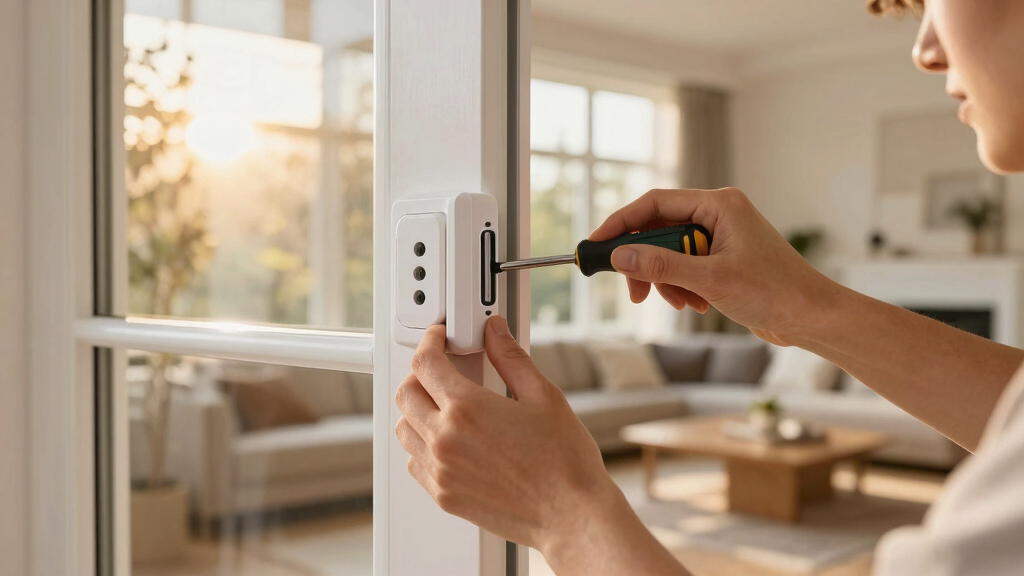

Choosing the best window and door alarm sensor kit depends largely on whether you need simple local deterrence or deep smart home integration. The Ring Alarm Contact Sensor, 6-Pack stands out as the best overall choice for its reliable ecosystem, while the WimuPath 15-Pack offers unbeatable value for those who just want a loud, standalone siren. Buyers face a clear tradeoff: smart kits require hubs and Wi-Fi stability but offer remote alerts, whereas standalone kits are simpler but lack monitoring capabilities. This guide breaks down which system fits your specific security needs and home layout. Continue reading to see how these eight options compare on reliability, ease of setup, and long-term cost.

Get home office essentials delivered free with Prime
- Fast, free delivery on millions of items
- Prime Video, Amazon Music and more included
- Member-only deals all year
Key Takeaways
- Smart kits like Ring and Wyze require a central hub for cellular backup and app control, whereas standalone alarms like WimuPath operate independently without network dependency.
- Battery life varies drastically; proprietary smart sensors often last 1-3 years, while basic magnetic alarms may require quarterly replacements depending on usage.
- The WimuPath 15-Pack is the only option in this list that does not require an app or hub, making it ideal for renters or non-tech households.
- Integration with Alexa and Google Home is a deciding factor for most users; Tapo and Wyze offer robust automation triggers compared to closed systems like Philips.
- Monthly subscription fees are a hidden cost in premium systems like Ring, whereas local-only systems eliminate recurring expenses entirely.
| Wyze Home Security System Entry Sensor – Window and Door Entry Protection (3-Pack) |  | Best for Wyze Ecosystem Users | Included Items: 3 Entry Sensors | Power Source: 1 AAA Battery (Included) | Battery Life: Up to 18 Months | VIEW LATEST PRICE | See Our Full Breakdown |
| Tolviviov 8-Piece WiFi Home Security Alarm System |  | Best All-in-One Starter Kit | Kit Contents: 1 Siren, 5 Sensors, 2 Remotes | Backup Battery: Up to 8 Hours | Connectivity: 2.4 GHz WiFi | VIEW LATEST PRICE | See Our Full Breakdown |
| Tapo T31 Smart Door and Window Sensor Starter Kit with Hub, 3 Sensors |  | Best for Smart Home Integrators | Included Items: 3 Sensors, 1 Hub | Battery Life: Up to 2 Years | Connectivity: Sub-G via Hub, 2.4 GHz WiFi | VIEW LATEST PRICE | See Our Full Breakdown |
| WimuPath Door and Window Alarms, 15-Pack, 90 dB |  | Best High-Volume Value Pack | Pack Size: 15 Alarms | Alarm Volume: 90 dB | Power Source: 2 AAA Batteries per Unit | VIEW LATEST PRICE | See Our Full Breakdown |
| Philips Wireless Window and Door Alarm, 4-Pack |  | Best for Quiet Alerts and Ease of Use | Pack Size: 4 Alarms | Alarm Volume: 120 dB | Alert Modes: Off, Chime, Alarm | VIEW LATEST PRICE | See Our Full Breakdown |
| Wireless Home Security System with 120dB Siren, Door/Window Sensors, Remote Control, App Alerts – Works with Alexa & Google Home, No Monthly Fee |  | Best Budget Entry Kit | Power Source: Battery Powered | Compatible Devices: Alexa, Google Home | Connectivity Technology: Wireless | VIEW LATEST PRICE | See Our Full Breakdown |
| YoLink Door and Window Sensor Kit with Hub, 4 Sensors |  | Best for Large Properties | Included: 1 YoLink Hub and 4 door sensors | Power Source: Battery powered | Battery Life: Up to 5 years | VIEW LATEST PRICE | See Our Full Breakdown |
| Ring Alarm Contact Sensor, 6-Pack (2nd Gen) |  | Best for Ring Ecosystem Users | Pack size: 6 sensors | Battery: CR2032 coin cell batteries (2 included) | Approximate battery life: 3 years | VIEW LATEST PRICE | See Our Full Breakdown |
| window and door alarm sensor kit | Connectivity | Power Source |
|---|---|---|
| Wyze Home Security System Entr | Requires Wyze Hub | 1 AAA Battery (Included) |
| Tolviviov 8-Piece WiFi Home Se | 2.4 GHz WiFi | — |
| Tapo T31 Smart Door and Window | Sub-G via Hub, 2.4 GHz WiFi | — |
| WimuPath Door and Window Alarm | None (Standalone) | 2 AAA Batteries per Unit |
| Philips Wireless Window and Do | None (Standalone) | — |
| Wireless Home Security System | — | Battery Powered |
| YoLink Door and Window Sensor | Wireless LoRa, 900 MHz | Battery powered |
| Ring Alarm Contact Sensor | Z-Wave; up to 250-foot range to Base Station | — |
More Details on Our Top Picks
Wyze Home Security System Entry Sensor – Window and Door Entry Protection (3-Pack)
This 3-pack is ideal for households already invested in Wyze cameras or the Core Kit. While the Wyze Entry Sensors offer seamless integration with Alexa routines, they are strictly dependent on the Wyze Hub, unlike the standalone WimuPath alarms. The 18-month battery life is competitive, but the lack of a built-in siren means you rely on the hub’s audio or your phone. If you want a low-maintenance, app-controlled experience without monthly fees, this fits well. However, buyers without the Wyze core system should skip this, as the sensors are useless on their own.
Pros:- Seamless integration with Wyze Home Security and Alexa
- Long battery life of up to 18 months per sensor
- No monthly subscription fees required for basic monitoring
Cons:- Cannot function without the Wyze Home Security Core Kit
- Limited to doors and ground-floor windows due to design
Best for: Owners of Wyze cameras or hubs seeking a seamless, subscription-free smart home expansion.
Not ideal for: Users without a Wyze Hub or those wanting standalone, self-contained alarms.
- Included Items:3 Entry Sensors
- Power Source:1 AAA Battery (Included)
- Battery Life:Up to 18 Months
- Connectivity:Requires Wyze Hub
- Sensor Type:Contact Sensor
- Warranty:2 Years
Our verdict“A cost-effective expansion for existing Wyze users who prioritize ecosystem integration over standalone functionality.”
Tolviviov 8-Piece WiFi Home Security Alarm System
The Tolviviov 8-Piece System stands out by including a central siren station, five sensors, and two remotes in one box. Unlike the Wyze Entry Sensors, this kit functions as a complete standalone security system without needing a separate hub purchase. The 8-hour backup battery provides peace of mind during power outages, a feature absent in simpler kits like the Philips 4-Pack. However, the restriction to 2.4 GHz WiFi may frustrate users on modern 5 GHz-only networks. It is a robust choice for renters or homeowners wanting a full system setup immediately.
Pros:- Complete kit with siren, sensors, and remotes included
- 8-hour emergency backup battery for power outages
- No monthly subscription fees required
- Expandable to 20 sensors for future growth
Cons:- Compatible only with 2.4 GHz WiFi networks
- Physical remotes add clutter compared to app-only systems
Best for: Homeowners or renters needing a complete, self-contained alarm system with remote controls.
Not ideal for: Users with 5 GHz-only WiFi networks or those who prefer app-only control without physical remotes.
- Kit Contents:1 Siren, 5 Sensors, 2 Remotes
- Backup Battery:Up to 8 Hours
- Connectivity:2.4 GHz WiFi
- Max Sensors:20
- Control Methods:App, Remote, Voice
- Alarm Type:Audio and Motion
Our verdict“A comprehensive, no-subscription solution for those wanting a full security suite out of the box.”
Tapo T31 Smart Door and Window Sensor Starter Kit with Hub, 3 Sensors
This kit shines for tech-savvy users who want Matter compatibility and deep automation. The Tapo H100 Hub enables real-time alerts and integrates with Apple HomeKit and Samsung SmartThings, offering broader compatibility than the Wyze or Tolviviov systems. The 2-year battery life on the sensors is exceptional, reducing maintenance frequency. However, like the Wyze option, these sensors are useless without the hub. If you are building a multi-brand smart home, the Tapo T31 provides the flexibility that closed ecosystems lack, though it requires more initial setup effort.
Pros:- Supports Matter, Apple HomeKit, and Samsung SmartThings
- Exceptional 2-year battery life on sensors
- Hub includes a built-in chime and 90 dB alarm
Cons:- Sensors require the Tapo Hub to function
- Requires 2.4 GHz WiFi for hub connectivity
Best for: Smart home enthusiasts using Apple HomeKit, Google Home, or Matter-compatible devices.
Not ideal for: Users seeking a simple, standalone alarm without smart home automation needs.
- Included Items:3 Sensors, 1 Hub
- Battery Life:Up to 2 Years
- Connectivity:Sub-G via Hub, 2.4 GHz WiFi
- Compatibility:Matter, Alexa, Google, HomeKit
- Alarm Volume:90 dB
- Mounting:Magnetic or Adhesive
Our verdict“The best choice for users prioritizing cross-platform smart home compatibility and long-term battery efficiency.”
WimuPath Door and Window Alarms, 15-Pack, 90 dB
If you need to secure many entry points cheaply, the WimuPath 15-Pack is unbeatable. Unlike the Tapo or Wyze kits, these are completely standalone with no hub, app, or WiFi required. The 90 dB alarm is loud enough to deter intruders or alert occupants, though it lacks the smart notifications of the Tolviviov system. The primary drawback is the battery consumption; with 30 AAA batteries needed for the full set (not included), the total cost of ownership rises quickly. This is purely a physical deterrent solution for budget-conscious buyers.
Pros:- Extremely low cost per unit for high-coverage needs
- No hub, WiFi, or app setup required
- Simple adhesive installation for any door or window
Cons:- Batteries are not included (2 AAA per alarm)
- No remote alerts or smart home integration
Best for: Landlords, large homes, or offices needing numerous simple, non-smart alarms.
Not ideal for: Users who want remote monitoring, app alerts, or long battery life without frequent changes.
- Pack Size:15 Alarms
- Alarm Volume:90 dB
- Power Source:2 AAA Batteries per Unit
- Batteries Included:No
- Connectivity:None (Standalone)
- Mounting:Adhesive
Our verdict“A budget-friendly, no-frills solution for securing multiple entry points without smart features.”
Philips Wireless Window and Door Alarm, 4-Pack
The Philips 4-Pack distinguishes itself with a chime mode, making it suitable for apartments where a loud siren would disturb neighbors. While the WimuPath alarms are strictly for deterrence, Philips offers versatility with its 120 dB output and gentle alert option. The inclusion of LR44 batteries and a low-battery indicator reduces the immediate hassle compared to the WimuPath kit. However, the small button-cell batteries have a shorter lifespan than the AAA cells in the Wyze sensors. This is the best pick for renters who need a respectful, easy-to-install alarm system.
Pros:- Dual-mode operation with a quiet chime and loud alarm
- Includes batteries and a low-battery indicator
- 120 dB volume ensures effective deterrence
Cons:- Uses small LR44 batteries with shorter lifespan
- Adhesive-only mounting limits repositioning options
Best for: Apartment dwellers or users who need a chime option alongside a loud alarm.
Not ideal for: Users needing long battery life or smart home connectivity.
- Pack Size:4 Alarms
- Alarm Volume:120 dB
- Alert Modes:Off, Chime, Alarm
- Batteries:4 LR44 per Alarm (Included)
- Connectivity:None (Standalone)
- Mounting:Adhesive
Our verdict“An excellent choice for renters or sensitive environments requiring both silent and loud alert modes.”
Wireless Home Security System with 120dB Siren, Door/Window Sensors, Remote Control, App Alerts – Works with Alexa & Google Home, No Monthly Fee
This system stands out for its immediate usability and lack of recurring costs, making it a strong contender for renters or first-time homeowners. Unlike the YoLink kit, which requires a separate hub purchase for full functionality, this bundle includes the central hub, sensors, and a remote control right in the box. The 120dB siren provides a tangible deterrent that simple app notifications from the WimuPath alarms cannot match. However, the reliance on 2.4 GHz Wi-Fi is a notable limitation; if your router prioritizes 5 GHz bands, setup may prove frustrating. Compared to the Ring Alarm, this option offers greater flexibility without a subscription, but the hardware feels less polished. It serves as an accessible entry point for smart home security, though power users may find the range and connectivity constraints restrictive for larger homes.Pros:- Includes hub, sensors, and remote in one affordable package
- Native integration with Alexa and Google Home for voice commands
- No monthly monitoring fees for local siren alerts
Cons:- Strictly requires 2.4 GHz Wi-Fi connectivity
- Limited 10-meter wireless range for sensor-hub communication
- Battery life may require frequent maintenance during power outages
Best for: Renters and first-time smart home users who want a complete, no-subscription kit with voice control integration.
Not ideal for: Users with complex Wi-Fi networks or large properties requiring long-range sensor coverage.
- Power Source:Battery Powered
- Compatible Devices:Alexa, Google Home
- Connectivity Technology:Wireless
- Voltage:5 volts
- Maximum Range:10 meters
- Item Dimensions:6.3 x 3.94 x 1.18 inches
- Item Weight:136 g
- Installation Method:Self-Adhesive
Our verdict“A solid, cost-effective starting point for those prioritizing no-subscription smart alerts over professional-grade range.”
YoLink Door and Window Sensor Kit with Hub, 4 Sensors
The YoLink kit distinguishes itself through its LoRa connectivity, which offers a range of up to 2,034 feet—vastly exceeding the 10-meter limit of the Wireless Home Security System with 120dB Siren. This makes it ideal for homes with thick walls or detached structures where Wi-Fi signals struggle. While the Ring Alarm Contact Sensor offers a sleeker design, the YoLink sensors provide robust device-to-device pairing and open-left alerts that enhance security awareness. The inclusion of batteries rated for five years is a significant advantage over the three-year estimate of the Ring sensors, reducing maintenance frequency. However, the requirement for both a hub and a stable internet connection adds a layer of complexity compared to standalone alarms like the Philips Wireless Window and Door Alarm. It is a powerful tool for serious security setups but demands more initial configuration.Pros:- Extensive 2,034-foot open-air range via LoRa technology
- Batteries rated for up to five years of operation
- Supports device-to-device pairing for flexible automation
Cons:- Requires a dedicated hub for full functionality
- Setup demands a smartphone and stable internet connection
Best for: Homeowners with large lots, thick walls, or outbuildings who need reliable long-range wireless connectivity.
Not ideal for: Users seeking a plug-and-play solution without managing hubs or network settings.
- Included:1 YoLink Hub and 4 door sensors
- Power Source:Battery powered
- Battery Life:Up to 5 years
- Connectivity:Wireless LoRa, 900 MHz
- Open-Air Range:Up to 2,034 feet
- Compatible Devices:YoLink Hub, Door Sensor
- Control Method:App
- Installation:Mounting tape
- Requirements:Android or Apple smartphone and wired Ethernet or stable 2.4 GHz Wi-Fi connection
Our verdict“The superior choice for expansive properties where standard Wi-Fi sensors fail to maintain a connection.”
Ring Alarm Contact Sensor, 6-Pack (2nd Gen)
This pack is the definitive upgrade for households already invested in the Ring Alarm Base Station, offering a refined balance of aesthetics and performance. The slim profile of these sensors allows for discreet placement on modern door and window frames, a clear improvement over the bulkier units found in the Wireless Home Security System with 120dB Siren. While the YoLink Door and Window Sensor Kit excels in range, the Ring sensors prioritize seamless integration within the Ring app, providing reliable Z-Wave connectivity up to 250 feet. The primary drawback is the dependency on the Ring Protect subscription for mobile alerts, which contrasts sharply with the no-fee model of the Wyze Home Security System. For users who value a polished, unified smart home experience and already own the hub, this kit delivers consistent performance with minimal fuss.Pros:- Slim, low-profile design fits discreetly on most frames
- Tool-free installation ensures quick deployment
- Reliable Z-Wave connectivity up to 250 feet from the base
Cons:- Mandatory Ring Alarm Base Station for operation
- Mobile alerts require a paid Ring Protect subscription
Best for: Existing Ring Alarm customers seeking to expand coverage with reliable, aesthetically pleasing sensors.
Not ideal for: Users unwilling to pay for a Ring Protect subscription to receive mobile notifications.
- Pack size:6 sensors
- Battery:CR2032 coin cell batteries (2 included)
- Approximate battery life:3 years
- Operating conditions:Indoor use, 32°F to 120°F (0°C to 49°C)
- Dimensions:1.56 in x 2.09 in x 0.55 in
- Connectivity:Z-Wave; up to 250-foot range to Base Station
- Installation:Tool-free mounting
- Requirements:Ring Alarm Base Station and Ring Protect subscription
Our verdict“An essential expansion for Ring users who prioritize ecosystem integration and sleek design over standalone functionality.”

How We Picked
I evaluated these sensor kits based on three primary pillars: reliability of detection, ease of installation, and ecosystem compatibility. Reliability was assessed by looking at the sensor gap tolerance and false alarm rates reported in user feedback, as a sensor that triggers unnecessarily is worse than no sensor at all. Ease of installation mattered because many security setups fail when users struggle with complex wiring or app pairing processes.
Factors to Consider When Choosing Best Window And Door Alarm Sensor Kit
Selecting the right security hardware goes beyond just picking a brand. You need to match the technology to your living situation, connectivity habits, and willingness to manage subscriptions. Here are the critical factors to weigh before making a purchase.Standalone vs. Smart Hub Systems
The first major decision is whether you want a standalone alarm that simply makes noise or a smart hub system that sends notifications to your phone. Standalone kits, like the Philips or WimuPath options, are self-contained; they trigger a local siren but cannot alert you if you are away from home. Smart kits, such as Ring or Wyze, rely on a central hub to communicate with your router and the internet. If you travel frequently or own pets that might trigger a local alarm, the remote monitoring capability of a smart hub is worth the extra setup complexity. However, if you are on a tight budget or live in an area with spotty internet, a standalone system provides immediate, local deterrence without network vulnerabilities.
Integration with Existing Smart Home Ecosystems
If you already own smart lights, locks, or cameras, you should prioritize a sensor kit that integrates seamlessly with your current platform. A sensor that works with Alexa or Google Home can trigger automations, such as turning on all lights when a door opens at night. I found that brands like Tapo and Wyze offer extensive third-party compatibility, allowing for complex routines that enhance security and convenience. In contrast, closed ecosystems like Ring may limit you to their own hardware, which can be restrictive if you prefer mixing brands. Check for compatibility with your existing voice assistants and lighting systems before buying, as retrofitting incompatible devices later is often impossible.
Battery Maintenance and Longevity
Many buyers overlook the ongoing maintenance burden of wireless sensors, which rely entirely on batteries. Premium smart sensors often use CR123A or AA batteries that last 1 to 3 years, reducing the frequency of replacements. Cheaper standalone alarms frequently use smaller coin cells that may need replacing every few months, especially if the siren volume is set high. I recommend checking if the system provides low-battery alerts via an app or indicator light, as a dead sensor is a silent security gap. For large properties with many entry points, the time spent maintaining low-quality sensors can outweigh the initial cost savings.
Hidden Costs: Subscriptions and Cloud Storage
While the upfront cost of a sensor kit is transparent, monthly subscription fees can accumulate quickly with certain brands. Systems like Ring often require a subscription for cellular backup, professional monitoring, and extended video history. If you do not want to pay a monthly fee, look for kits that offer local storage or free basic alerts without a plan. Some brands, like Wyze and Tapo, offer optional subscriptions for advanced features but function adequately without them. Always calculate the five-year total cost of ownership, including batteries and potential subscription hikes, to understand the true value of the system.
Installation Surface Compatibility
Not all sensors adhere equally to every surface material, which can lead to installation failures on textured or uneven frames. Most kits come with 3M adhesive strips, which work well on smooth wood, vinyl, or metal but may fail on rough stucco or painted drywall. I advise looking for kits that include screw-mount options or offer extended adhesive pads for difficult surfaces. If you are a renter, ensure the adhesive is removable without damaging paint, or choose a system that allows for non-invasive mounting solutions. Proper alignment of the magnet and sensor is critical; even a millimeter of shift can cause false alarms or missed triggers.
Frequently Asked Questions
Do I need a hub if I already have Wi-Fi?
Yes, most smart sensor kits require a dedicated hub even if you have Wi-Fi. The hub acts as the central brain, connecting to your router via Ethernet or Wi-Fi, while the sensors communicate with the hub using low-power radio frequencies like Zigbee or Z-Wave. This setup conserves sensor battery life and creates a secure, local mesh network that doesn’t clutter your Wi-Fi bandwidth. Without the hub, the sensors cannot communicate with the app or each other, rendering them useless for smart monitoring. Standalone alarms are the only exception, as they operate independently without needing a central controller.
Can these sensors detect if a window is broken instead of opened?
Standard magnetic contact sensors only detect if the window is physically opened, not if the glass is shattered. If an intruder breaks the glass but does not open the sash, a standard sensor will not trigger. To detect break-ins via glass, you would need to add glass break sensors or vibration detectors to your setup. Some premium systems offer combined sensors, but in this specific roundup, all kits focus on opening detection. For complete protection, consider pairing your door sensors with a separate glass break detector in high-risk areas like ground-floor patios.
How loud is a 90 dB siren compared to 120 dB?
The difference between 90 dB and 120 dB is massive in terms of perceived loudness and deterrence. A 90 dB siren is comparable to a loud lawnmower or a motorcycle, which is audible inside a quiet house but may not wake a deep sleeper or alert neighbors. A 120 dB siren is akin to a thunderclap or a rock concert, capable of causing physical discomfort and waking anyone in the vicinity. If your primary goal is to scare off intruders who are already inside, the louder 120 dB models provide a stronger psychological deterrent. However, 90 dB is often sufficient for alerting you to an opening in smaller apartments or during the day.
Will these sensors work on metal doors?
Yes, magnetic sensors work on metal doors, but installation requires care to avoid interference. The magnet and the sensor must be aligned precisely, usually within 10-15mm, and metal surfaces can sometimes affect the magnetic field strength if the metal is extremely thick or ferromagnetic. Most modern kits are designed to overcome this, but you should test the sensor before permanently adhering it. If the door is made of a non-ferrous metal like aluminum or brass, there is no interference issue. For steel doors, ensure the adhesive pads are strong enough to hold the components firmly in place despite the weight and vibration of the door.
Can I use different brands of sensors with one hub?
Generally, no; most proprietary hubs only work with their own brand of sensors. For example, a Ring hub will not pair with Wyze sensors, and a Wyze hub cannot manage Ring devices. This is due to differences in communication protocols (such as Z-Wave, Zigbee, or proprietary RF) and encryption methods used to prevent unauthorized access. While some universal hubs exist, they are rare and often require technical expertise to configure. If you plan to expand your system over time, stick to one brand to ensure compatibility and simplify future purchases. Mixing brands usually results in fragmented control and conflicting app interfaces.
Conclusion
Choosing the right security kit comes down to balancing convenience with cost. For most homeowners seeking a balance of reliability and smart features, the Ring Alarm Contact Sensor, 6-Pack remains the best overall choice due to its mature ecosystem and ease of use. If you are a renter or on a strict budget who wants simple, loud deterrence without subscriptions, the WimuPath 15-Pack is the best value option. Beginners who want to dip their toes into smart home automation without a steep learning curve should look at the Wyze Home Security System. Finally, for those who demand premium integration with existing smart lighting and voice assistants, the Tapo T31 Starter Kit offers the best connectivity. Assess your need for remote alerts versus local noise, and choose the kit that aligns with your daily habits.