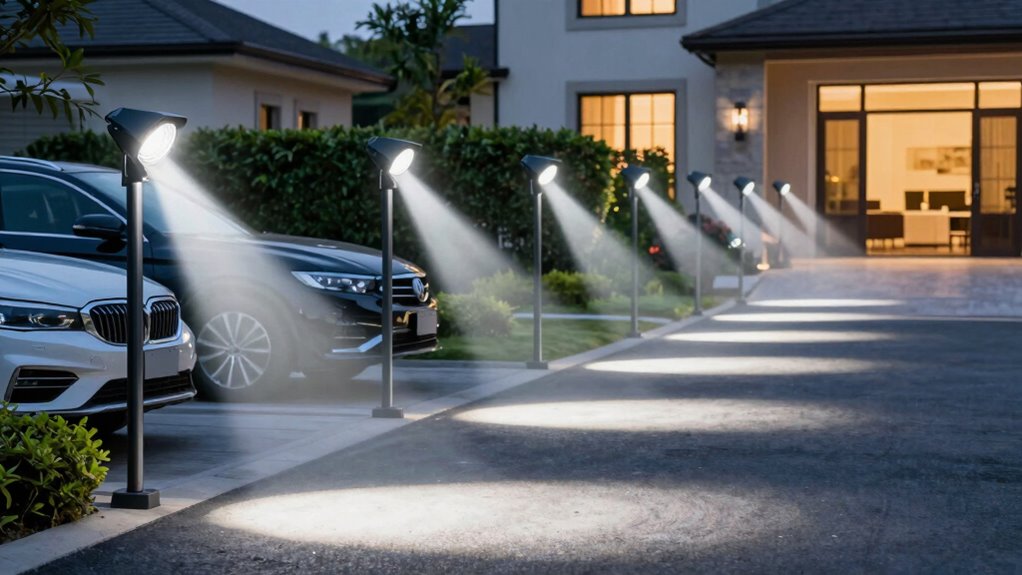

For most driveways, I’d start with the Ring Floodlight Cam Wired Pro: its 2K video, color night vision, and wired floodlights suit buyers who want a familiar, fixed-camera setup. The eufy Floodlight Camera E340 stands out for wider, dual-lens coverage, while the Tapo C720 offers brighter listed lighting and 2K+ video. The main tradeoffs are wired reliability versus installation flexibility, and a fixed view versus pan-and-tilt coverage. Subscription needs, local storage, and compatibility with your existing smart-home setup can also change which camera makes sense. Read on for the full comparison and recommendations by driveway and buyer type.

Get home office essentials delivered free with Prime
- Fast, free delivery on millions of items
- Prime Video, Amazon Music and more included
- Member-only deals all year
Key Takeaways
- Ring Wired Pro is the clearest all-around fit for buyers prioritizing 2K video, color night vision, and a hardwired driveway camera; the Wired Plus is a simpler 1080p alternative.
- The Eufy E340 favors broad visual coverage with its dual-lens design, 360-degree coverage, and zoom, while the E30 is a 2K option for shoppers comparing within the same brand.
- Listed light output varies widely: the Tapo C720 is rated at 2800 lumens, compared with 2000 lumens for Ring Wired Pro and 2600 lumens for Blink Wired, but brightness alone does not establish useful driveway coverage.
- Power method shapes placement: wired models suit existing electrical points, while Arlo Pro 3 and Tapo C615F KIT offer wireless options that can help where wiring is impractical.
- Video labels do not tell the whole story: models range from 1080p HD to 2K, 2K+, 3K, and 3K UHD, so field of view, night performance, recording access, and camera positioning matter alongside resolution.
| Ring Floodlight Cam Wired Pro – 2K Video, Color Night Vision, Two-Way Talk, Motion Detection, 2000 Lumen Floodlights, Security Siren, Black |  | Best for Precise Driveway Alerts | Video resolution: Retinal 2K | Night vision: Color | Floodlight output: 2,000 lumens, motion-activated | VIEW ON AMAZON | See Our Full Breakdown |
| Wyze Cam Floodlight Pro Outdoor Security Camera |  | Best for Wide Driveway Coverage | Resolution: 2.5K | Field of view: 180° | Floodlight output: 3,000 lumens | VIEW ON AMAZON | See Our Full Breakdown |
| Tapo 2K+ Outdoor Wired Floodlight Security Camera, C720, 2800LM |  | Best for Smart Motion-Zone Lighting | Resolution: 2K QHD | Field of view: 150° | Floodlight output: 2,800 lumens | VIEW ON AMAZON | See Our Full Breakdown |
| Arlo Pro 3 Wireless Floodlight Security Camera, 2K HDR, 1-Camera |  | Best Wireless Pick | Video resolution: 2K HDR | Field of view: 160° | Night vision: Color | VIEW ON AMAZON | See Our Full Breakdown |
| Blink Wired Floodlight Camera, 1080p HD, 2600 Lumens, White |  | Best Straightforward Alexa Pick | Video resolution: 1080p HD | Field of view: 143° diagonal | Frame rate: Up to 30 fps | VIEW ON AMAZON | See Our Full Breakdown |
| Google Nest Cam with Floodlight, Outdoor Security Camera, White |  | Best for Google Home Households | Video resolution: 1080p HDR | Frame rate: 30 fps | Field of view: 130 degrees | VIEW ON AMAZON | See Our Full Breakdown |
| 3K UHD Wired Floodlight Outdoor Security Camera, Works with Alexa |  | Best for Broad, Continuous Driveway Coverage | Resolution: 3K UHD | Night vision: Full-color | Coverage: 270° adjustable | VIEW ON AMAZON | See Our Full Breakdown |
| eufy Security Floodlight Camera E340 (Dual-Lens, 360° Coverage, 8X Zoom) |  | Best for Tracking Vehicles Across a Wide Driveway | Resolution: 3K; up to 2K with AI Tracking or Dual Views | Zoom: 8x hybrid zoom | Coverage: 360° pan; 355° viewing angle | VIEW ON AMAZON | See Our Full Breakdown |
| Ring Floodlight Cam Wired Pro Security Camera, Retinal 2K Video, Color Night Vision, Two-Way Talk, White |  | Best for Ring App-Based Alerts and Deterrence | Video resolution: Retinal 2K | Night vision: Color | Floodlight brightness: 2,000 lumens | VIEW ON AMAZON | See Our Full Breakdown |
| Arlo Wired Floodlight Security Camera, 2K HDR, 1 Camera |  | Best for Multi-Platform Smart-Home Setups | Video resolution: 2K HDR | Floodlight brightness: 2,000 lumens | Field of view: Listed as 160° in item details and 130° in product description | VIEW ON AMAZON | See Our Full Breakdown |
| Ring Floodlight Cam Wired Plus, 1080p HD Outdoor Security Camera with Motion-Activated Floodlights, Black |  | Best for Ring Households | Video resolution: 1080p HD | Field of view: 140° horizontal, 80° vertical | Floodlights: Two 2,000-lumen LED lights, 3000 K | VIEW ON AMAZON | See Our Full Breakdown |
| Wyze Floodlight Camera v2, 2K HD Outdoor Security Camera | 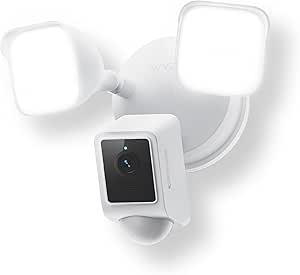 | Best for Local Recording | Resolution: 2K HD | Field of view: 160° | Motion detection: 270° PIR | VIEW ON AMAZON | See Our Full Breakdown |
| Blink Outdoor 4 Floodlight Camera | 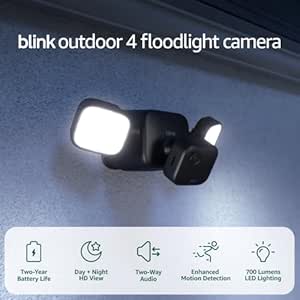 | Best Wire-Free Installation | Resolution: 1080p HD | Floodlight: 700 lumens | Battery life: Up to 2 years with AA Energizer lithium batteries | VIEW ON AMAZON | See Our Full Breakdown |
| eufy Security Floodlight Camera E30, 2K |  | Best for Tracking Across a Wide Driveway | Resolution: 2K | Coverage: 360° pan and tilt | AI features: Human and vehicle detection with auto-tracking | VIEW ON AMAZON | See Our Full Breakdown |
| Tapo 2K Outdoor Pan/Tilt Wireless Floodlight Security Camera, C615F KIT |  | Best Solar-Powered Pick | Resolution: 2K | Floodlight: 800 lumens | Pan and tilt range: 360° horizontal, 130° vertical | VIEW ON AMAZON | See Our Full Breakdown |
| outdoor floodlight camera for driveway | Power | Resolution | Field of view |
|---|---|---|---|
| Ring Floodlight Cam Wired Pro | Wired | — | — |
| Wyze Cam Floodlight Pro Outdoo | Hardwired; outdoor power adapter sold separately | 2.5K | 180° |
| Tapo 2K+ Outdoor Wired Floodli | Wired | 2K QHD | 150° |
| Arlo Pro 3 Wireless Floodlight | Rechargeable battery; solar compatible | — | 160° |
| Blink Wired Floodlight Camera | Hardwired; neutral wire required; 100–240 VAC, 50/60 Hz, 45 W | — | 143° diagonal |
| Google Nest Cam with Floodligh | — | — | 130 degrees |
| 3K UHD Wired Floodlight Outdoo | Wired AC, 120V/60Hz | 3K UHD | — |
| eufy Security Floodlight Camer | — | 3K; up to 2K with AI Tracking or Dual Views | — |
| Ring Floodlight Cam Wired Pro | Wired | — | — |
| Arlo Wired Floodlight Security | Hardwired | — | Listed as 160° in item details and 130° in product description |
| Ring Floodlight Cam Wired Plus | Hardwired, 110–240 V | — | 140° horizontal, 80° vertical |
| Wyze Floodlight Camera v2 | — | 2K HD | 160° |
| Blink Outdoor 4 Floodlight Cam | — | 1080p HD | — |
| eufy Security Floodlight Camer | Corded electric, hardwired | 2K | — |
| Tapo 2K Outdoor Pan/Tilt Wirel | — | 2K | — |
More Details on Our Top Picks
Ring Floodlight Cam Wired Pro – 2K Video, Color Night Vision, Two-Way Talk, Motion Detection, 2000 Lumen Floodlights, Security Siren, Black
For a driveway where alerts need to distinguish passing activity from movement near the car or garage, I’d put the Ring Floodlight Cam Wired Pro near the top of the list. Its 3D motion detection pairs with 2K video and color night vision to give a more specific view of activity than the Blink Wired Floodlight Camera’s 1080p setup. The 2,000-lumen lights and 110 dB siren add deterrence, though the Wyze Cam Floodlight Pro shines a broader area with brighter 3,000-lumen panels and a 180-degree view. This Ring model is a better fit when alert precision and the Ring ecosystem matter more than maximum coverage. Its tradeoffs are wired installation and reliance on a compatible Ring Protect subscription for full features.
Pros:- 3D motion detection helps make driveway alerts more specific.
- 2K video and color night vision provide useful detail after dark.
- 2,000-lumen motion-activated floodlights illuminate an outdoor approach.
- Built-in 110 dB siren adds an audible deterrent.
Cons:- Wired installation limits placement flexibility and may require electrical work.
- A compatible Ring Protect subscription is needed for full features.
- Its 2,000-lumen output is lower than the Wyze Cam Floodlight Pro’s 3,000 lumens.
Best for: Driveway owners already using Ring who want more targeted motion alerts and clear nighttime video around a parked vehicle or garage.
Not ideal for: Renters or anyone unable to wire a camera, and buyers who want the widest view or to use full features without a Ring Protect subscription.
- Video resolution:Retinal 2K
- Night vision:Color
- Floodlight output:2,000 lumens, motion-activated
- Motion detection:3D Motion Detection
- Siren:110 dB
- Audio:Two-way talk
- Power:Wired
- Color:Black
Our verdict“Choose this Ring if precise motion alerts and Ring compatibility matter more than wireless placement or the brightest, widest floodlight coverage.”
Wyze Cam Floodlight Pro Outdoor Security Camera
The Wyze Cam Floodlight Pro is the strongest fit here when one camera needs to cover a broad driveway, including the apron and nearby approach. Its 180-degree field of view and three adjustable panels producing up to 3,000 lumens can cover more ground than the Tapo C720’s 150-degree view, while 2.5K video gives it a resolution advantage over the Blink Wired Floodlight Camera. For owners who want ongoing footage without depending solely on cloud history, 24/7 microSD recording is a useful distinction. That coverage comes with practical limits: it needs hardwired power, and the outdoor power adapter is sold separately. Its wall-mount form and 10.2-inch width also call for a suitable mounting spot rather than a discreet installation.
Pros:- 180-degree field of view covers a broad driveway from one mounting position.
- Three adjustable panels provide up to 3,000 lumens of floodlighting.
- 2.5K video and color night vision support detailed nighttime monitoring.
- Continuous microSD recording offers a local footage option.
Cons:- Requires hardwired installation.
- Outdoor power adapter is sold separately.
- Its 10.2 × 9.1 × 7.8-inch body may be conspicuous on a smaller exterior wall.
Best for: Homeowners with a wide driveway who want adjustable, bright lighting, a broad camera view, and continuous local recording.
Not ideal for: Renters or buyers without a suitable hardwired location, and anyone seeking a compact camera or a setup that needs no separately purchased power accessory.
- Resolution:2.5K
- Field of view:180°
- Floodlight output:3,000 lumens
- Light panels:Three adjustable panels
- Recording:24/7 local recording via microSD card
- Storage duration:Up to 30 days
- Wi-Fi:Dual-band 2.4 GHz and 5 GHz
- Weather resistance:IP65
- Power:Hardwired; outdoor power adapter sold separately
Our verdict“Pick the Wyze Pro for broad driveway coverage and local continuous recording if hardwired installation and a separate adapter are acceptable.”
Tapo 2K+ Outdoor Wired Floodlight Security Camera, C720, 2800LM
The Tapo C720 suits driveways where the light needs to react across a broad area, not just where the camera points. Its 270-degree motion-activated floodlight coverage and adjustable 2,800-lumen output make it distinct from the Ring Floodlight Cam Wired Pro, whose appeal leans more toward 3D motion detection and Ring integration. The Tapo also uses AI detection for people, pets, and vehicles, helping owners tailor alerts to the activity they care about. Its 2K QHD image and 150-degree field of view offer a solid middle ground, though the Wyze Cam Floodlight Pro sees a wider 180-degree span and records continuously to microSD. Tapo requires wired power and 2.4GHz Wi-Fi; the supplied details also give no weather-resistance rating, which leaves less certainty for exposed installations.
Pros:- 270-degree motion detection can trigger lighting across a wide area.
- AI detection distinguishes people, pets, and vehicles.
- Adjustable 2,800-lumen floodlight supports tailored driveway illumination.
- 2K QHD video, two-way audio, and local recording are included.
Cons:- Wired power restricts where the camera can be installed.
- Wi-Fi support is limited to 2.4GHz.
- No weather-resistance or IP rating is specified in the supplied product data.
Best for: Homeowners who want adjustable floodlight coverage and separate people, pet, and vehicle detection for a driveway with varied activity.
Not ideal for: Buyers who need wireless placement, dual-band Wi-Fi, or a stated weather-resistance rating before mounting in a highly exposed location.
- Resolution:2K QHD
- Field of view:150°
- Floodlight output:2,800 lumens
- Motion detection coverage:270°
- Detection:AI detection for people, pets, and vehicles
- Connectivity:2.4GHz Wi-Fi
- Power:Wired
- Audio:Two-way audio
- Recording:Local recording
Our verdict“Choose the Tapo C720 if broad motion-triggered lighting and activity-specific detection matter more than wireless installation or a wider camera view.”
Arlo Pro 3 Wireless Floodlight Security Camera, 2K HDR, 1-Camera
When running power to a driveway mounting point is impractical, the Arlo Pro 3 Wireless Floodlight offers flexibility that the hardwired Wyze Cam Floodlight Pro and Blink Wired Floodlight Camera cannot. Its rechargeable battery, 2K HDR video, 160-degree view, and color night vision make it a capable choice for monitoring a vehicle or driveway entrance without a wired power connection. The tradeoff is lighting output: it reaches 2,000 lumens on battery, while the advertised 3,000-lumen maximum requires a separately sold outdoor magnetic charging cable. That makes it less compelling if maximum brightness is the priority. Advanced detection and 60-day cloud history also require an Arlo Secure plan after the trial, so the wireless convenience does not mean every feature works without a subscription.
Pros:- Rechargeable battery allows placement without a wired power connection.
- 2K HDR video, color night vision, and a 160-degree view suit driveway monitoring.
- Two-way audio and a built-in siren support communication and deterrence.
- Compatible with Alexa, Apple Home, Google Home, Samsung SmartThings, and IFTTT.
Cons:- Battery-powered floodlight output is limited to 2,000 lumens.
- Reaching 3,000 lumens requires a separately sold outdoor magnetic charging cable.
- Advanced detection and 60-day cloud history require an Arlo Secure plan after the trial.
Best for: Homeowners who need to mount a floodlight camera where wired power is unavailable and value compatibility with several smart-home platforms.
Not ideal for: Buyers who want the brightest output without extra accessories or advanced detection and extended cloud history without a paid plan.
- Video resolution:2K HDR
- Field of view:160°
- Night vision:Color
- Floodlight output:Up to 2,000 lumens on battery; up to 3,000 lumens with separately sold outdoor magnetic charging cable
- Power:Rechargeable battery; solar compatible
- Audio:Two-way audio
- Weather use:Designed for year-round outdoor use
- Smart-home compatibility:Amazon Alexa, Apple Home, Google Home, Samsung SmartThings, IFTTT
- Subscription:Arlo Secure trial; paid plan required for advanced features and 60-day cloud history
Our verdict“Choose the Arlo Pro 3 when wireless placement is the deciding factor, but budget for a cable or subscription if you need its higher output or advanced features.”
Blink Wired Floodlight Camera, 1080p HD, 2600 Lumens, White
The Blink Wired Floodlight Camera is the simpler choice for a driveway owner who wants bright lights, basic live video, and Alexa compatibility without prioritizing higher resolution. Its 2,600-lumen floodlights outshine the Ring Floodlight Cam Wired Pro’s 2,000-lumen output, but Blink records at 1080p rather than Ring’s 2K or the Wyze Cam Floodlight Pro’s 2.5K. The 143-degree diagonal view is narrower than Wyze’s 180-degree coverage, so placement matters if the driveway is wide. Customizable motion zones, two-way audio, and a built-in siren cover core security needs. The compromises are hardwiring with a required neutral wire and subscription requirements for person detection and extended cloud storage; Sync Module and local-storage accessories are separate purchases.
Pros:- 2,600-lumen LED floodlights provide strong illumination.
- Customizable motion zones help focus alerts on the driveway.
- Two-way audio, a built-in siren, and Alexa compatibility support core security needs.
- Color night view adds useful context after dark.
Cons:- 1080p resolution is lower than the 2K Ring and 2.5K Wyze options in this lineup.
- Hardwired installation requires a neutral wire.
- Person detection and extended cloud storage require a subscription; Sync Module and local-storage accessories are sold separately.
Best for: Alexa households with a suitable wired junction box that want bright driveway lighting and straightforward motion-zone controls.
Not ideal for: Renters, homes without a neutral wire at the mounting point, or buyers who need higher-resolution video and broad driveway coverage.
- Video resolution:1080p HD
- Field of view:143° diagonal
- Frame rate:Up to 30 fps
- Floodlight output:2,600 lumens
- Light color temperature:5,000 K LEDs
- Power:Hardwired; neutral wire required; 100–240 VAC, 50/60 Hz, 45 W
- Wi-Fi:2.4 GHz 802.11b/g/n
- Siren:105 dB, measured at 4 in/10 cm
- Compatibility:Alexa; all Blink Sync Modules
Our verdict“Pick Blink for bright lighting and Alexa-friendly basics if your mounting point has a neutral wire and 1080p video is sufficient.”
Google Nest Cam with Floodlight, Outdoor Security Camera, White
For a driveway already managed through Google Home, this Nest pairs 1080p HDR video with alerts that distinguish people, animals, and vehicles. That filtering can make a busy approach easier to monitor than a camera that reports motion without identifying what triggered it. The floodlight responds to important activity, and two-way talk adds a way to address visitors from the app. Compared with the eufy E340, it offers simpler, fixed-camera coverage rather than pan-and-tilt viewing, and its listed free event history is limited to up to three hours. I’d favor the Nest for buyers who value Google Home integration over maximum detail or broad area coverage. A Google Account and Wi-Fi are required, some features need Nest Aware, and the camera does not work with the Nest app.
Pros:- Identifies people, animals, and vehicles for more informative activity alerts
- Built-in floodlight activates for important activity
- Two-way talk and emergency calling through the Google Home app
- Can store up to one hour of events during Wi-Fi or power outages
Cons:- Some features require a separately sold Nest Aware subscription
- Requires Wi-Fi and a Google Account
- Not compatible with the Nest app
Best for: Driveway owners who use Google Home and want activity alerts that distinguish people, animals, and vehicles.
Not ideal for: Buyers seeking long event history without a subscription, Nest app compatibility, or a camera that pans to cover multiple areas.
- Video resolution:1080p HDR
- Frame rate:30 fps
- Field of view:130 degrees
- Night vision:Yes
- Floodlight:Built-in LED
- Connectivity:Wi-Fi
- Mounting:Wall mount
- Free event history:Up to 3 hours
Our verdict“Choose the Nest if Google Home integration and categorized alerts matter more than higher resolution or pan-and-tilt coverage.”
3K UHD Wired Floodlight Outdoor Security Camera, Works with Alexa
This camera suits a driveway where the approach is wide and recording gaps are a concern: its 270-degree adjustable coverage and 24/7 continuous recording are aimed at watching more than a single fixed patch. The included 64GB SD card also gives it a local-recording advantage over the Arlo Wired Floodlight Camera, whose cloud storage and advanced features require a paid plan after the trial. Its 3K UHD video and full-color night vision add detail when reviewing activity, while the 2,200-lumen lights and 105dB siren bring deterrence features. The tradeoff is a wired AC installation and reliance on the Yoosee app for control, rather than a more familiar smart-home platform. I’d shortlist it for buyers comfortable with that app and wiring; those prioritizing Google Home or Alexa-centered control may prefer another option.
Pros:- 3K UHD footage with full-color night vision
- 270-degree adjustable coverage helps watch a broad driveway
- Includes 64GB local storage and supports 24/7 recording
- IP65 weather resistance, 2,200-lumen lights, and a 105dB siren
Cons:- Requires wired 120V AC power
- Remote access and alerts rely on Wi-Fi
- Uses the Yoosee app, which may be less convenient for buyers invested in other smart-home platforms
Best for: Homeowners with a wide driveway who can install wired AC power and want continuous recording to included local storage.
Not ideal for: Renters, buyers who need a wireless installation, or households that want a familiar Google Home or Ring app experience.
- Resolution:3K UHD
- Night vision:Full-color
- Coverage:270° adjustable
- Power:Wired AC, 120V/60Hz
- Wi-Fi:2.4GHz / 5GHz
- Floodlight brightness:2,200 lumens
- Recording and storage:24/7 continuous recording; 64GB SD card included
- Weather resistance:IP65
- Compatibility:Alexa
Our verdict“Pick this model for wide, continuous driveway monitoring with included local storage if wired installation and the Yoosee app suit your setup.”
eufy Security Floodlight Camera E340 (Dual-Lens, 360° Coverage, 8X Zoom)
The E340 is the strongest fit here when a driveway has multiple approach angles or vehicles that move across the frame: its pan-and-tilt 360-degree coverage and AI tracking can follow people and vehicles rather than leaving monitoring to a fixed view. Dual cameras and 8x hybrid zoom also give it more reach for identifying activity than the 1080p Google Nest Cam with Floodlight. Local recording can avoid a subscription, but continuous recording requires a separately purchased microSD card or HomeBase S380, so the included setup is not a complete recording package. There’s also a resolution compromise: the camera drops to 2K when AI tracking or dual views are active. I’d choose it for coverage flexibility and local-storage options, not for buyers who want the simplest fixed-camera installation or peak resolution in every mode.
Pros:- Pan-and-tilt coverage and AI tracking help follow activity across a wide area
- Dual-lens system offers 3K resolution and 8x hybrid zoom
- Local storage supports recording without a subscription
- 2,000-lumen floodlight and 95dB alarm add deterrence
Cons:- Continuous recording requires a separately purchased microSD card or HomeBase S380
- Resolution drops to 2K with AI tracking or dual views enabled
- Large, heavy fixture may be harder to fit in some mounting locations
Best for: Owners of wide or angled driveways who want a camera to track moving people and vehicles and are willing to add local storage.
Not ideal for: Buyers who want recording-ready local storage out of the box, a compact fixture, or full 3K resolution while tracking.
- Resolution:3K; up to 2K with AI Tracking or Dual Views
- Zoom:8x hybrid zoom
- Coverage:360° pan; 355° viewing angle
- Floodlight brightness:2,000 lumens
- Alarm:95dB siren
- Storage:microSD up to 128GB or eufy HomeBase S380
- Connectivity:Dual-band Wi-Fi 6, 2.4GHz / 5GHz
- Mounting:Wall, junction box, or ceiling
- Smart-home compatibility:HomeBase 3, Amazon Alexa, Google Assistant
Our verdict“Choose the E340 for adjustable, tracking coverage across a complex driveway, provided you accept the resolution tradeoff and supply local storage.”
Ring Floodlight Cam Wired Pro Security Camera, Retinal 2K Video, Color Night Vision, Two-Way Talk, White
For buyers already using Ring, this wired model combines Retinal 2K video with 3D Motion Detection, which is intended to make driveway alerts more precise than a simple motion trigger. Color night vision, two-way talk with Audio+, and a 110dB app-activated siren support both checking on activity and responding to it. The eufy E340 offers pan-and-tilt coverage and local recording options, while this Ring keeps a fixed view and ties additional features to a separately sold Ring Protect subscription. Its 2,000-lumen lights are in the same class as the eufy and Arlo options, so the case for choosing Ring rests more on its alerting and app ecosystem than raw illumination. Hardwired installation also rules it out for anyone unable to connect a fixture to outdoor power.
Pros:- Retinal 2K video with color night vision
- 3D Motion Detection is designed for more precise alerts
- 2,000-lumen motion-activated floodlights
- Two-way talk and a 110dB siren controlled through the Ring app
Cons:- Requires wired installation
- Ring Protect subscription is sold separately for additional features
- Fixed-camera coverage does not pan to follow activity
Best for: Ring households with a fixed driveway view who want motion-zone-style precision, two-way talk, and an app-controlled siren.
Not ideal for: Renters, buyers seeking pan-and-tilt coverage, or anyone who wants subscription-dependent features without a Ring Protect plan.
- Video resolution:Retinal 2K
- Night vision:Color
- Floodlight brightness:2,000 lumens
- Motion detection:3D Motion Detection
- Siren:110dB
- Audio:Two-way talk with Audio+
- Power:Wired
- Smart-home compatibility:Alexa
- Subscription:Ring Protect sold separately for additional features
Our verdict“Choose this Ring if its app and motion-detection approach fit your setup and you can hardwire a fixed view of the driveway.”
Arlo Wired Floodlight Security Camera, 2K HDR, 1 Camera
The Arlo makes sense for a driveway monitored through more than one smart-home platform: it supports Alexa, Google Home, Apple Home, and Samsung SmartThings, a broader listed compatibility set than the Alexa-focused Ring Floodlight Cam Wired Pro. Its 2K HDR video, color night vision, 2,000-lumen light, two-way audio, and siren cover the core jobs of a wired driveway floodlight camera. A notable data inconsistency gives its field of view as both 160 degrees and 130 degrees, so I would not choose it based on a precise coverage estimate. Basic alerts and live streaming work without a subscription, but cloud storage and advanced features require a paid Arlo Secure plan after the trial. Like the Ring, it needs hardwired power; unlike the pan-and-tilt eufy E340, it does not offer moving-camera coverage.
Pros:- 2K HDR video and color night vision
- 2,000-lumen floodlight with two-way audio and a siren
- Works with Alexa, Google Home, Apple Home, and Samsung SmartThings
- Live streaming and basic alerts work without a subscription
Cons:- Hardwired installation is required
- Cloud storage and advanced features require a paid plan after the trial
- Product information lists conflicting 160-degree and 130-degree field-of-view figures
Best for: Homeowners with a hardwired driveway camera location who want compatibility across Alexa, Google, Apple Home, or SmartThings.
Not ideal for: Renters, buyers who need subscription-free cloud storage, or anyone who needs a confirmed field-of-view figure before choosing.
- Video resolution:2K HDR
- Floodlight brightness:2,000 lumens
- Field of view:Listed as 160° in item details and 130° in product description
- Night vision:Color
- Power:Hardwired
- Audio:Two-way audio
- Zoom:12x
- Connectivity:2.4GHz Wi-Fi
- Smart-home compatibility:Amazon Alexa, Google Home, Apple Home, Samsung SmartThings
Our verdict“Choose the Arlo for a hardwired driveway and broad smart-home compatibility, but confirm the coverage angle and plan for paid cloud features if needed.”
Ring Floodlight Cam Wired Plus, 1080p HD Outdoor Security Camera with Motion-Activated Floodlights, Black
For a driveway already covered by Ring devices, the Floodlight Cam Wired Plus keeps lighting, alerts, Live View, and two-way talk in the same app. Its two 2,000-lumen lights can illuminate an approach when motion triggers them, while adjustable zones help cut down alerts from activity outside the driveway. Compared with the Wyze Floodlight Camera v2, it records at 1080p rather than 2K and has a narrower 140° horizontal view, so it gives up detail and breadth. Its advantage is a familiar Ring setup, a remote siren, and hardwired power for continuous operation. The tradeoff is that installation needs a compatible electrical box, and recorded video storage and some alerts require a subscription. I’d choose it for ecosystem fit, not for the sharpest footage or subscription-free recording.
Pros:- Two 2,000-lumen motion-activated lights add useful illumination across a driveway.
- Customizable motion zones help focus alerts on the approach rather than nearby activity.
- Two-way audio and a remotely activated 105 dB siren add ways to respond to visitors.
- Hardwired power supports continuous operation without routine battery changes.
Cons:- 1080p resolution and a 140° horizontal field of view offer less detail and coverage than the Wyze Floodlight Camera v2.
- Installation requires hardwired AC power and a compatible electrical box.
- Recorded video storage and some alerts require a paid Ring subscription.
Best for: Driveway owners who already use Ring and have a suitable hardwired junction box.
Not ideal for: Buyers seeking 2K footage, local recording without a subscription, or a battery-powered installation.
- Video resolution:1080p HD
- Field of view:140° horizontal, 80° vertical
- Floodlights:Two 2,000-lumen LED lights, 3000 K
- Siren:105 dB, remote-activated
- Power:Hardwired, 110–240 V
- Wi-Fi:802.11 b/g/n, 2.4 GHz
- Weather resistance:Weather resistant
- Operating temperature:-4°F to 122°F (-20°C to 50°C)
Our verdict“Choose this if Ring compatibility and hardwired lighting matter more to you than 2K resolution or subscription-free recording.”
Wyze Floodlight Camera v2, 2K HD Outdoor Security Camera
The Wyze Floodlight Camera v2 stands out for driveway owners who want 2K detail and continuous local recording rather than relying solely on a cloud plan. A microSD card can support 24/7 recording, giving you a way to review activity that happens between motion alerts. Its 160° view, 270° PIR detection, and 2,800-lumen lights make it a stronger coverage-and-illumination package than the 1080p Ring Wired Plus, though both need hardwired installation. Wyze also offers a 105 dB siren, two-way talk, and dusk-to-dawn automation. The limits are practical: it connects only to 2.4 GHz Wi-Fi, and the outdoor power adapter is sold separately. I’d pick it when local footage and a wide view matter more than avoiding wiring or buying an extra accessory.
Pros:- 2K video provides more image detail than the Ring Floodlight Cam Wired Plus’s 1080p footage.
- A 160° field of view and 270° PIR detection cover a broad approach.
- 2,800-lumen dimmable lights combine illumination with dusk-to-dawn automation.
- Supports continuous local recording to a microSD card.
Cons:- Hardwired installation limits placement and may require electrical work.
- Works only with 2.4 GHz Wi-Fi.
- Outdoor power adapter is sold separately.
Best for: Homeowners who can hardwire a driveway camera and want 2K video with continuous microSD recording.
Not ideal for: Renters, buyers without a suitable wired power point, or households relying on 5 GHz Wi-Fi.
- Resolution:2K HD
- Field of view:160°
- Motion detection:270° PIR
- Floodlight brightness:2,800 lumens
- Siren:105 dB
- Local recording:24/7 recording to microSD card; up to 30 days of footage
- Weather resistance:IP65
- Power and Wi-Fi:Hardwired; 2.4 GHz only
Our verdict“Pick the Wyze v2 if you want a wide, bright 2K driveway view with local continuous recording and can handle hardwired setup.”
Blink Outdoor 4 Floodlight Camera
When a driveway has no convenient wiring point, the Blink Outdoor 4 Floodlight Camera offers a simpler placement option than hardwired models such as the eufy Floodlight Camera E30. Its included Sync Module Core and battery-powered design avoid connecting the camera to household wiring, and the stated battery life is up to two years with AA Energizer lithium batteries. That flexibility comes with a clear compromise: the 700-lumen light is far less powerful than the 2,000- and 2,800-lumen options elsewhere in this group, and night vision is infrared rather than color. The 1080p live view, two-way audio, and dual-zone detection suit basic driveway monitoring, but cloud storage and AI people detection involve a subscription. I’d favor Blink for easy placement, not for broad, bright illumination or the richest nighttime image.
Pros:- Wire-free installation offers more placement flexibility than the hardwired eufy E30.
- Stated battery life is up to two years with AA Energizer lithium batteries.
- Includes a Sync Module Core for setup.
- 1080p live view and two-way audio support basic remote driveway monitoring.
Cons:- The 700-lumen light is much dimmer than the Wyze v2’s 2,800-lumen floodlight.
- Infrared night vision does not provide color nighttime footage.
- Cloud storage and AI-powered people detection require a subscription; local backup needs separately sold equipment and a microSD card.
Best for: Homeowners who need a battery-powered camera for a driveway location without an accessible electrical box.
Not ideal for: Buyers who need a powerful floodlight, color night vision, or included continuous local recording.
- Resolution:1080p HD
- Floodlight:700 lumens
- Battery life:Up to 2 years with AA Energizer lithium batteries
- Night vision:Infrared
- Motion detection:Dual-zone enhanced motion detection
- Included module:Sync Module Core
- Smart detection:AI people-versus-motion detection; subscription required
- Local backup:Sync Module XR and microSD card up to 256 GB, sold separately
Our verdict“Choose Blink for a flexible, wire-free driveway camera, but skip it if bright scene lighting is a priority.”
eufy Security Floodlight Camera E30, 2K
A fixed camera can miss a car or visitor moving across a broad driveway; the eufy Floodlight Camera E30 addresses that with 360° pan-and-tilt coverage and automatic tracking for people and vehicles. Its 2K video and 2,000-lumen lights make it a more capable wired monitoring choice than the Blink Outdoor 4, which trades image detail and illumination for battery-powered placement. The E30 also supports 24/7 recording without a monthly fee, a notable fit for buyers who want ongoing footage without a required subscription. That coverage depends on a hardwired location and a 2.4 GHz Wi-Fi connection, so it is not as easy to place as Blink. Its light output is also below the Wyze v2’s 2,800 lumens. I’d choose it when tracking and all-day recording matter more than installation flexibility or maximum brightness.
Pros:- 360° pan-and-tilt coverage with scheduled patrol can follow activity across a wider area than a fixed view.
- AI detection and tracking distinguish people and vehicles.
- 2K recording adds detail beyond the Blink Outdoor 4’s 1080p live view.
- Supports 24/7 recording without a monthly fee.
Cons:- Requires hardwired power, unlike the battery-powered Blink Outdoor 4.
- Connects only to 2.4 GHz Wi-Fi.
- Its 2,000-lumen lights are less powerful than the Wyze v2’s 2,800-lumen lights.
Best for: Homeowners with a wide driveway who want a camera that can follow movement and record continuously without a monthly fee.
Not ideal for: Renters or anyone who needs battery-powered placement, 5 GHz Wi-Fi, or the brightest floodlight in this group.
- Resolution:2K
- Coverage:360° pan and tilt
- AI features:Human and vehicle detection with auto-tracking
- Floodlight brightness:2,000 lumens
- Recording:24/7 recording
- Weather resistance:IP65
- Connectivity:2.4 GHz Wi-Fi
- Power:Corded electric, hardwired
Our verdict“Choose the E30 for hardwired, subscription-free continuous recording and tracking across a broad driveway.”
Tapo 2K Outdoor Pan/Tilt Wireless Floodlight Security Camera, C615F KIT
The Tapo C615F KIT is the standout here for a driveway where wiring is impractical but a sunny mounting spot is available. Its solar charging, 2K video, and 360° pan with 130° vertical tilt provide flexible coverage without running a power cable. Unlike the battery-powered Blink Outdoor 4, it offers pan-and-tilt movement, AI tracking, and detection for people, pets, and vehicles without subscription fees. The illumination tradeoff is substantial: its 800-lumen floodlight is only slightly brighter than Blink’s 700 lumens and well below the wired Wyze v2’s 2,800 lumens. Solar charging also depends on direct sunlight, and the camera needs temperatures above 32°F for solar charging. There’s no built-in storage, so footage requires a separately purchased microSD card or cloud storage. I’d select it for flexible monitoring, not as a powerful driveway light.
Pros:- Solar charging avoids routine wired power and battery changes when the camera receives suitable sunlight.
- 360° horizontal pan and 130° vertical tilt provide broad, adjustable coverage.
- AI detection for people, pets, and vehicles is available without subscription fees.
- 2K video and automatic motion tracking support detailed monitoring across a driveway.
Cons:- The 800-lumen light is much dimmer than the hardwired Wyze v2’s 2,800-lumen floodlight.
- Solar charging needs direct sunlight and temperatures above 32°F.
- No built-in storage; microSD card or cloud storage is needed for footage.
Best for: Homeowners with a sunny, unwired driveway location who want pan-and-tilt tracking and subscription-free AI detection.
Not ideal for: Buyers in shaded locations, cold climates where solar charging is limited, or anyone who needs bright floodlighting or built-in storage.
- Resolution:2K
- Floodlight:800 lumens
- Pan and tilt range:360° horizontal, 130° vertical
- Battery life:Up to 140 days
- Solar charging:Yes; requires direct sunlight for optimal charging
- AI detection:People, pets, and vehicles; no subscription fee
- Wi-Fi:2.4 GHz
- Storage:microSD up to 512 GB, sold separately
Our verdict“Choose the Tapo C615F KIT for solar-powered, subscription-free tracking at a sunny driveway, but not when strong floodlighting is the main goal.”

How We Picked
I ranked these cameras around the demands of a driveway: seeing a vehicle and the approach clearly, lighting the area, detecting activity without excessive alerts, and making the camera practical to install and maintain. I weighed stated video resolution and night features alongside camera movement or multi-lens coverage, floodlight output where supplied, power requirements, and smart-home fit. A higher resolution or brighter lamp did not earn a top position on its own; the useful question is whether the combination suits a real driveway layout.
The ranking favors balanced, clearly described options first, then models with a distinct advantage for a particular buyer. Ring Wired Pro leads for its mix of 2K video, color night vision, and hardwired lighting; Eufy E340 follows for its coverage approach, and Tapo C720 for its bright listed output and 2K+ video. Wired cameras generally make more sense for a permanent, frequently monitored driveway, while battery-powered or wireless kits rank better for buyers who need easier placement. Where product details or recording terms are not specified, I avoid treating them as guaranteed advantages and recommend checking compatibility and storage requirements before buying.
Factors to Consider When Choosing Outdoor Floodlight Camera For Driveway
Before choosing a model, I’d match the camera to the driveway rather than shop by resolution alone. The viewing angle, light placement, power source, recording plan, and alert behavior can matter more day to day than a headline specification.
Match the View to the Shape of Your Driveway
A camera aimed at a short, straight driveway has different needs from one covering a wide apron, side gate, and garage entrance. A fixed camera can work well when you can point it at the key approach, but it may leave blind spots at the edges. Pan-and-tilt models or cameras with multiple lenses can cover more directions, though moving views may make it harder to monitor several spots at once. Sketch the areas you need to see and note where people or vehicles enter before settling on a mounting point. Avoid aiming mainly at the garage door if that leaves the path from the street outside the frame. For broad lots, check the camera’s field of view and whether its movement or zoom features preserve useful detail at the distance you need.
Choose Power for Reliability and Placement
Hardwired floodlight cameras suit buyers who have a suitable electrical point and want a permanent installation without routine battery charging. They can be less flexible to position, and installation may call for an electrician if the existing fixture location is wrong or the wiring is unsuitable. Wireless and battery-powered models make placement easier, but you’ll need to plan for charging or battery replacement and check how settings affect runtime. A common mistake is buying a wireless camera for a high-traffic driveway without thinking through maintenance access. If the best view is far from existing wiring, compare the effort of adding power with the ongoing upkeep of a battery model. Check the exact power arrangement for the model and kit, since similarly named cameras may not install the same way.
Treat Resolution and Night Vision as a Pair
Higher resolution can help retain detail when identifying a vehicle or reviewing a person farther from the camera, but it cannot compensate for poor framing or glare. Floodlights add visible illumination, while color night vision depends on having enough light in the scene; neither guarantees clear detail in every weather or angle. Look at the camera’s night features alongside its intended mounting height and the distance to the street. A wide image may cover more ground but show smaller subjects, so a narrow view can be better for a long, straight approach. Avoid choosing by labels such as 2K or 3K alone, especially when products list different lighting and lens designs. Set expectations around identifying activity and reviewing useful footage, not reading every distant license plate.
Check Recording Access Before You Buy
Live viewing and event notifications are not the same as keeping a usable recording history. Before choosing, check whether the camera requires a subscription for cloud recording, how long clips remain available, and whether local storage is supported. Also confirm whether the specific model’s storage features work without a paid plan; do not assume every camera from one brand follows the same rules. If you need footage after a delayed discovery, retention length may matter more than an extra resolution step. Consider who needs access to recordings and whether the app makes sharing clips straightforward. These details can affect the long-term cost and usefulness of a camera even when the hardware seems like a close match.
Position Floodlights for Coverage, Not Just Brightness
A high lumen figure can help illuminate a dark approach, but placement determines whether that light reaches the driveway or shines into a window. Think about the mounting height, nearby walls, trees, reflective surfaces, and the direction vehicles approach from. Adjustable light heads can help direct illumination, while a camera’s detection zone can reduce alerts from passing traffic or movement outside your property. A common mistake is aiming the camera and lights as one unit without checking whether the light creates glare in the image. If your driveway borders a sidewalk or road, use zones and sensitivity controls to focus alerts on the area you care about. Compare practical coverage and adjustability, not brightness figures in isolation.
Confirm App and Smart-Home Fit
A camera is easier to live with when its alerts, live view, and smart-home controls fit the system you already use. Check compatibility with your preferred voice assistant, household accounts, and any existing cameras before choosing. App differences also affect daily use: notification controls, event review, and sharing access can determine whether alerts are helpful or distracting. If multiple people need to monitor the driveway, verify how account access works rather than assuming a single login is ideal. Choose a simpler setup if you mainly want light activation and a quick live view; advanced tracking or connected routines make more sense when you will configure and maintain them. Brand familiarity can help, but it should not outweigh the camera’s coverage and recording fit.
Frequently Asked Questions
Is a wired floodlight camera a better choice than a battery-powered one for a driveway?
It depends on whether you already have a suitable electrical point and how often the driveway generates activity. A wired camera is usually a more natural fit for a permanent, frequently used area because it avoids routine battery charging. A battery-powered model can be the better choice when wiring is unavailable or the ideal camera position is away from a fixture. Before deciding, account for installation work and how easy the camera will be to reach for maintenance. For a high-traffic driveway, I’d favor dependable power if the wiring can be installed safely and sensibly.
Will a 2K or 3K camera let me read a license plate from my driveway entrance?
Not by resolution alone. Distance, camera angle, vehicle speed, lighting, glare, and the size of the camera’s field of view all affect whether a plate is legible. A camera covering a very wide area may show the whole driveway but leave a distant plate with little detail. If plate capture is a priority, check the intended range and position the camera toward the vehicle’s path rather than expecting it to identify plates across a broad scene. Test the view at the actual mounting location before relying on it for that purpose.
Should I choose a camera that pans or one with a fixed view?
A fixed camera is often easier to aim at a driveway entrance and keep monitoring the same important area. Pan-and-tilt can help when one mounting point must cover a garage, side path, and parking area, but the camera may not show every direction at the same time. Movement, tracking behavior, and app controls can also add setup decisions. If your driveway has one obvious approach, a well-aimed fixed view may be the simpler choice. For an irregular or wide area, compare the camera’s movement range with the actual blind spots you need to cover.
Do I need a subscription to save driveway footage?
That depends on the model and its recording options, so check the specific camera’s current storage terms before buying. Some models may offer local storage, while others may rely more heavily on cloud plans for recorded events or longer history. A live view does not necessarily mean you can retrieve an event recording later. Decide how long you need clips kept and whether you want access when you are away from home. If avoiding recurring service costs matters, confirm that the camera’s no-subscription recording features meet your needs rather than relying on the brand name.
How many floodlight cameras does a typical driveway need?
Many compact, straight driveways can be covered by one camera when it is placed to see both the approach and the parking area. A wide driveway, multiple entrances, or a garage that blocks the view may call for a second camera or a model with broader coverage. Start by mapping blind spots and checking whether a single camera can show useful detail at both near and far distances. Adding cameras can improve coverage but may bring more alerts, app activity, and recording requirements. I’d add a second unit only when a different viewing angle solves a specific gap.
Conclusion
For the best overall driveway balance, I’d choose the Ring Floodlight Cam Wired Pro for its 2K video, color night vision, and hardwired design. The best value-style pick is the Tapo C720 if its 2K+ video and 2800-lumen lighting match your needs; compare its power and storage requirements before settling on it. Buyers seeking a more feature-focused premium setup should look at the Eufy E340 for dual-lens, 360-degree coverage and zoom. For beginners, the Blink Wired Floodlight Camera is a straightforward wired option with 1080p video and listed 2600-lumen lighting, provided that resolution and app fit are sufficient. If wiring is the main obstacle, compare the Arlo Pro 3 Wireless Floodlight or Tapo C615F KIT; for a wider or more complex driveway, prioritize the Eufy E340’s coverage style. My final choice would depend on the camera position, recording terms, and how much ongoing setup the household is willing to manage.