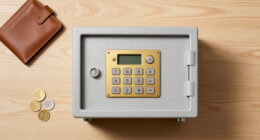

When you withdraw physical gold from your IRA, you can choose to sell it or take it in-kind, but you’ll need to report the fair market value as taxable income and may face penalties if you’re under 59½. You’ll also be responsible for secure storage and insurance afterward. Understanding the process, tax rules, and your options helps facilitate a smooth transition—if you want to learn more about the steps and considerations, keep exploring.
Key Takeaways
- Withdrawing physical gold from an IRA triggers a taxable event based on its fair market value at withdrawal.
- You must submit a distribution request and coordinate with your custodian and depository for transfer.
- Post-withdrawal, you are responsible for securing and insuring the physical gold.
- Early withdrawals before age 59½ may incur a 10% penalty plus income tax.
- Proper planning minimizes transit risks, compliance issues, and ensures secure storage of the gold.

Biometric Large Rifle Safe,30-40 Fingerprint Gun Safe for Rifle and Shotgun
- Large Capacity Storage: Holds up to 29 rifles and 16 pistols
- Multiple Storage Options: Includes shelves, hooks, and organizer pockets
- Biometric & Key Access: Fast 0.1s fingerprint, digital code, emergency key
As an affiliate, we earn on qualifying purchases.
As an affiliate, we earn on qualifying purchases.
Options for Receiving Your Gold: Sell or Take In-Kind

When you decide to take a distribution from your Gold IRA, you have two main options: sell the gold for cash or take an in-kind distribution of the actual metals. Selling the gold converts your assets into cash within the IRA, simplifying tax reporting and liquidity. You’ll report the sale as income, and taxes depend on your account type. Alternatively, an in-kind distribution involves transferring physical gold—coins or bars—from the IRA’s custodial storage directly to your possession. This method requires careful planning for secure storage and insurance afterward. It’s a more tangible approach, giving you actual gold in hand. However, it also means assuming responsibility for safeguarding your metals and managing potential market fluctuations outside the IRA, impacting your investment and future planning. Additionally, consider the role of gold IRAs in protecting against inflation when deciding on your distribution strategy.

CoinFolio American One Ounce (1 oz) Gold Bullion Presentation Box
- Includes one presentation box: One box per purchase
- Stock photo for quality reference: Image shows quality standards
- Designed for 1 oz gold coin: Holds one 1 oz gold bullion
As an affiliate, we earn on qualifying purchases.
As an affiliate, we earn on qualifying purchases.
Tax Implications of Physical Gold Distributions

Taking physical gold from your IRA has specific tax implications that you need to understand. When you distribute gold in-kind, the IRS treats the fair market value at the time of withdrawal as taxable income. You’ll owe ordinary income tax on this amount, regardless of whether you sell the gold immediately or hold onto it. If you’re under age 59½, you might also face a 10% early withdrawal penalty. For those over 59½, the distribution is penalty-free but still taxable. Additionally, physical gold distributions temporarily end the tax deferral on gains, meaning any appreciation after withdrawal is taxable upon sale. Proper reporting is crucial to avoid penalties, and consulting a tax professional helps ensure compliance and maximum tax planning.

Gold Digital Electronic Fireproof Safe Box, Steel Lock Box with Keypad & Spare Keys, Home Office Money Jewelry Safe Felt Liner & Bolts, 0.24 Cubic.
- Product dimensions:With exterior dimensions of 6.69" x 6.69"…
- Reliable Dual Access Digital Security:Our fireproof safe box…
- Durable material structure:Built with alloy steel and dual…
As an affiliate, we earn on qualifying purchases.
As an affiliate, we earn on qualifying purchases.
Age Restrictions and Penalties for Early Withdrawal

You can take penalty-free distributions from your IRA starting at age 59½, but withdrawing earlier results in a 10% penalty plus income tax. If you don’t start your required minimum distributions (RMDs) by age 70½ or 72, depending on your birthdate, you may face penalties. Understanding these age limits and penalties helps you plan your gold withdrawals to avoid unnecessary costs. Additionally, coastal erosion can threaten beach areas, emphasizing the importance of proper planning and management.
Penalty-Free Age Limit
Accessing your Gold IRA without penalties is generally allowed once you reach age 59½, aligning with standard IRA rules. At this age, you can take distributions, including physical gold, without facing the 10% early withdrawal penalty. This age threshold is designed to give retirement savers access to their assets when they’re likely to need funds. However, even penalty-free withdrawals may be subject to income tax, depending on your IRA type. It’s important to note that taking physical possession of gold after this age still requires careful planning—consider secure storage and potential tax implications. If you withdraw before 59½, penalties apply unless you qualify for specific exceptions. Reaching age 59½ simplifies the process, making early penalties unnecessary. Understanding the rules around distributions can help ensure compliance and optimize your retirement strategy.
Early Withdrawal Penalties
While reaching age 59½ allows for penalty-free withdrawals from your Gold IRA, taking out funds before this age triggers specific penalties. If you withdraw early, the IRS imposes a 10% penalty on the distribution amount, on top of regular income taxes. This penalty applies whether you take cash or physical gold, and it’s designed to discourage premature distributions. In addition, any early withdrawal reduces your retirement savings and can impact future growth. You should carefully consider whether an early withdrawal aligns with your financial goals, as penalties and tax consequences can substantially diminish your assets. Utilizing specialized investment options within your IRA can help you optimize your savings and avoid unnecessary penalties. Planning ahead and consulting a financial professional can help you avoid unnecessary penalties and ensure your retirement strategy remains on track.
RMD Requirements
The IRS mandates that required minimum distributions (RMDs) from a Gold IRA must begin by age 70½ or 72, depending on your birth year. If you don’t take your RMDs timely, you face a 50% penalty on the amount you should have withdrawn. This applies whether you hold physical gold or other IRA assets. Once you reach the required age, you need to calculate and withdraw the minimum amount annually. Failing to do so increases your tax liability and penalties. Remember, RMDs are taxable as ordinary income, so plan your withdrawals to manage your tax burden effectively. Taking physical gold doesn’t exempt you from these rules; you must still fulfill RMD obligations to avoid costly penalties. Additionally, understanding tax implications of physical asset withdrawals is crucial for effective planning.

(1) Airtite Coin Holder Storage Container & (10) Black Ring 32mm Air-tite Coin Holder Capsules for 1oz American Gold Eagles and 1oz Gold Krugerrands & Kangaroos
- Includes Coin Holder and Capsules: 1 Airtite storage container and 10 capsules
- Premium Quality Materials: Genuine Airtite brand coin holders
- Fits 1oz Gold Coins: Compatible with American Gold Eagles and Krugerrands
As an affiliate, we earn on qualifying purchases.
As an affiliate, we earn on qualifying purchases.
Navigating the Procedures for Gold Withdrawal

To start the withdrawal process, you’ll need to submit a distribution request form that specifies in-kind delivery and your preferred gold coins or bars. Once your request is approved, coordinate with your custodian and the depository to make certain the physical transfer is handled smoothly and complies with IRS rules. Finally, arrange secure transportation and insurance to protect your gold during transit and storage. To ensure your safety and compliance, review the transfer switch requirements and best practices for physical gold movement.
Initiate Distribution Request
Initiating a gold distribution from your IRA involves submitting a formal request to your custodian, specifying that you want an in-kind transfer of physical metals. You’ll need to fill out a distribution request form, clearly indicating your preference for the type and quantity of gold to be transferred. Make sure to specify the bullion bars or coins, and include details about the depository where the metals will be delivered. Work closely with your custodian to ensure all paperwork is complete and accurate, avoiding delays. Confirm the transfer logistics, including shipping arrangements and any applicable fees. It’s essential to review your IRA agreement beforehand so you understand the process, costs, and IRS rules. Understanding the contrast ratio and other specifications of your chosen projectors can help you select the best method for viewing your physical gold holdings. Once everything is approved, your custodian will coordinate the transfer to facilitate a smooth in-kind distribution.
Ensure Secure Delivery
How can you guarantee the safe and secure delivery of your physical gold during a withdrawal? You need to coordinate closely with your custodian and depository, guarantee all paperwork is complete and correct. Use insured, reputable carriers experienced with precious metals to transport your gold. Confirm delivery addresses and timing, and verify insurance coverage for the shipment. To visualize, consider this table:
| Step | Action | Purpose |
|---|---|---|
| 1 | Submit request | Initiate secure transfer |
| 2 | Coordinate logistics | Ensure proper handling |
| 3 | Use insured carrier | Protect against loss or damage |
| 4 | Confirm delivery | Verify safe arrival |
Following these steps helps avoid delays, theft, or mishandling, ensuring your gold arrives securely in your possession. Proper planning and precious metals transportation can further mitigate risks during transit.
Planning Financially for Your Gold Distribution

Are you prepared to manage the financial impact of taking physical possession of your gold from an IRA? Proper planning helps you optimize tax outcomes and ensure your assets support your retirement goals. Consider these key factors:
- Timing your withdrawal to minimize tax brackets
- Deciding whether to sell immediately or hold physical gold
- Budgeting for secure storage and insurance costs after withdrawal
- Understanding how market fluctuations affect your holdings
- Consulting a tax professional to navigate IRS rules and avoid penalties
- Recognizing the importance of trust issues and establishing confidence in your decision-making process
Balancing these elements helps you avoid surprises and makes your gold distribution a strategic part of your retirement plan. Being proactive guarantees you retain control over your assets while managing tax liabilities and ongoing expenses effectively.
Responsibilities and Risks After Taking Possession

Once you’ve taken physical possession of your gold, you assume full responsibility for its safekeeping and security. You must guarantee it’s stored securely and insured against theft or damage, as the IRA custodian no longer manages these risks. Market fluctuations can affect the value of your gold directly; you bear the risk of price volatility. Additionally, selling your gold may involve transaction fees, commissions, and capital gains taxes, depending on timing. Proper reporting of the distribution’s value as income is essential to avoid IRS penalties. The table below highlights key responsibilities:
| Responsibility | Risk | Action Needed |
|---|---|---|
| Secure storage | Theft, damage, loss | Use insured, secure storage |
| Accurate reporting | Penalties, taxes | Report fair market value |
| Market volatility | Value fluctuations | Monitor and plan sales accordingly |
It is also important to be aware of Gold IRA scams, which can sometimes target individuals who are not fully informed about their responsibilities after taking possession of their gold.
Impact on Your Retirement Portfolio and Legacy

Taking physical possession of your gold can considerably shape your retirement portfolio and legacy. You gain a tangible asset that can serve as a hedge during economic downturns or inflation, providing stability when markets fluctuate. However, it also reduces your IRA’s tax-deferred growth, potentially impacting future earnings. Your decision to withdraw gold influences your financial flexibility and estate planning, as physical assets can be passed down outside your IRA.
Consider these implications:
- You create a lasting legacy for heirs through physical assets.
- You risk market volatility affecting your gold’s value.
- You may need to manage secure storage and insurance costs.
- Your retirement funds could be less liquid, affecting cash flow.
- Your portfolio’s diversification might decrease, increasing risk.
Secure Storage and Insurance Requirements

When you decide to take physical possession of your gold, ensuring proper storage and insurance becomes your responsibility. You need a secure, insured location to protect your assets from theft, damage, or loss. Consider options like a safe deposit box or a professional vault. The table below illustrates storage choices:
| Storage Method | Features |
|---|---|
| Safe Deposit Box | Secured, insured, access limited |
| Private Vault | Custom security, professional oversight |
| Home Safe | Accessible, but higher risk of theft |
| Off-site Storage | Insurance coverage, monitored environment |
| Insurance Coverage | Protects against loss, damage, theft |
Proper insurance adds peace of mind, covering potential risks during storage. You must actively manage your storage and insurance plans to safeguard your gold effectively.
Strategic Considerations for Gold Withdrawal Timing

Timing your gold withdrawals requires careful strategic planning because market conditions and your personal financial goals can substantially impact the best moment to access your assets. You need to contemplate factors like current gold prices, tax implications, and your retirement timeline.
Consider these key points:
- Market valuation: Withdraw when gold prices are high if you plan to sell immediately.
- Tax brackets: Time withdrawals to minimize tax impact, possibly delaying until lower income years.
- Retirement goals: Align withdrawal timing with your income needs and RMD requirements.
- Economic outlook: Withdraw during periods of economic uncertainty if you value physical assets as a hedge.
- Storage and security: Plan for post-withdrawal logistics, including secure storage and insurance costs.
Strategic timing maximizes benefits and reduces risks, ensuring your gold assets support your financial future.
Frequently Asked Questions
Can I Withdraw My Physical Gold Without Selling It Within the IRA?
Yes, you can withdraw your physical gold without selling it within the IRA through an in-kind distribution. This means the actual gold coins or bars are transferred from the custodial storage to your possession. Keep in mind, you’ll need to report the fair market value as taxable income, and you’ll be responsible for secure storage and insurance afterward. Make sure to follow procedural steps and consult your custodian for compliance.
How Do I Determine the Fair Market Value of Gold at Withdrawal?
You determine the fair market value of gold at withdrawal by checking current market prices, typically using reputable sources like spot gold prices from financial news or precious metals dealers. You can also get an appraisal from a qualified professional or refer to the price listed by your depository or custodian. confirm the valuation reflects the market price at the time of withdrawal for accurate reporting and tax purposes.
Are There Specific Storage Options Recommended After Taking Possession?
You should choose secure, insured storage options after taking possession of your gold. Consider a high-quality safe at home, a bank safety deposit box, or a professional private vault. Each option offers varying levels of security and accessibility. Make certain your storage is fireproof, theft-resistant, and insured to protect your investment. Regularly review and update your security measures to keep your physical gold safe and accessible when needed.
What Are the IRS Reporting Requirements for Physical Gold Distributions?
Imagine you’re the captain of a ship, steering through treacherous waters. When you withdraw physical gold from your IRA, the IRS requires you to report the fair market value of the gold at distribution as taxable income. You’ll need to file Form 1099-R, showing this value. Proper reporting guarantees you stay compliant, avoiding penalties, and keeps your financial voyage smooth as you take possession of your precious cargo.
Can I Pass on Physical Gold to Heirs Outside My IRA?
Yes, you can pass on physical gold to heirs outside your IRA. Once you withdraw the gold and take possession, it becomes a personal asset, allowing you to transfer it through a will or estate plan. Keep in mind, the heirs will need to manage secure storage and insurance, and they’ll owe taxes if they sell the gold. Proper estate planning ensures your legacy is preserved according to your wishes.
Conclusion
Taking possession of your IRA gold can be a strategic move, but it comes with important considerations. For example, if you withdraw gold before age 59½, you might face penalties and taxes, reducing your gains. Think carefully about timing, storage, and your long-term goals. By planning ahead, you can avoid pitfalls and guarantee your gold supports your retirement legacy—making your decision both profitable and secure.