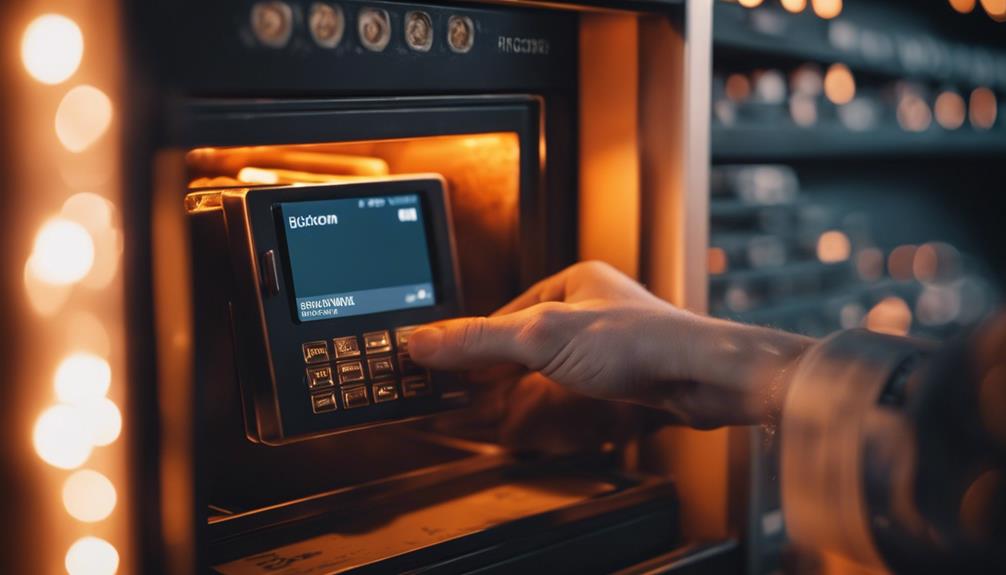

A secure home setup for crypto devices involves storing your hardware wallets in fireproof, waterproof safes away from accessible areas, and keeping backups like seed phrases offline in secure locations such as safe deposit boxes. Use a combination of biometric authentication, strong passwords, and regular firmware updates to protect your devices. Install surveillance cameras and alarms to deter theft. Implementing these layered precautions guarantees your assets stay safe; explore further steps to strengthen your security measures.
Key Takeaways
- Store hardware wallets in fireproof, waterproof safes with surveillance to prevent theft and environmental damage.
- Use biometric authentication and strong passwords for all devices and accounts linked to crypto holdings.
- Keep seed phrases offline in secure, separate locations like safety deposit boxes, away from devices.
- Regularly update firmware and security features on all hardware wallets and connected devices.
- Implement layered physical and digital security measures, including alarms, cameras, and multi-factor authentication.
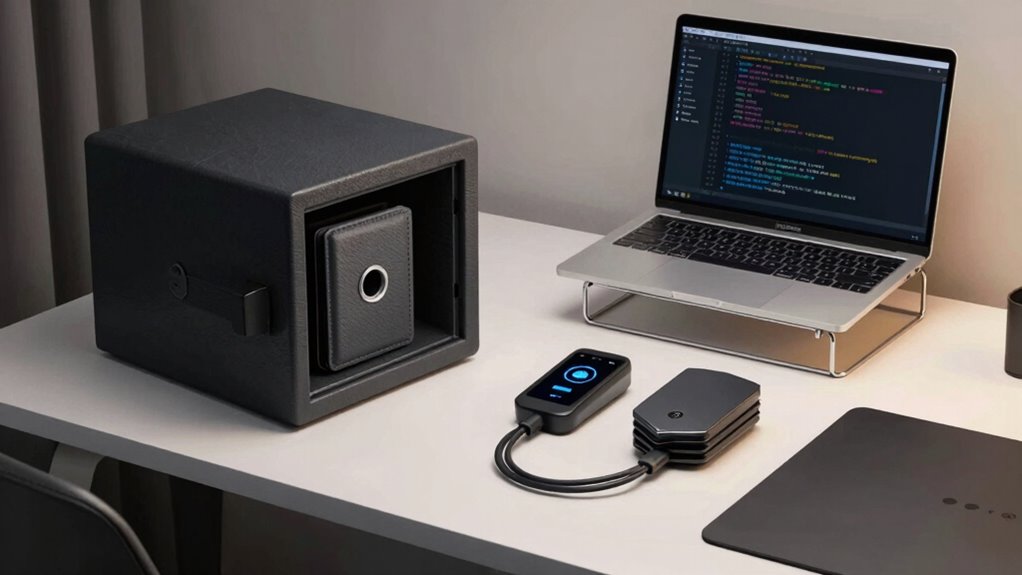
Setting up a secure home environment for your crypto devices is essential to protect your digital assets from theft and hacking. You want to create a space where your private keys and sensitive information stay safe from prying eyes and cyber threats. The foundation of this setup involves choosing the right hardware wallets, which are physical devices designed specifically for securely storing your cryptocurrencies offline. Unlike software wallets, hardware wallets keep your private keys isolated from internet-connected devices, making them much harder for hackers to access. When selecting a hardware wallet, look for reputable brands that have robust security features, such as secure element chips and tamper-proof design.
Choose reputable hardware wallets with secure chips and tamper-proof design to protect your crypto assets offline.
Beyond hardware wallets, biometric authentication plays a key role in fortifying your home setup. Biometric security methods—like fingerprint scanners or facial recognition—add an extra layer of protection to your devices. You can set up biometric authentication on your computer, smartphone, or even your hardware wallet if it supports such features. This means that even if someone gains physical access to your device, they won’t be able to unlock it without your unique biometric data. Combining biometric authentication with your hardware wallets ensures that access is tightly controlled and personalized, reducing the risk of unauthorized use.
Creating a physically secure environment matters just as much as digital safeguards. Store your hardware wallets in a safe or lockbox when you’re not using them. Consider a fireproof, waterproof safe that’s hidden away in a discreet location. Avoid leaving your devices and backup seed phrases out in the open or in easily accessible areas. Keep backup seed phrases in a separate, secure location—preferably offline, in a safe deposit box or a secure, durable physical medium—so that even if your home is compromised, your assets remain protected. Additionally, understanding hardware security features like secure element chips can help you make informed decisions when choosing your devices. Incorporating physical security measures such as surveillance cameras and alarm systems can further deter theft and unauthorized access. Moreover, educating yourself about cybersecurity best practices can help you stay ahead of potential threats and vulnerabilities.
Regularly updating your security practices is essential. Guarantee your devices have the latest firmware updates and security patches. Use strong, unique passwords for your accounts and enable two-factor authentication where possible. For added security, consider setting up biometric authentication on your devices and wallets, making it more difficult for intruders to bypass your protections. In the end, a secure home setup isn’t just about one element; it’s about layering multiple defenses—hardware wallets, biometric authentication, physical security measures, and vigilant practices—that work together to keep your crypto assets safe from theft, hacking, and accidental loss.
fireproof waterproof safe for hardware wallets
As an affiliate, we earn on qualifying purchases.
As an affiliate, we earn on qualifying purchases.
Frequently Asked Questions
How Often Should I Update My Crypto Device Firmware?
You should update your crypto device firmware as soon as updates are available to address potential firmware vulnerabilities. Regular updates help maintain device encryption strength and prevent attackers from exploiting known vulnerabilities. Usually, checking for firmware updates monthly is a good practice, but follow your device manufacturer’s recommendations. Staying current minimizes risks, guarantees your device remains secure, and keeps your crypto assets protected from evolving threats.
Can I Use a Single Password for Multiple Devices?
You shouldn’t use a single password for multiple devices. Instead, focus on strong password management by creating unique, complex passwords for each device. Enhance your security with multi-factor authentication whenever possible. This layered approach makes it harder for someone to compromise your crypto devices, even if one password gets exposed. Regularly update your passwords and use a reliable password manager to keep track of them securely.
What Are the Risks of Cloud Backups for Crypto Wallets?
Cloud backups for crypto wallets pose risks like potential cloud security breaches, where hackers might access your sensitive data. Additionally, relying solely on cloud backups diminishes backup redundancy, making your crypto assets vulnerable if the cloud service experiences outages or data loss. To stay safe, use encrypted cloud storage, implement multi-layer security, and keep multiple backup copies in different locations. This way, you minimize risks and guarantee your wallet’s safety.
Is It Necessary to Have a Dedicated Internet Connection?
Yes, having a dedicated internet connection can be a game-changer for your crypto security. It minimizes risks from shared networks, ensuring your wireless security is rock solid. By isolating your crypto devices on this separate connection, you drastically reduce the chance of physical access or cyber attacks. It’s like building a fortress around your assets, making it nearly impossible for hackers to breach your defenses and steal your hard-earned crypto.
How Do I Securely Dispose of Old Crypto Hardware?
To securely dispose of old crypto hardware, start with thorough data wiping using specialized software to erase all sensitive information. Next, consider hardware recycling to guarantee environmentally friendly disposal. Remove any batteries or components that could hold residual data or pose environmental hazards. Properly recycle or donate usable parts, and avoid just throwing devices away. This process guarantees your private keys stay protected and your hardware is disposed of responsibly.
biometric safe for crypto storage
As an affiliate, we earn on qualifying purchases.
As an affiliate, we earn on qualifying purchases.
Conclusion
So, there you have it—your fortress of solitude for crypto devices. Just imagine, all that effort to keep hackers at bay, only to accidentally leave your seed phrase on a sticky note in plain sight. Truly, nothing screams “secure” like a fortress built on luck and hope. But hey, if losing your entire crypto stash in a kitchen drawer sounds like a fun adventure, you’re all set. Otherwise, maybe consider taking security a tad more seriously.
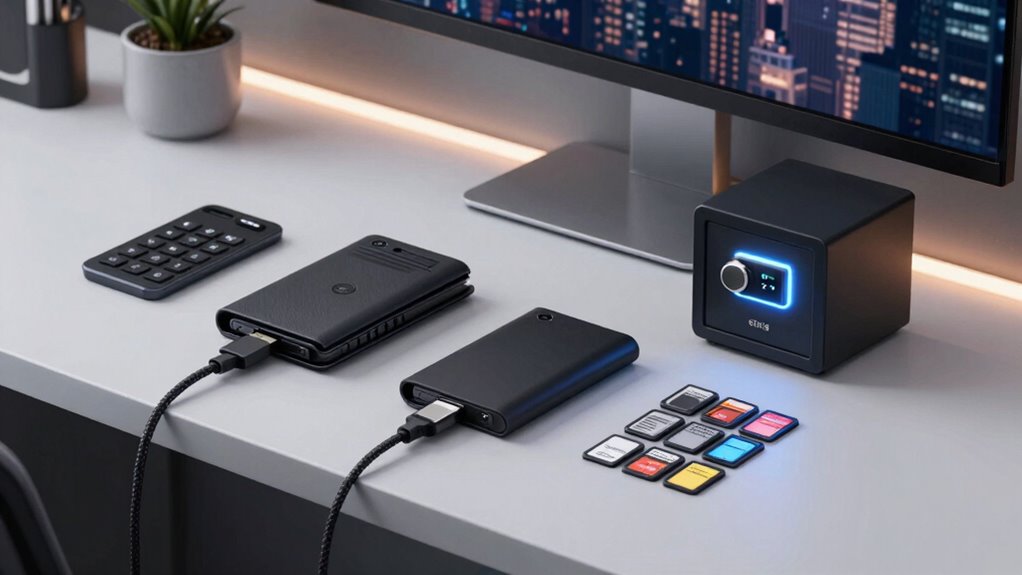
hardware wallet with secure element chip
As an affiliate, we earn on qualifying purchases.
As an affiliate, we earn on qualifying purchases.
As an affiliate, we earn on qualifying purchases.