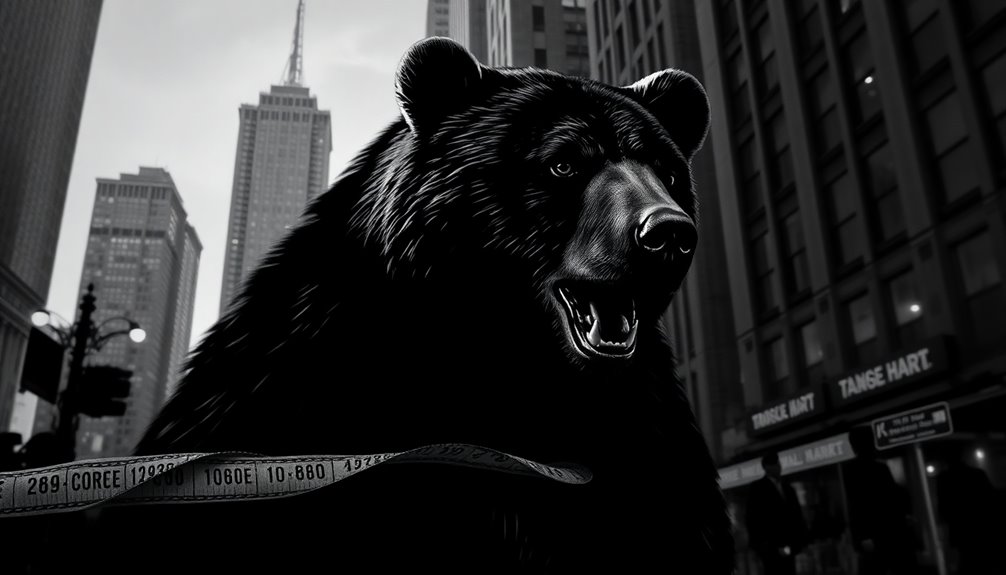

When you hear the term "bear market," it likely evokes a sense of dread. But have you ever wondered where this phrase actually comes from? The connection to aggressive bears and their historical significance in trading practices adds depth to its meaning. As you explore this unexpected origin story, you might find that the legacy of this wild animal influences market perceptions more than you think. What other surprising elements might emerge from this tale?

Get home office essentials delivered free — and shop member deals
- Fast, free delivery on millions of items
- Access to Prime Big Deal Days deals on October 6–7
- Prime Video, Amazon Music and more included
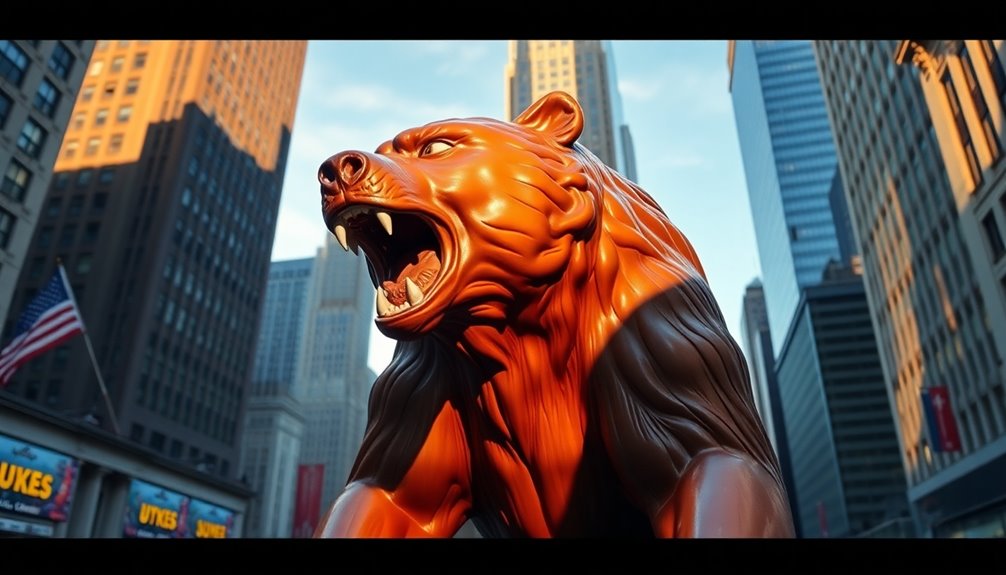
When you think of Wall Street, the image of a bear mightn't come to mind right away, but the legacy of this formidable creature looms large over the financial world. The term "bear market" has an intriguing origin that reflects both historical trading practices and the nature of market declines.
One popular theory suggests that it comes from the practice of selling bearskins before they were even in hand. Traders would sell these skins, hoping to buy them back at a lower price later. This speculative approach mirrors the downward trajectory associated with bear markets, where investor confidence falters. Understanding fee structures can help investors avoid unexpected costs during these market conditions.
Another explanation ties the bear to its aggressive behavior, swiping downward with its claws, symbolizing a market that's headed south. While there's no definitive proof of either etymology, these stories resonate with those who navigate the financial landscape. As investors grapple with downturns, the term "bear" has become synonymous with pessimism and market declines.
You might've heard of Jesse Livermore, dubbed the "Great Bear of Wall Street." He was a legendary trader who thrived during market downturns, often profiting from short-selling strategies. Livermore's uncanny ability to predict declines, especially during events like the 1907 Bankers' Panic, made him a figure of both admiration and fear. Since 1942, there have been 16 bull markets and 15 bear markets, highlighting the cyclical nature of market performance.
His life was a rollercoaster of wealth and bankruptcy, highlighting the volatility inherent in trading. Livermore's legacy as the "Great Bear" emphasizes the potential for profit even in the bleakest of market conditions.
Artistic representations also play a role in how we perceive these markets. The "Charging Bull" sculpture in New York City, while not directly related to bear markets, embodies strength and resilience, contrasting sharply with the bear's symbolism.
This bull was installed as a beacon of hope after the 1987 stock market crash, reminding investors that recovery is possible. Over time, it has become a financial icon, drawing tourists and locals alike.
Bear markets can trigger economic downturns, affecting everything from consumer spending to business investments. They often arise from crises, geopolitical tensions, or market overvaluations.
The fear that accompanies these bearish phases can deepen economic woes. Yet, bear markets can also present unique opportunities for savvy investors who can adjust to shifting trends. Understanding the legacy of the bear in Wall Street's lexicon allows you to navigate these turbulent times with a clearer perspective.
Halloween Picks
halloween
As an affiliate, we earn on qualifying purchases.