
TL;DR

Get home office essentials delivered free — and shop member deals
- Fast, free delivery on millions of items
- Access to Prime Big Deal Days deals on October 6–7
- Prime Video, Amazon Music and more included
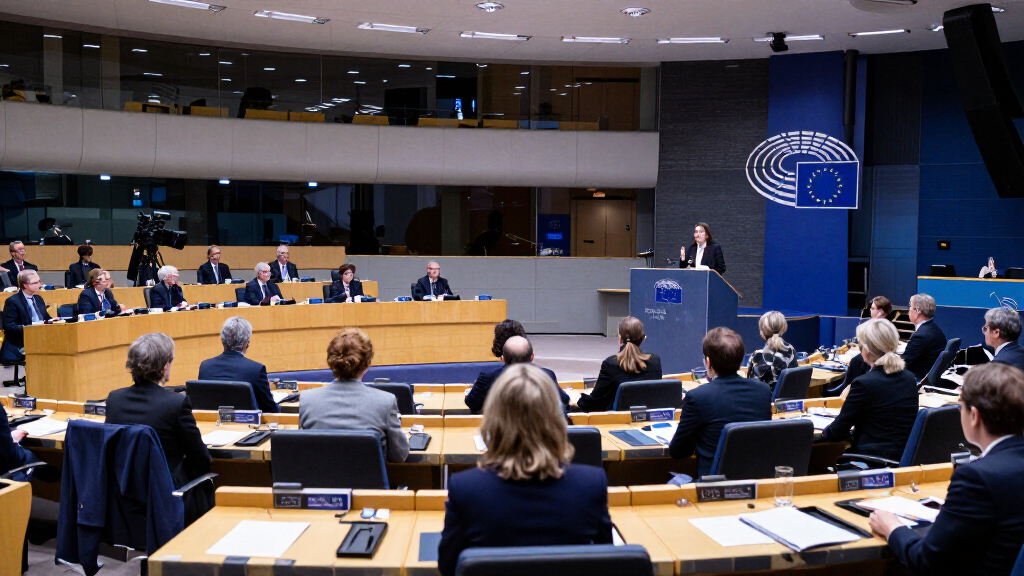
ECB President Christine Lagarde told the European Parliament’s economic affairs committee on 28 September 2026 that the ECB raised interest rates by 25 basis points in response to an energy-driven rise in inflation, which reached 3.2% in August. She also said AI investment and borrowing are already reshaping the euro area economy, with AI-related credit accounting for roughly a quarter of corporate credit growth.
ECB President Christine Lagarde told the European Parliament’s Committee on Economic and Monetary Affairs on 28 September 2026 that the ECB raised its three key interest rates by 25 basis points earlier this month in response to rising energy-driven inflation, and warned that artificial intelligence is already reshaping euro area investment, credit and labour markets in ways that matter for monetary policy.
Speaking at the regular hearing in Brussels, Lagarde said the ECB’s decision to tighten policy followed an increase in headline inflation to 3.2% in August, up from 2.9% in July, driven largely by energy inflation of 14.3%. She stressed that the ECB’s strategy for energy shocks is well defined: “We do not react to energy prices, we react if we see risks of higher energy prices becoming embedded in inflation.” She said the ECB’s “three criteria” — the inflation outlook, underlying inflation dynamics, and monetary policy transmission — showed higher inflation ahead but no signs yet of it becoming embedded in wages or other prices.
On the economy, Lagarde said the euro area proved resilient despite the energy shock, with solid real GDP growth in the second quarter of 2026, broad-based across countries and sectors, and expected to have continued in the third quarter. Unemployment stood at 6.4% in July, though employment and labour force growth continue to slow. The September ECB staff projections forecast growth of 0.9% in 2026, 1.4% in 2027 and 1.5% in 2028, with headline inflation averaging 3.0% in 2026, 2.5% in 2027 and 2.1% in 2028.
On AI, Lagarde said firms are set to devote around 10% of total investment to AI in 2026, and that AI-related borrowing already accounts for roughly a quarter of credit growth to firms. She called AI a “transformative force” that could enhance Europe’s productivity, competitiveness and living standards, but cautioned that its overall macroeconomic effect “is uncertain” and will work through interconnected demand and supply channels.
Rate Path and AI’s Reach for Households
The rate rise directly affects borrowing costs for mortgages, business loans and consumer credit across the euro area. Lagarde characterised the ECB as remaining on a “middle path” — the energy shock is too large to look through, but the response is deliberately measured. She also flagged that long-term interest rates have risen notably since the last meeting, which she said would slow growth and reduce policy pass-through by more than projected.
The AI discussion marks a shift in how the ECB frames the technology: not as a distant trend but as a present-day force in credit markets and investment, with potential effects on productivity, wages, labour markets and inflation that central bankers must monitor. For readers, this means both the cost of money and the structure of the economy’s growth are being shaped by decisions informed by these judgments.
Top picks for "christine lagarde hear"
As an affiliate, we earn on qualifying purchases.
Energy Shock and the Middle Path
The hearing forms part of the ECB’s regular dialogue with the European Parliament. Lagarde said the euro area has faced a renewed energy shock, with energy inflation accelerating to 14.3% in August from 10.3% in July, reflecting higher energy commodity prices and strong refining margins on liquid fuels. Underlying inflation excluding energy and food edged down to 2.4%, helped by falling services inflation.
Wage data so far show no material response to the shock: compensation per employee stood at 3.3% in the second quarter, down from 3.6% in the first. Longer-term inflation expectations remain around 2%, which Lagarde said supports the stabilisation of inflation at target over the medium term. The “middle path” framing was first laid out by Lagarde earlier this year as the guiding approach to the energy-driven inflation episode.
“We do not react to energy prices, we react if we see risks of higher energy prices becoming embedded in inflation.”
— Christine Lagarde, President of the ECB
Unknowns in the AI-Inflation Picture
Lagarde was explicit that AI’s overall macroeconomic effect is uncertain and will unfold over time through channels that are difficult to quantify. It is not yet clear how AI will affect wage setting, services inflation or productivity growth in the euro area specifically.
On inflation, the outlook carries upside risks, while growth faces downside risks, and Lagarde noted that shorter-horizon inflation expectations remain elevated. Whether higher energy prices will eventually feed into wages remains an open question — current data show no material response, but the ECB is watching for it. The pace of future rate decisions was not specified.
Upcoming Projections and Transmission Watch
The ECB will continue to assess its three criteria — the inflation outlook, underlying inflation dynamics and monetary policy transmission — at upcoming Governing Council meetings. Markets and households will watch for the next staff projections and any sign that energy prices are passing into wages or services prices, which Lagarde indicated would be the trigger for a stronger policy reaction. The ECB’s ongoing analysis of AI’s effects on productivity, labour markets and inflation is expected to feature in future hearings and publications.
Key Questions
Why did the ECB raise interest rates in September 2026?
The ECB raised its three key rates by 25 basis points because headline inflation rose to 3.2% in August, driven mainly by energy inflation of 14.3%. Lagarde said the energy shock was too large to look through, but that a measured response was appropriate because there are no signs yet of inflation becoming embedded in wages.
What did Lagarde say about AI?
She said AI is already affecting the economy: firms are set to devote around 10% of total investment to AI in 2026, and AI-related borrowing accounts for roughly a quarter of credit growth to firms. She called AI a transformative force for productivity and competitiveness but stressed its overall macroeconomic effect is uncertain.
What is the ECB’s growth forecast for the euro area?
The September ECB staff projections expect growth of 0.9% in 2026, 1.4% in 2027 and 1.5% in 2028, supported by falling energy prices, a robust labour market, business and housing investment, and stronger foreign demand.
Will the ECB raise rates again?
Lagarde did not commit to further moves. She said the ECB remains on a “middle path” and will continue assessing its three criteria, with particular attention to whether energy prices start feeding into wages and underlying inflation. Long-term interest rates have risen notably, which she said would slow growth and reduce policy pass-through.
Is inflation expected to return to the 2% target?
According to the September staff projections, headline inflation is expected to average 3.0% in 2026, 2.5% in 2027 and 2.1% in 2028, approaching but remaining slightly above target. Longer-term inflation expectations stand at around 2%, which the ECB views as supportive of stabilisation.
Source: primary
Fall Picks
fall essentials
As an affiliate, we earn on qualifying purchases.