To diversify your IRA, consider allocating assets across multiple metals like gold, silver, platinum, and palladium, each with IRS-approved options. Gold offers stability, while silver provides affordability and liquidity. Including platinum and palladium can boost growth potential but come with added risks. Balancing your investments based on market trends and your risk tolerance helps create a resilient portfolio. Keep exploring to discover strategies that optimize your metal allocations and long-term gains.
Key Takeaways
- Allocate among gold, silver, platinum, and palladium to spread risk and enhance portfolio resilience.
- Prioritize highly liquid, IRS-approved coins and bullion with high purity standards for easy trading and compliance.
- Consider your investment goals—growth, stability, or liquidity—when determining metal allocations.
- Regularly review and rebalance your metal holdings to adapt to market conditions and optimize diversification.
- Use reputable sources and verify certifications to ensure the authenticity and IRS compliance of your IRA metals.
Understanding the Different Metals Approved for IRAs
Are you aware of which metals qualify for inclusion in an IRA? The main metals approved by the IRS are gold, silver, platinum, and palladium. Gold must have at least 99.5% purity, while silver needs a minimum of 99.9%. Platinum and palladium also have specific purity standards, making them suitable for retirement accounts. These metals must be stored in IRS-approved depositories to meet federal regulations. You can’t just buy any bullion or coins; they must be certified as IRS-approved and meet purity and weight requirements. Choosing the right metals for your IRA offers diversification, but it’s essential to understand these standards to ensure your investments qualify. Proper metal selection is crucial for building a compliant, valuable, and resilient precious metals portfolio.
The Benefits of Diversification Across Precious Metals
Diversifying your precious metals portfolio helps manage risk and enhances long-term stability. By spreading investments among gold, silver, platinum, and palladium, you reduce exposure to any single metal’s downturn. This approach can offset losses in one metal with gains in others, especially during economic turbulence. Diversification also guards against market volatility and fluctuating commodity prices. Consider the following benefits:
| Risk Mitigation | Market Stability | Long-Term Growth |
|---|---|---|
| Reduces dependency on one asset | Smooths out price swings | Maintains value over time |
| Protects against sector-specific downturns | Provides steady performance | Enhances portfolio resilience |
| Balances different metal behaviors | Balances supply/demand shifts | Builds a diversified retirement fund |
| Minimizes potential losses | Ensures consistent asset performance | Supports wealth preservation |
Additionally, understanding the market dynamics of each metal can help investors make informed decisions and better adapt to changing conditions.
Gold: The Cornerstone of a Precious Metals IRA

Gold is the foundation of a precious metals IRA because of its high purity standards and stability. Popular coins like the American Gold Eagle and Canadian Maple Leaf meet the IRS’s 99.5% purity requirement and are widely trusted. Including gold in your portfolio helps diversify and strengthen your retirement strategy. When selecting gold for your IRA, it’s important to consider vetted products that meet safety and effectiveness standards to ensure long-term value.
Gold Purity Standards
To qualify for inclusion in a Precious Metals IRA, gold must meet strict purity standards set by the IRS. Generally, this means the gold must be at least 99.5% pure, guaranteeing you’re investing in high-quality assets. This purity standard guarantees that your gold has minimal impurities, which helps maintain its value over time. The IRS specifies these standards to prevent investors from holding low-quality or counterfeit metals. When selecting gold for your IRA, verify certifications from reputable refineries and ensure the coins or bars are marked with their purity level. Keeping your gold compliant not only safeguards your investment but also ensures it remains eligible for tax-advantaged growth within your IRA. Understanding purity standards is crucial for maintaining the integrity of your precious metals portfolio. Always work with trusted dealers who understand these purity requirements.
Popular Gold Coins
Choosing the right gold coins for your IRA can substantially impact your investment’s stability and growth. Popular options like the American Gold Eagle and Canadian Maple Leaf are widely recognized for their purity and liquidity. The Gold Eagle, issued by the U.S. Mint, contains 91.67% gold and features iconic imagery, making it highly attractive to investors. The Canadian Maple Leaf is known for its pure 99.99% gold content and its beautiful design. Both coins are IRS-approved, ensuring they meet federal standards for IRAs. When selecting coins, consider their purity, recognition, and liquidity—these factors make it easier to buy, sell, or transfer your holdings later. Investing in well-known, reputable gold coins helps safeguard your retirement assets and enhances your portfolio’s stability. Additionally, understanding local regulations can help optimize your Gold IRA investment strategy.
Role in Diversification
As a cornerstone of a well-rounded precious metals IRA, gold plays a key role in diversification strategies. Its historical stability and universal recognition make it a reliable store of value during economic uncertainty. Including gold in your portfolio helps balance volatility from other assets, providing a hedge against inflation and market swings. Gold’s liquidity and long-term growth potential make it a strategic choice for steady preservation of wealth. When you diversify across metals like silver, platinum, and palladium, gold anchors your portfolio, reducing risk and enhancing resilience. This combination offers protection during economic turbulence while maintaining growth opportunities. In fundamental terms, gold acts as a foundation, supporting a balanced approach that can adapt to evolving market conditions and safeguard your retirement goals. Additionally, understanding how to diversify your assets across different precious metals can further strengthen your investment strategy and market resilience.
Silver: An Accessible and Valuable Addition
Silver offers an accessible entry point into precious metals IRAs due to its affordability and widespread availability. Its lower price makes it easier for investors to diversify without a large upfront commitment. Silver also boasts significant liquidity, allowing you to buy or sell with relative ease. To help you better understand your options, here’s a quick overview:
| Silver Investment Type | Popular Coins | Approved Bullion |
|---|---|---|
| Coins | American Silver Eagle | 1 oz. Silver bars and rounds |
| Bars | Austrian Philharmonic | 10 oz. Silver bars |
| Rounds | Generic silver rounds | 100 oz. Silver bars |
With silver, you get an affordable, versatile addition that enhances your IRA’s diversification and long-term potential. Low premium options make silver investments even more accessible for IRA holders.
Platinum and Palladium: Expanding Your Portfolio
Platinum and palladium offer unique characteristics and uses that can enhance your IRA portfolio, such as their roles in automotive catalysts and jewelry. To include these metals, you need to verify they meet IRS approval criteria, like purity standards and approved forms. While they can boost diversification and potential returns, it’s important to understand their market risks and investment benefits. Additionally, knowing the market performance metrics of these metals can help you make informed investment decisions.
Metal Characteristics and Uses
Since platinum and palladium are less common than gold and silver, they offer unique diversification opportunities for your IRA portfolio. Platinum is a dense, durable metal with a silvery-white appearance, often used in catalytic converters, jewelry, and industrial applications. Palladium shares similar uses but is lighter and more reactive, making it essential in automotive catalytic systems and electronics. Both metals have high melting points and are resistant to corrosion, which contributes to their long-term stability. Their industrial demand can drive prices, providing growth potential beyond traditional precious metals. Including platinum and palladium in your IRA can diversify your holdings, hedge against economic shifts, and capitalize on their unique industrial and aesthetic uses. Their rarity and specific applications make them a strategic addition to a balanced metals portfolio. Additionally, the integration of AI in industrial processes is expected to influence demand and supply dynamics for these metals in the coming years.
IRS Approval Criteria
To include platinum and palladium in your IRA, it’s important to understand the IRS approval criteria that govern these metals. The IRS requires these metals to meet specific purity standards and be stored in approved depositories. They must be in the form of bars or coins that meet minimum purity levels and are produced by accredited manufacturers. The table below summarizes the key approval criteria: notable titles include “Spirited Away” and “Your Name.” | Metal | Purity Requirement | Approved Forms | Storage Location | |————–|———————|———————-|————————| | Platinum | 99.95% | Bars and coins | IRS-approved depository | | Palladium | 99.95% | Bars and coins | IRS-approved depository
Investment Benefits and Risks
Expanding your IRA to include platinum and palladium can offer significant diversification benefits, but it also introduces specific risks. These metals often move independently of gold and silver, helping you hedge against market volatility. However, their prices are highly sensitive to supply disruptions, geopolitical issues, and industrial demand, especially from the automotive industry. This can lead to increased volatility and unpredictable fluctuations. Additionally, platinum and palladium tend to have narrower markets with less liquidity, making it harder to buy or sell large amounts quickly. Storage and custodial costs may also be higher due to their specialized handling requirements. While these metals can strengthen your portfolio’s resilience, you should carefully weigh their risks against potential rewards to ensure they align with your long-term investment goals.
Selecting the Right Coins and Bullion for Your Investment
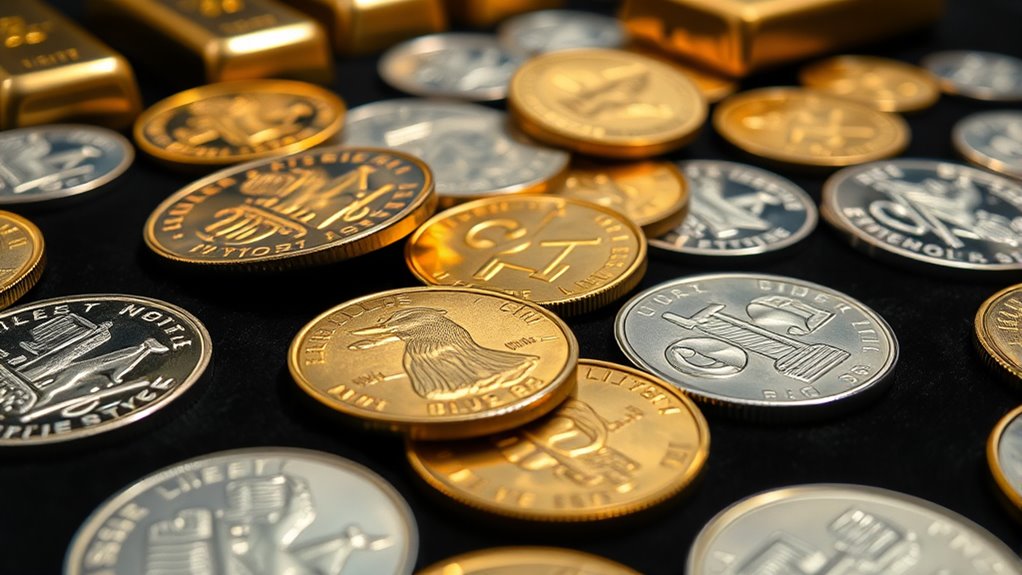
Choosing the right coins and bullion for your IRA investment is essential to building a diversified and valuable portfolio. You want to focus on IRS-approved options that meet purity standards and are easy to store securely. Consider coins with high liquidity, like the American Gold Eagle or Silver Maple Leaf, which are widely recognized and easy to sell later. Guarantee the bullion is certified and comes from reputable mints to avoid counterfeit issues. Also, select coins that align with your investment goals—whether you’re seeking long-term growth or quick liquidity. Keep in mind that premiums, rarity, and condition can influence value.
- Prioritize IRS-approved coins and bullion with high purity
- Choose popular, highly liquid options like American Eagles or Maple Leafs
- Verify certification and source from reputable mints
How to Allocate Your Metals for Optimal Diversification

Achieving ideal diversification in your metals IRA involves strategically distributing your investments across various approved metals to balance risk and reward. Start by evaluating your risk tolerance and long-term goals. Allocate a significant portion to gold, since it’s a stable store of value, and diversify with silver, which often has higher volatility but potential for growth. Consider adding platinum and palladium to further reduce dependence on one metal and hedge against economic shifts. Keep in mind that a balanced mix can help protect your portfolio during market downturns, as different metals respond differently to economic changes. Regularly review your allocations to ensure they align with market conditions and your retirement timeline. Diversification isn’t a one-time decision; it’s an ongoing process to optimize your IRA’s performance.
Working With Top Custodians and Dealers

Partnering with reputable custodians and dealers is vital to successfully building and managing your metals IRA. The right professionals ensure your investments meet IRS standards, are properly stored, and are smoothly transferred. To choose the best partners, consider these factors:
- Experience and Reputation: Look for companies with positive reviews and a solid history in precious metals IRAs.
- Transparent Fees: Ensure their fee structure is clear, with no hidden charges.
- Customer Support: Choose providers who offer dedicated guidance and respond promptly to your questions.
Working with top custodians and dealers minimizes risks, streamlines the setup process, and helps you stay compliant with federal regulations. This partnership is indispensable for safeguarding your investment and achieving your diversification goals effectively.
Strategies for Rebalancing Your IRA Portfolio Over Time

Rebalancing your IRA portfolio over time is essential to maintaining your desired level of diversification and managing risk. Regularly review your holdings to guarantee your allocation aligns with your long-term goals. If one metal’s value rises substantially, consider selling a portion to rebalance and prevent overexposure. Conversely, if a metal’s value drops, you might buy more to keep your desired proportion. Set specific rebalancing intervals—annually or semi-annually—and stick to them. Use market movements as opportunities to adjust rather than reacting impulsively. Keep an eye on economic trends and inflation rates, which can influence metal prices. Partner with your custodian to execute rebalancing efficiently and tax-advantageously. Consistent rebalancing helps you maintain a resilient, diversified metals IRA that adapts to market shifts.
Frequently Asked Questions
What Are the Tax Implications of Reallocating Metals Within My IRA?
When you reallocate metals within your IRA, you’ll generally avoid taxes or penalties if you do a direct rollover or transfer. This process moves assets between custodians without triggering taxable events. However, if you sell metals inside the IRA and then repurchase, it could be regarded as a taxable event. Always consult your custodian or a tax professional to ensure proper handling and avoid unintended tax consequences.
How Do I Determine the Right Percentage of Each Metal in My IRA?
Picture yourself as a modern-day gold prospector, carefully balancing your metals. To determine the right percentage, consider your risk tolerance, investment goals, and market outlook. Typically, a mix of 50% gold, 30% silver, and 20% other metals works well, but adjust based on your comfort level and diversification needs. Regularly review your portfolio to stay aligned with your financial objectives and market changes.
Can I Include Rare or Collectible Coins in My Precious Metals IRA?
Yes, you can include rare or collectible coins in your precious metals IRA, but only if they meet IRS standards. They must be approved for IRA inclusion, have a minimum purity, and be stored in an IRS-approved depository. Keep in mind, collectible coins often carry premiums, which can affect your investment’s long-term value. Always consult with your custodian to guarantee your coins qualify before adding them to your IRA.
What Are the Storage and Insurance Costs for Diversified Metal Holdings?
Storage and insurance costs for your diversified metals typically vary, but expect to pay a percentage of the metal’s value annually. While storage in IRS-approved depositories guarantees security, insurance adds an extra layer of protection against loss or theft. Think of it as safeguarding your treasure chest; the higher the value, the more you’ll invest in securing it. Regular fees help keep your metals protected and compliant with federal regulations.
How Often Should I Review and Rebalance My Precious Metals IRA Portfolio?
You should review and rebalance your precious metals IRA at least once a year or whenever there’s a significant market change. Regular check-ins help verify your holdings align with your financial goals and risk tolerance. If one metal outperforms or underperforms, rebalancing keeps your portfolio diversified and balanced. Staying proactive allows you to capitalize on market trends and protect your long-term retirement savings effectively.
Conclusion
By diversifying your IRA with gold, silver, platinum, and palladium, you’re building a resilient portfolio that can weather market shifts. But the real question is—are you ready to take the next step and access the full potential of precious metals? Your ideal strategy awaits, and the right move today could shape your financial future in ways you never imagined. Don’t wait—your diversified gold and silver journey is just beginning.