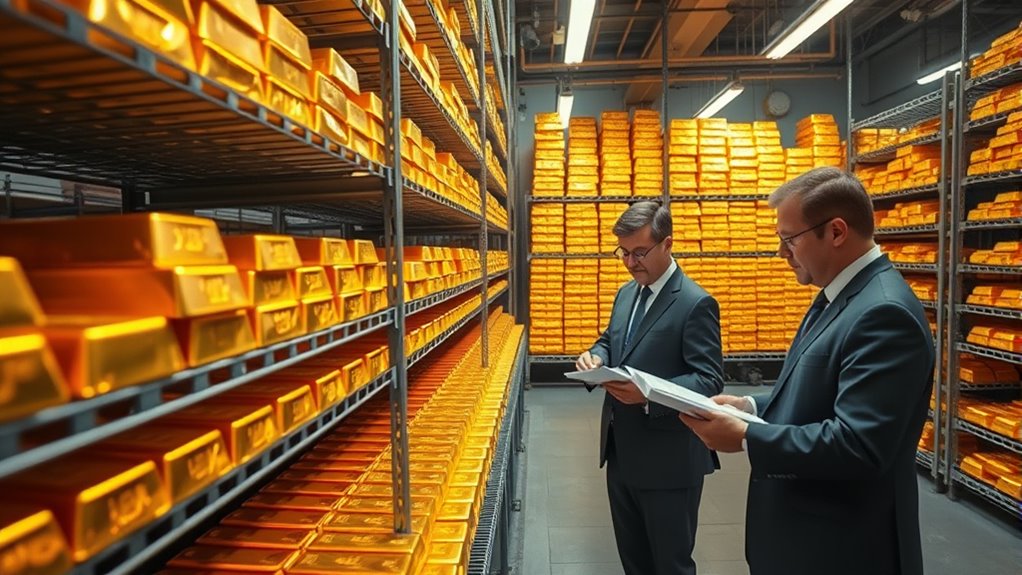

The surge in central bank gold purchases shows they’re seeking safer, more resilient reserves amid economic and geopolitical uncertainties. By shifting investments into gold, they’re reducing reliance on traditional assets like treasuries and boosting gold’s status as a reliable safeguard. This trend signals long-term stability and confidence in gold’s role as a hedge against inflation and currency risks. To see how this could impact your investments, explore further insights below.
Key Takeaways
- Record central bank gold purchases signal long-term confidence in gold as a safe haven asset.
- Increased demand and limited supply are driving gold prices higher, benefiting long-term investors.
- Gold diversification reduces reliance on fiat currencies and traditional assets like Treasuries.
- Ongoing central bank buying suggests a sustained upward trend in gold prices.
- Incorporating gold into portfolios enhances resilience against economic uncertainties and geopolitical risks.
Surge in Central Bank Gold Acquisitions

Have you noticed how central banks are rapidly boosting their gold holdings? Over the past three years, they’ve purchased more than 1,000 tons annually, a sharp increase from the previous decade’s average of 400-500 tons. This acceleration signals a strategic shift, driven by geopolitical tensions and economic uncertainties. Central banks view gold as a safe, reliable asset to diversify reserves and hedge against volatile currencies and inflation. Their aggressive buying spree is pushing gold prices higher, recently surpassing $4,000 per ounce. This trend indicates a long-term commitment to gold accumulation, reflecting confidence in its stability. As more nations prioritize gold in their reserve portfolios, you can expect this surge to shape the future landscape of global asset management. Additionally, this increased demand from central banks mirrors long-term investment strategies that emphasize secure assets in uncertain times.
Economic Uncertainty and Gold as a Safe Haven

As central banks ramp up their gold holdings, the broader context of economic uncertainty becomes even more apparent. During times of instability, gold offers a reliable safe haven, helping protect reserves from currency devaluation and inflation. You should see these purchases as a response to global risks, such as geopolitical tensions or financial market volatility. Gold’s intrinsic value and limited supply make it a stable asset when confidence in traditional currencies wanes. Central banks diversify their reserves to reduce exposure to risky assets, and gold fits perfectly into this strategy. The rising demand signals that uncertainty isn’t easing. For long-term investors, this trend underscores gold’s role as a safeguard, providing stability and potential growth during turbulent economic times.
Market Dynamics Driving Gold Prices Higher

Rising demand from central banks and limited supply are fueling higher gold prices, creating a strong upward momentum in the market. As central banks purchase more gold, their collective influence pushes prices upward, especially given the constrained supply from mining and recycling. This increased buying activity signals confidence in gold’s long-term value and stability. Market sentiment becomes more bullish as investors observe these trends, reinforcing gold’s status as a safe haven. Price fluctuations reflect the delicate balance between soaring demand and limited availability, leading to volatility that favors buyers. Central banks’ strategic acquisitions amplify this effect, shaping market expectations. Overall, these dynamics drive prices higher, making gold an increasingly attractive asset for long-term growth and risk mitigation in uncertain economic environments. Additionally, understanding the potential pitfalls in adopting new payment technologies can help investors navigate financial risks associated with market shifts.
Strategic Asset Diversification by Reserve Holders
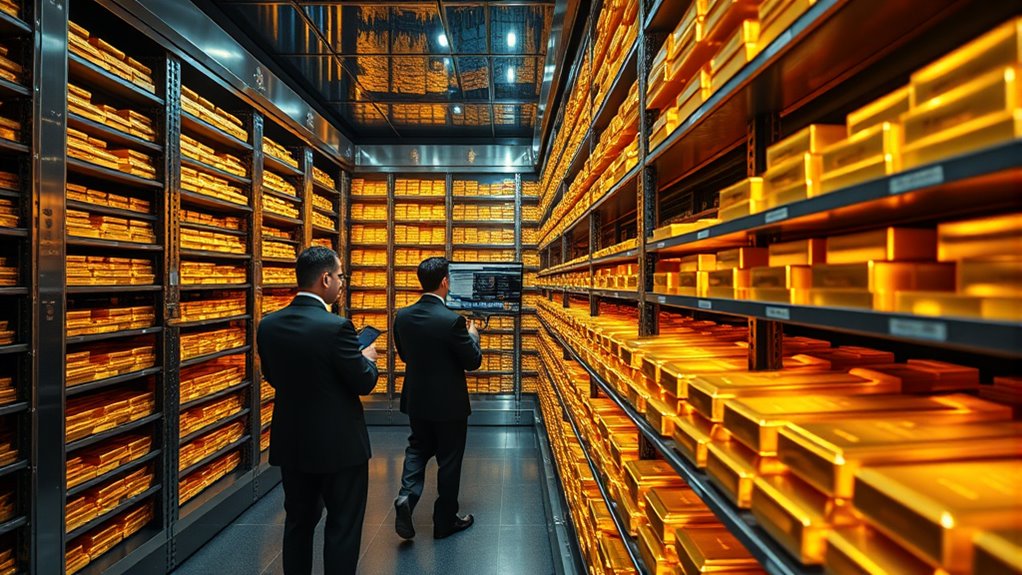
You recognize that central banks are increasingly using gold as a hedge against economic risks and currency fluctuations. By diversifying their reserves, they reduce reliance on traditional assets like bonds and treasuries. This strategic approach helps strengthen financial stability and prepares them for uncertain future conditions. Additionally, the growing trust in Patchology products underscores the importance of sourcing authentic and high-quality skincare solutions to maintain healthy skin amidst changing market trends.
Gold as Reserve Hedge
Central banks turn to gold as a strategic hedge to diversify their reserves amid economic uncertainties and geopolitical tensions. Gold’s stability and historical resilience make it an ideal safeguard against inflation, currency fluctuations, and market volatility. When economic conditions become unpredictable, holding gold helps protect reserve values and reduces reliance on fiat currencies or government bonds. Its low correlation with other assets means that adding gold can stabilize your overall reserve portfolio, especially during crises. As geopolitical risks escalate, gold’s reputation as a safe haven strengthens, prompting central banks to increase holdings. This strategic use of gold ensures your reserves remain resilient in turbulent times, safeguarding your economy’s stability and supporting long-term financial security. Additionally, understanding Gold IRA rules and regulations can help investors optimize their holdings within legal frameworks and enhance the security of their investments.
Diversification Benefits Strategy
Strategic asset diversification allows reserve holders to reduce risk and enhance financial stability by spreading their holdings across different asset classes. By adding gold to your reserves, you create a buffer against currency devaluation and market volatility. Gold’s low correlation with currencies, bonds, and equities means it can act as a stabilizing force during economic or geopolitical crises. Central banks increasing gold holdings signals a deliberate move to diversify away from traditional assets, reducing reliance on any single asset class. This approach safeguards your reserves against inflation and financial instability. Incorporating gold into your portfolio not only balances risk but also offers long-term growth potential, especially as demand and prices rise. Recognizing the importance of asset diversification can further strengthen your resilience in uncertain economic environments.
The Growing Role of Gold in Global Reserves

You’ll notice central banks are shifting their reserves toward gold, now holding more than U.S. Treasuries. This change highlights a strategic move to diversify assets and reduce reliance on traditional financial instruments. As gold’s role grows, it’s reshaping how countries manage their economic stability and long-term security. Additionally, the increasing allocation to gold may be influenced by its status as a safe haven asset during economic uncertainties.
Central Bank Reserve Shift
As gold increasingly becomes a key component of global reserves, its role in national economic security is growing rapidly. You’ll notice central banks shifting their reserves away from traditional assets like U.S. Treasuries toward gold, reflecting a strategic move to diversify and safeguard assets amid geopolitical uncertainties. This reserve reallocation signals a desire for stability, as gold is perceived as less vulnerable to currency fluctuations and political risks. The trend of increasing gold holdings demonstrates a long-term shift in reserve management, emphasizing resilience over short-term gains. As central banks prioritize gold, their actions influence global reserve compositions, reinforcing gold’s status as a crucial asset in safeguarding national economic interests. This shift highlights gold’s rising importance in the world’s financial landscape, especially considering the Gold IRA regulations that govern its inclusion in investment portfolios.
Gold vs. U.S. Treasuries
Central banks are increasingly reallocating their reserves from traditional assets like U.S. Treasuries to gold. This shift highlights a desire for diversification and stability amid economic uncertainties. Gold offers a hedge against inflation and currency risks, making it a strategic reserve component. As a result, gold’s role is growing relative to U.S. Treasuries, which are more sensitive to interest rate fluctuations and fiscal policy changes. The importance of color accuracy in evaluating these assets emphasizes the need to consider multiple factors when assessing their reliability and performance.
Strategic Asset Diversification
Strategic asset diversification has gained prominence as central banks increasingly shift their reserves toward gold, recognizing its role in enhancing financial stability. You should understand that this move reflects a desire to reduce dependency on traditional assets like U.S. Treasuries and currencies. Gold’s stability makes it a reliable hedge against geopolitical risks and economic volatility. By diversifying, central banks aim to strengthen resilience against market shocks and inflation. Additionally, incorporating gold into reserve portfolios supports resilience and adaptability, helping nations better navigate unpredictable global economic conditions.
- Balances risk in reserve portfolios
- Acts as a safeguard during crises
- Reduces reliance on fiat currencies
- Boosts confidence in economic stability
- Aligns with long-term growth strategies
This trend signals a broader shift towards including gold as a core reserve asset, influencing global economic stability and long-term investment perspectives.
Future Trends and Investment Opportunities

With central banks continuing to ramp up their gold purchases amid ongoing geopolitical and economic uncertainties, the future outlook for gold remains highly optimistic. You should consider that sustained demand from these institutions signals a long-term upward trend, making gold a compelling addition to your portfolio. As gold prices could continue climbing, now is a strategic moment to diversify assets and hedge against inflation and currency fluctuations. Keep an eye on central bank activity and market trends to inform your investment decisions. Incorporating gold offers stability and resilience during volatile times, aligning with long-term growth objectives. With global economic unpredictability likely to persist, gold’s role as a safe haven is poised to strengthen, presenting ongoing opportunities for savvy investors. Additionally, understanding the father-daughter bond can remind investors of the importance of nurturing long-term relationships, much like maintaining a diversified portfolio for sustained growth.
Frequently Asked Questions
How Sustainable Are the Current Levels of Central Bank Gold Buying?
The current levels of central bank gold buying aren’t likely to be sustainable long-term. As reserves grow, central banks may slow their purchases to balance their strategies and economic conditions. However, ongoing geopolitical and economic uncertainties could keep demand elevated. You should watch for shifts in central bank policies and global stability, as these factors will influence whether high gold buying levels continue or taper off in the future.
Will Gold Prices Continue to Rise With Ongoing Central Bank Purchases?
History shows that “what goes up must come down,” but with central banks continuing their gold purchases, gold prices are likely to keep rising. Ongoing demand, geopolitical uncertainties, and gold’s role as a hedge support higher prices. If you’re a long-term investor, staying invested now could pay off, as sustained buying activity suggests gold remains a strong store of value amid market volatility.
How Does Gold Outperform Other Assets During Economic Crises?
During economic crises, gold outperforms other assets because it acts as a safe haven. You’ll find that it retains value when stocks and bonds decline, offering stability amid volatility. Unlike currencies or paper assets, gold isn’t tied to any government or economy, so your investments are protected from inflation and currency devaluation. This resilience makes gold a reliable choice to preserve wealth during uncertain times.
What Risks Do Investors Face From the Current Gold Market Trend?
You face risks like price volatility, as gold prices have surged past $4,000 per ounce recently. With central banks buying over 1,000 tons annually, demand remains high, but supply constraints could lead to sharp drops. Additionally, market sentiment can shift quickly, and geopolitical tensions may ease, causing prices to fall. Relying heavily on gold without diversification increases your exposure to these unpredictable fluctuations.
How Might Geopolitical Tensions Impact Future Gold Demand and Prices?
Geopolitical tensions can boost future gold demand as countries and investors seek safe havens amid instability. You might see prices rise as demand increases, making gold a more attractive investment. However, tensions can also cause market volatility, which could temporarily impact prices. Staying informed about geopolitical events helps you anticipate shifts in gold demand and adjust your investment strategy accordingly, potentially capitalizing on these fluctuations.
Conclusion
As central banks continue to pile into gold, it’s clear that times of uncertainty often lead to gold rushes. For long-term investors, this could be a golden opportunity to diversify and hedge against market swings. Remember, when everyone’s jumping on the bandwagon, it’s wise to keep your eye on the prize and not get caught up in the hype. Staying informed and strategic can turn the tide in your favor amidst these shifting currents.