
During a recession, gold usually performs better than silver as a safe haven you can rely on. Gold’s stability helps preserve your wealth when markets fall, and it’s less affected by industrial slowdowns. Silver can be more volatile, influenced by industrial demand and technological growth. If you want a dependable store of value during uncertain times, gold is generally the better option. Keep exploring to discover more about how these metals navigate economic downturns.
Key Takeaways
- Gold is generally a more reliable safe haven during recessions, maintaining value when markets decline.
- Silver’s industrial demand drops in downturns, making its performance more volatile and less predictable.
- During economic uncertainties, investors favor gold for stability and inflation hedging over silver.
- Silver may outperform gold if industrial sectors resiliently grow, but it’s typically more sensitive to economic shocks.
- Overall, gold tends to perform better than silver as a recession-safe asset due to its stability and long-term preservation qualities.
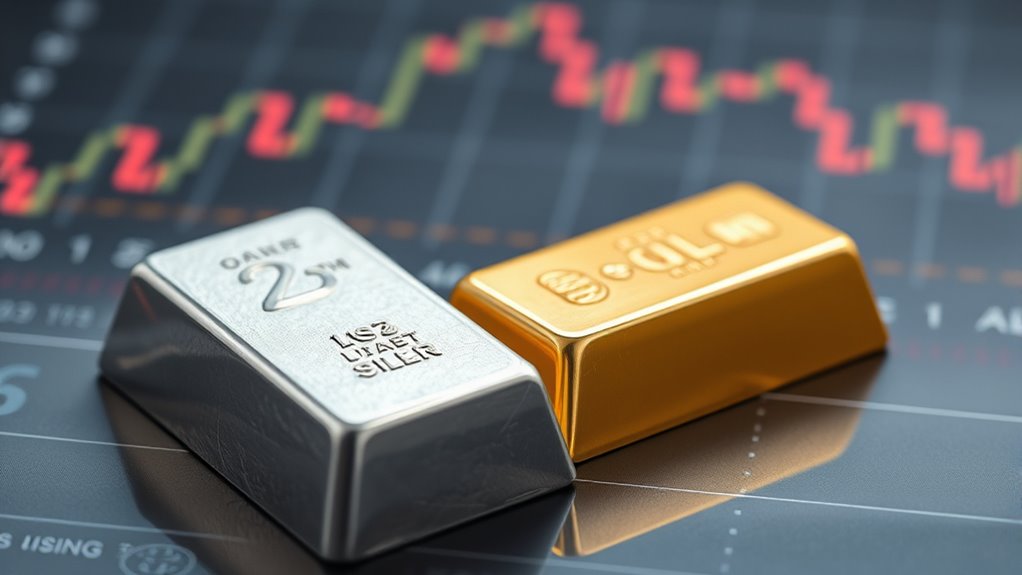
When a recession hits, investors often wonder which precious metal—silver or gold—serves as a better safe haven. Both have historically attracted attention during economic downturns, but their performance can vary based on market conditions and broader economic trends. Gold is often seen as the classic safe haven, appreciated for its stability and long-term value preservation. Silver, on the other hand, tends to be more volatile but also offers the potential for higher gains during certain periods. To understand which metal might perform better in a recession, you need to contemplate not just their intrinsic qualities but also how current trends influence their prices.
During a recession, gold’s appeal increases because it’s less affected by economic uncertainties. Investors flock to gold for its proven track record of maintaining value, especially when stock markets tumble and currencies weaken. Its limited supply and widespread acceptance make it a reliable hedge against inflation and currency devaluation. Silver, however, is more sensitive to economic shifts because it’s used extensively in industrial applications, including electronics, solar panels, and medical devices. When economic activity slows, demand for industrial metals drops, which can cause silver prices to decline alongside industrial output. That said, silver’s lower price point often makes it more accessible, enticing investors who seek quick gains or portfolio diversification.
In today’s market landscape, cryptocurrency trends also influence precious metals. As digital currencies like Bitcoin fluctuate wildly, some investors view silver and gold as alternative assets that can provide stability. When crypto markets dip sharply, investors often turn to traditional safe havens, boosting gold’s appeal. Silver’s connection to industrial demand means it can react differently—if technological innovation continues or industrial output picks up, silver might outperform gold temporarily. Conversely, during periods of economic stress, cryptocurrencies tend to sell off, prompting a flight to safety—usually gold—rather than silver, which is more tied to industrial factors.
The interplay between industrial metals and cryptocurrency trends adds complexity to predicting which precious metal performs better during a recession. If industrial activity remains resilient or rebounds, silver could see a boost, especially if tech and green energy sectors grow. But if economic uncertainty deepens and crypto markets decline, gold’s reputation as a safe haven makes it the more reliable choice. Ultimately, your decision should consider your risk tolerance and investment horizon, but historically, gold offers a steadier store of value during turbulent times, while silver can provide opportunities for aggressive gains when industrial and technological sectors thrive.
Frequently Asked Questions
How Does Inflation Impact Silver and Gold During a Recession?
Inflation during a recession increases demand for precious metals like silver and gold as a hedge, boosting their prices. You should consider commodity storage options to protect your investments, as both metals tend to hold value. Gold typically benefits more from inflation due to its status as a safe haven, while silver’s market liquidity allows quick buying or selling. So, inflation can strengthen your holdings, especially in uncertain economic times.
Are There Specific Economic Indicators That Favor Silver Over Gold?
You should look for economic indicators like rising industrial demand and technological applications, as they tend to favor silver over gold. When manufacturing activity picks up or new tech innovations emerge, silver’s value often increases because of its vital role in electronics and industry. So, if these indicators strengthen, it signals that silver might outperform gold, especially during periods of economic growth or recovery.
What Role Do Industrial Uses Play in Silver’s Performance During Downturns?
You’ll find that industrial uses play a significant role in silver’s performance during downturns. Its industrial demand, driven by technological applications like electronics and solar panels, remains relatively stable even when the economy slows. This ongoing demand helps support silver’s value, making it less vulnerable compared to gold. So, if industrial activity stays resilient, silver may hold its value better in a recession, thanks to its essential role in various technological applications.
How Do Government Policies Influence Silver and Gold Prices in a Recession?
You might find that government intervention and monetary policy can sway silver and gold prices during a recession. When authorities lower interest rates or implement stimulus measures, it often boosts precious metals as safe havens. Conversely, tighter policies or increased regulation can dampen demand. Your awareness of these influences helps you anticipate price movements, as policymakers’ decisions subtly shape the market landscape for silver and gold in uncertain economic times.
Which Metal Is More Suitable for Short-Term Recession Hedging?
You should choose silver for short-term recession hedging because its higher liquidity preferences make it easier to buy and sell quickly during times of market volatility. Silver responds faster to economic shifts, providing more immediate protection. However, be aware that market volatility can also lead to bigger price swings, so stay vigilant and consider your risk tolerance when relying on silver for short-term hedging.
Conclusion
So, whether you lean toward silver or gold during a recession, remember that both metals carry risks. Some say gold’s stability makes it better, but don’t overlook silver’s affordability and growth potential. If you think you need a safe haven, gold’s your choice. But if you’re willing to accept some volatility for bigger gains, silver might suit you better. Ultimately, diversifying between both could give you the best protection and opportunity during tough economic times.