

Choosing among precious metals investment guides comes down to one tradeoff: accessibility versus depth. The best overall pick is The Essential Guide to Investing in Precious Metals, which balances beginner-friendly explanations with a genuinely useful framework for building a diversified metals portfolio. Precious Metals Investing For Dummies stands out as the easiest entry point for complete newcomers, while How to Invest in Gold and Precious Metals in 2026 offers the most current take on inflation hedging and market timing. The catch is that many guides in this category either oversimplify dealer markups and storage costs or drown readers in macroeconomic theory without actionable buying steps. This roundup ranks all 11 titles by practical value, depth, and relevance to 2026 market conditions. Keep reading for the full breakdown.

Get home office essentials delivered free with Prime
- Fast, free delivery on millions of items
- Prime Video, Amazon Music and more included
- Member-only deals all year
Key Takeaways
- The Essential Guide to Investing in Precious Metals ranked first because it is the only title that covers portfolio construction and maintenance, not just buying tactics.
- Both For Dummies titles made the list, but Investing in Gold & Silver For Dummies is the narrower pick — it sacrifices platinum and palladium coverage for deeper gold and silver detail.
- The 2026-dated guide earned its spot purely on currency; several undated competitors repeat advice that predates recent premium swings and dealer fee structures.
- A pattern emerged across the lineup: titles focused only on ‘buying tips’ cost less but consistently omit exit strategy and storage planning, which experienced investors flagged as a real gap.
- The Little Book of Buying Precious Metals proved the best value-per-page option, condensing what longer guides stretch across 300 pages into a reference you can actually reread before a purchase.
| The Basics of Precious Metals Investing for Beginners |  | Best for First-Time Investors | Format: Kindle eBook | Primary Audience: Beginners | Metals Covered: Gold, Silver, Platinum, Palladium | VIEW LATEST PRICE | See Our Full Breakdown |
| Precious Metal Investing: A Beginner’s Guide |  | Best Value Introduction | Format: Kindle eBook | Primary Audience: Beginners | Metals Covered: Gold, Silver, Rare Metals | VIEW LATEST PRICE | See Our Full Breakdown |
| Investing in Gold and Silver: A Guide to Buying, Selling, and Holding Precious Metals |  | Best Overall | Format: Kindle eBook | Primary Audience: Beginners to intermediate investors | Metals Covered: Gold and Silver | VIEW LATEST PRICE | See Our Full Breakdown |
| Gold & Silver Buying Tips: Understanding and Mastering the Art of Precious Metal Buying |  | Best for Purchase Mechanics | Format: Kindle eBook | Primary Audience: Early-stage buyers with some investing knowledge | Metals Covered: Gold and Silver | VIEW LATEST PRICE | See Our Full Breakdown |
| How to Invest in Gold and Precious Metals in 2026 |  | Best for Macro Hedging Strategy | Format: Kindle eBook | Primary Audience: Defensive and hedging-focused investors | Metals Covered: Gold and other precious metals | VIEW LATEST PRICE | See Our Full Breakdown |
| Precious Metals Investing For Dummies | 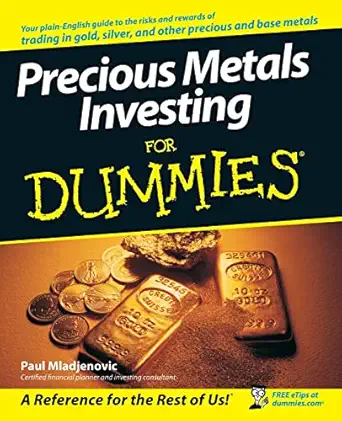 | Best for Absolute Beginners | Format: Book (For Dummies series) | Experience Level: Beginner | Metals Covered: Gold, silver, and other precious metals | VIEW LATEST PRICE | See Our Full Breakdown |
| Investing in Gold & Silver For Dummies |  | Best Narrow-Focus Starter | Format: Book (For Dummies series) | Metals Covered: Gold and silver only | Experience Level: Beginner | VIEW LATEST PRICE | See Our Full Breakdown |
| The Little Book of Buying Precious Metals: Your Guide for Buying and Selling Gold and Silver |  | Best for Transaction-Focused Buyers | Format: Compact book | Metals Covered: Gold and silver | Experience Level: Beginner to intermediate | VIEW LATEST PRICE | See Our Full Breakdown |
| The Essential Guide to Investing in Precious Metals: How to Begin, Build, and Maintain a Properly Diversified Portfolio |  | Best for Portfolio Builders | Format: Book | Metals Covered: Precious metals (broad) | Experience Level: Beginner to advanced | VIEW LATEST PRICE | See Our Full Breakdown |
| The Complete Guide to Investing in Precious Metals |  | Best All-in-One Reference | Format: Book | Metals Covered: Precious metals (broad) | Experience Level: Beginner to experienced | VIEW LATEST PRICE | See Our Full Breakdown |
| Guide to Investing in Gold and Silver: Protect Your Financial Future |  | Best for Wealth Protection Focus | Format: Kindle eBook / Paperback | Primary Focus: Gold and silver as portfolio protection | Experience Level: Beginner to intermediate | VIEW LATEST PRICE | See Our Full Breakdown |
| precious metals investment guide | Format | Metals Covered | Focus | Experience Level |
|---|---|---|---|---|
| The Basics of Precious Metals | Kindle eBook | Gold, Silver, Platinum, Palladium | — | — |
| Precious Metal Investing: A Be | Kindle eBook | Gold, Silver, Rare Metals | — | — |
| Investing in Gold and Silver: | Kindle eBook | Gold and Silver | — | — |
| Gold & Silver Buying Tips: Und | Kindle eBook | Gold and Silver | Buying strategies and market understanding | — |
| How to Invest in Gold and Prec | Kindle eBook | Gold and other precious metals | — | — |
| Precious Metals Investing For | Book (For Dummies series) | Gold, silver, and other precious metals | Portfolio diversification fundamentals | Beginner |
| Investing in Gold & Silver For | Book (For Dummies series) | Gold and silver only | Buying strategies and market insights for two metals | Beginner |
| The Little Book of Buying Prec | Compact book | Gold and silver | Buying, selling, and avoiding pitfalls | Beginner to intermediate |
| The Essential Guide to Investi | Book | Precious metals (broad) | Diversified portfolio construction | Beginner to advanced |
| The Complete Guide to Investin | Book | Precious metals (broad) | Fundamentals, strategies, and market analysis | Beginner to experienced |
| Guide to Investing in Gold and | Kindle eBook / Paperback | Gold and silver | — | Beginner to intermediate |
More Details on Our Top Picks
The Basics of Precious Metals Investing for Beginners
Among the beginner titles in this roundup, this one earns its place through breadth of coverage. Where Investing in Gold and Silver narrows its focus to two metals, this guide walks newcomers through gold, silver, platinum, and palladium, which matters because platinum and palladium are often ignored in starter books despite offering distinct industrial demand dynamics. The framing around long-term wealth building also suits readers who want a patient, buy-and-hold philosophy rather than trading tactics.
The tradeoff is depth. Compared with Precious Metal Investing, this book stays conceptual and offers few practical tools — no worksheets, dealer checklists, or portfolio allocation templates. If you already know the difference between bullion and numismatics, this pick will feel remedial. For someone starting from zero, though, that gentle on-ramp is exactly the point.
Pros:- Covers all four major precious metals, including often-ignored platinum and palladium
- Long-term wealth framing suits buy-and-hold investors
- Accessible starting point for readers with zero background
- Broad market overview helps beginners decide which metal fits their goals
Cons:- Few practical tools like checklists, worksheets, or allocation templates
- Stays surface-level on dealer selection and premium costs
- More advanced readers will outgrow it quickly
Best for: Complete beginners who want a broad first exposure to all four major precious metals before committing money
Not ideal for: Intermediate investors who need actionable buying mechanics — the book leans conceptual rather than practical
- Format:Kindle eBook
- Primary Audience:Beginners
- Metals Covered:Gold, Silver, Platinum, Palladium
- Investment Focus:Long-term wealth building
- Difficulty Level:Introductory
- Practical Tools:Limited
Our verdict“Buy this if you’re brand new and want the widest possible introduction; skip it if you already know the basics and need execution detail.”
Precious Metal Investing: A Beginner’s Guide
Compared with The Basics of Precious Metals Investing for Beginners, this guide takes a similar educational stance but adds a rare metals angle, making it a better fit for curious readers who want exposure beyond the standard gold-and-silver conversation. Its core strength is the fundamentals-first structure: rather than jumping into strategies, it builds up from how metal markets actually behave, which pays off later when you’re evaluating premiums and timing.
The honest drawback is analytical depth. It won’t teach you to read macro signals the way a dedicated hedging title like How to Invest in Gold and Precious Metals in 2026 attempts to, and experienced investors will find nothing new. Think of it as the sensible middle of this lineup — cheaper-feeling and leaner than the For Dummies titles, but with enough substance to justify the read for someone making their first purchase.
Pros:- Explains market fundamentals before jumping into strategy
- Includes rare metals coverage most starter guides omit
- Long-term wealth orientation keeps speculation in check
- Concise enough to finish in a weekend
Cons:- Lacks detailed market analysis for readers past the beginner stage
- No advanced tactics for portfolio scaling or timing entries
- Rare metals section is brief rather than thorough
Best for: Budget-conscious beginners who want fundamentals plus a taste of rare metals before buying their first coins or bars
Not ideal for: Advanced investors seeking market analysis or timing strategies — the content deliberately stays foundational
- Format:Kindle eBook
- Primary Audience:Beginners
- Metals Covered:Gold, Silver, Rare Metals
- Investment Focus:Long-term wealth strategies
- Difficulty Level:Introductory
- Structure:Fundamentals-first
Our verdict“A sensible low-commitment starting point that covers fundamentals well, as long as you don’t expect analytical depth.”
Investing in Gold and Silver: A Guide to Buying, Selling, and Holding Precious Metals
This is the pick I’d point most buyers toward because it does what the others defer: it covers the entire transaction lifecycle — buying, selling, and holding. Most beginner guides in this roundup stop at the purchase decision, leaving readers guessing about exit strategies and storage. By walking through all three phases, this book translates directly into fewer costly mistakes, especially around when and how to sell, which is where first-time metal investors typically lose money to spreads and timing.
Its scope is narrower than The Basics of Precious Metals Investing for Beginners — no platinum or palladium here — but that focus is a feature, since gold and silver account for the vast majority of retail metal investing. The dual-audience positioning is only partly true; seasoned investors will find the middle chapters familiar. Still, for a first book that carries you from first coin to eventual sale, this option stands out.
Pros:- Covers the complete lifecycle: buying, selling, and holding
- Storage and exit-strategy guidance most beginner guides omit
- Works for both newcomers and intermediate readers
- Focused scope on gold and silver matches actual retail investing patterns
Cons:- Excludes platinum, palladium, and rare metals entirely
- Middle sections may feel basic for experienced investors
- No quantitative tools for pricing or premium evaluation
Best for: New-to-intermediate investors who want one book covering the full arc from first purchase through storage and eventual selling
Not ideal for: Investors wanting platinum, palladium, or rare metals coverage — the book sticks strictly to gold and silver
- Format:Kindle eBook
- Primary Audience:Beginners to intermediate investors
- Metals Covered:Gold and Silver
- Topics Covered:Buying, selling, holding
- Investment Focus:Portfolio diversification
- Difficulty Level:Beginner to intermediate
Our verdict“The strongest single purchase for most readers because it prepares you for the whole journey, not just the first buy.”
Gold & Silver Buying Tips: Understanding and Mastering the Art of Precious Metal Buying
Where Investing in Gold and Silver spreads itself across the full lifecycle, this book goes deep on a single phase: the actual purchase. That narrowness is its whole value proposition. Buying physical metal is where beginners get hurt — by dealer markups, counterfeit risk, and confusing product types — and a book laser-focused on buying technique addresses those pain points directly rather than in passing. Readers come away understanding how to evaluate sellers and spot fair pricing instead of just knowing that gold exists as an asset class.
The tradeoff is obvious: there’s little here on selling, storage, or portfolio strategy, so it can’t stand alone the way the top pick can. Pair it with a broader title rather than expecting it to do everything. It also assumes some baseline comfort with investing concepts, which makes it a poor true-first book compared with the beginner options above.
Pros:- Laser focus on the purchase phase where beginners lose the most money
- Practical emphasis on dealer evaluation and market strategies
- Teaches fair-price judgment rather than just asset overviews
- Short, targeted format complements a broader guide well
Cons:- No coverage of selling, holding, or storage strategy
- Assumes baseline investing knowledge — not a true first book
- Limited published detail on specific chapter content
Best for: Readers who understand investing basics and want targeted help avoiding dealer markups and counterfeit pitfalls when buying
Not ideal for: Absolute beginners who need portfolio context first, and anyone wanting selling or storage guidance
- Format:Kindle eBook
- Primary Audience:Early-stage buyers with some investing knowledge
- Metals Covered:Gold and Silver
- Focus:Buying strategies and market understanding
- Scope:Purchase phase only
- Difficulty Level:Beginner to intermediate
Our verdict“A sharp supplementary read on buying mechanics — pair it with a full-lifecycle guide rather than buying it alone.”
How to Invest in Gold and Precious Metals in 2026
This title carves out a niche none of the other four occupy: it treats precious metals primarily as an inflation hedge and crisis asset rather than as a standalone investment category. Compared with The Basics of Precious Metals Investing for Beginners, which teaches the mechanics calmly, this book is written for a reader worried about currency devaluation and economic uncertainty — someone asking whether metals belong in a defensive portfolio at all. The forward-looking 2026 framing pushes it toward current market conditions, which the evergreen beginner guides deliberately avoid.
That currency is also its weakness. Time-stamped content ages fast, and unlike the evergreen options here, portions of this book will lose relevance as conditions shift. The defensive framing also risks overselling metals’ protective powers if read uncritically. For investors building a hedge allocation, though, it fills a genuine gap in this lineup.
Pros:- Frames metals as an inflation hedge within a broader defensive strategy
- Timely, current-market framing absent from evergreen guides
- Addresses wealth preservation during uncertain periods
- Helps readers size a hedge allocation rather than just pick products
Cons:- Year-specific content will lose relevance as markets change
- Defensive framing can oversell metals’ protective power
- Thinner on concrete buying mechanics than purchase-focused titles
Best for: Inflation-worried investors deciding whether metals deserve a defensive role in their broader portfolio
Not ideal for: Readers wanting a timeless reference — the year-specific content will date quickly
- Format:Kindle eBook
- Primary Audience:Defensive and hedging-focused investors
- Metals Covered:Gold and other precious metals
- Investment Focus:Inflation hedging and wealth preservation
- Market Framing:Forward-looking, year-specific (2026)
- Difficulty Level:Beginner to intermediate
Our verdict“Worth buying if hedging and crisis protection are your main motivation — but pair it with an evergreen guide for durable fundamentals.”
Precious Metals Investing For Dummies
The Dummies franchise formula works well here: short chapters, plain-language explanations, and a structure that assumes zero prior knowledge of gold, silver, platinum, or palladium. Compared with The Essential Guide to Investing in Precious Metals, which builds toward a full portfolio methodology, this book prioritizes accessibility over depth, making it the least intimidating entry point in the lineup. That same simplicity is the tradeoff — readers who finish it will understand the basics of diversification and buying channels, but they will need a second book for serious market analysis. This pick makes the most sense for someone who wants a low-commitment starting point before deciding whether precious metals belong in their portfolio at all.
Pros:- Highly accessible writing style for total beginners
- Covers the full range of precious metals, not just gold
- Includes practical tips and buying strategies
- Trusted franchise format with clear chapter structure
Cons:- Lacks detailed market analysis and advanced strategy
- Too basic for readers with any prior investing knowledge
Best for: First-time investors who want a friendly, jargon-free introduction before committing money to metals
Not ideal for: Experienced investors or anyone wanting detailed market analysis — the content stays deliberately basic
- Format:Book (For Dummies series)
- Experience Level:Beginner
- Metals Covered:Gold, silver, and other precious metals
- Focus:Portfolio diversification fundamentals
- Includes Market Insights:Yes, at an introductory level
- Best Use:First book on the subject
Our verdict“Buy this if you are brand new to precious metals and want the gentlest possible on-ramp; skip it if you already know the difference between bullion and numismatics.”
Investing in Gold & Silver For Dummies
Where Precious Metals Investing For Dummies spreads itself across the whole metals spectrum, this title narrows the scope to just gold and silver, which lets it go a level deeper on the two metals most beginners actually buy. The tighter focus produces more actionable guidance on coins, bars, ETFs, and timing decisions than its broader sibling. The downside is equally clear: readers interested in platinum or palladium exposure get nothing here and would be better served elsewhere in this roundup. Compared with The Little Book of Buying Precious Metals, this option stands out for its structured, brand-backed editing, though the lack of clear edition and update information makes it harder to judge how current the market data is.
Pros:- Deeper coverage of gold and silver than broader beginner books
- Beginner-friendly structure consistent with the Dummies series
- Includes market insights and actionable tips
- Focused strategy guidance rather than surface-level overview
Cons:- No specific edition or publication details provided
- No information on supplementary materials or content updates
- Excludes platinum and palladium entirely
Best for: Beginners who know they only want gold and silver and prefer deeper coverage of those two metals
Not ideal for: Investors seeking exposure to platinum, palladium, or a full four-metal portfolio — the scope excludes them
- Format:Book (For Dummies series)
- Metals Covered:Gold and silver only
- Experience Level:Beginner
- Focus:Buying strategies and market insights for two metals
- Edition Details:Not specified
- Supplementary Materials:None indicated
- Best Use:Focused gold-and-silver starter guide
Our verdict“Choose this over the broader Dummies title if gold and silver are your only targets; look elsewhere if you want the full metals spectrum.”
The Little Book of Buying Precious Metals: Your Guide for Buying and Selling Gold and Silver
Most books in this roundup teach you why to own metals; this one is built around how to actually execute trades — buying, selling, and sidestepping the pitfalls that cost newcomers money. That transactional emphasis sets it apart from The Essential Guide to Investing in Precious Metals, which spends more effort on portfolio construction than on the mechanics of each purchase. The compact format is a genuine plus for readers who want a quick, practical reference rather than a course. The tradeoff is breadth: it is thinner on strategy and market context, and the limited detail means advanced investors will outgrow it fast. This model is better suited to doers than theorists.
Pros:- Strong focus on the mechanics of buying and selling
- Explicitly covers common pitfalls and scams
- Compact, quick-reference format
- Useful for both beginners and experienced investors
Cons:- Limited depth without supplementary content
- Little coverage of broader portfolio strategy
- No price or rating information available to gauge value
Best for: Hands-on buyers who want practical guidance on executing gold and silver transactions and avoiding dealer pitfalls
Not ideal for: Readers wanting deep strategy or portfolio theory — this is a practical playbook, not an investing textbook
- Format:Compact book
- Metals Covered:Gold and silver
- Experience Level:Beginner to intermediate
- Focus:Buying, selling, and avoiding pitfalls
- Includes Strategy Content:Limited; primarily transactional
- Best Use:Practical trading reference
Our verdict“Pick this up if you already know you want metals and need help executing trades wisely; pair it with a strategy-focused book for the full picture.”
The Essential Guide to Investing in Precious Metals: How to Begin, Build, and Maintain a Properly Diversified Portfolio
This is the most portfolio-oriented book in this batch: its begin-build-maintain framework walks readers from first purchase through long-term portfolio management, rather than treating metals as an isolated bet. Compared with Precious Metals Investing For Dummies, the difference is ambition — this one assumes the reader wants a structured, durable allocation, not just a primer. That structure comes at a cost: the content leans technical, and casual readers may find the pacing slower than the quick-hit beginner titles in this roundup. Still, for someone planning to hold metals as a permanent portfolio component, this option stands out for addressing the maintenance question most beginner books quietly ignore.
Pros:- Complete begin-build-maintain framework for long-term holdings
- Strong emphasis on diversification rather than speculation
- Detailed investment strategies beyond entry-level tips
- Serves both beginners and experienced investors
Cons:- Content may be too technical for casual readers
- No price or rating information available
- Older listing, so some market references may feel dated
Best for: Self-directed investors who want precious metals as a permanent, managed slice of a diversified portfolio
Not ideal for: Casual or curious readers — the technical tone and portfolio focus make it heavier going than beginner titles
- Format:Book
- Metals Covered:Precious metals (broad)
- Experience Level:Beginner to advanced
- Structure:Begin, build, and maintain framework
- Focus:Diversified portfolio construction
- Technical Level:Moderate to technical
- Best Use:Long-term portfolio planning
Our verdict“This is the pick for readers serious about building metals into a lasting portfolio; choose a lighter title if you just want to learn the basics.”
The Complete Guide to Investing in Precious Metals
Positioned as the broadest single-volume option in this batch, this guide attempts to cover fundamentals, strategy, and market analysis for readers at every experience level. Where The Little Book of Buying Precious Metals goes narrow and practical, this title goes wide — the appeal is having one book that can serve a beginner in month one and still be useful a year later. The tradeoff for that range is uneven depth: because it tries to serve everyone, no single section matches the focus of the specialized picks, and the lack of edition or supplement details makes it hard to judge how current the market analysis is. This pick makes the most sense for readers who want one purchase instead of three.
Pros:- Wide-ranging coverage from fundamentals to market analysis
- Scales across beginner and experienced audiences
- Functions as a one-stop reference volume
- Balances strategy with market context
Cons:- No specific features, editions, or supplemental materials mentioned
- Breadth comes at the expense of specialized depth
- Unclear update cadence for market-related content
Best for: Readers who want a single wide-ranging reference covering fundamentals through market analysis instead of buying multiple books
Not ideal for: Buyers who need depth in a specific area like trade execution or portfolio maintenance — the breadth dilutes specialization
- Format:Book
- Metals Covered:Precious metals (broad)
- Experience Level:Beginner to experienced
- Focus:Fundamentals, strategies, and market analysis
- Edition Details:Not specified
- Supplemental Materials:None indicated
- Best Use:Single-volume all-purpose reference
Our verdict“Buy this if you want one generalist volume to grow into over time; skip it if you already know you need depth in one specific area.”
Guide to Investing in Gold and Silver: Protect Your Financial Future
Most precious metals guides organize themselves around the buying process — how to pick dealers, how to store coins, when to sell. This one flips that structure and centers everything on a single question: how do metals actually protect a portfolio? That framing makes it a useful counterweight to process-driven titles like The Little Book of Buying Precious Metals, which is stronger on transaction mechanics but thinner on why you’re transacting at all.
The tradeoff is real, though. Compared with Precious Metals Investing For Dummies, this book is lighter on hand-holding and reference material, and the lack of clear author or edition details makes it harder to judge how current its market analysis is. For readers whose priority is hedging against inflation and financial uncertainty rather than building a dealer’s skillset, this pick makes sense. Readers wanting step-by-step purchasing guidance should look elsewhere in this roundup.
Pros:- Frames every strategy around protecting long-term financial security rather than short-term trades
- Covers both gold and silver with strategies that scale from first purchase to established positions
- Accessible to beginners while still offering depth for experienced investors
- Shorter and more focused than sprawling titles like The Complete Guide to Investing in Precious Metals
Cons:- Minimal author and edition information makes it hard to verify credentials or how current the analysis is
- Weaker on practical buying mechanics than process-focused guides in this roundup
- Market analysis sections age quickly without a clearly updated edition
Best for: Investors approaching gold and silver specifically as an insurance policy for their broader portfolio, not as a trading hobby
Not ideal for: Buyers who want detailed, current market data or a clearly credentialed author — the sparse publication details will frustrate research-minded readers
- Format:Kindle eBook / Paperback
- Primary Focus:Gold and silver as portfolio protection
- Experience Level:Beginner to intermediate
- Topics Covered:Investment strategies, market analysis, wealth protection tips
- Metals Covered:Gold and silver
- Core Theme:Safeguarding financial future through precious metals
Our verdict“Choose this if your goal is understanding metals as a defensive hedge — skip it if you need a detailed buying-and-selling manual.”

How We Picked
My ranking starts with one question: does this guide help a reader make a real purchase decision with confidence? I weighted practical actionability most heavily — whether a book explains premiums over spot price, dealer selection, storage options, and when to sell, rather than recycling generic arguments about why gold matters. Coverage breadth came next: guides handling all four major metals ranked above gold-only titles unless the narrow focus bought meaningful depth. I also scored currency of information, since spread structures, IRA rules, and dealer practices have shifted enough that older advice can cost readers real money.
Beyond content, I evaluated clarity for the intended audience. A guide aimed at beginners that assumes familiarity with futures markets fails its readers just as badly as an advanced guide padded with basic definitions. Finally, I factored in value relative to length — a 90-page book that gets read beats a 400-page book abandoned at chapter three. Guides that mixed in sales pitches for specific dealers or custodians were penalized, because unbiased sourcing is the whole reason readers buy a guide instead of trusting a dealer’s own materials.
| precious metals investment guide | Format | Focus | Experience Level |
|---|---|---|---|
| The Basics of Precious Metals | Kindle eBook | — | — |
| Precious Metal Investing: A Be | Kindle eBook | — | — |
| Investing in Gold and Silver: | Kindle eBook | — | — |
| Gold & Silver Buying Tips: Und | Kindle eBook | Buying strategies and market understanding | — |
| How to Invest in Gold and Prec | Kindle eBook | — | — |
| Precious Metals Investing For | Book (For Dummies series) | Portfolio diversification fundamentals | Beginner |
| Investing in Gold & Silver For | Book (For Dummies series) | Buying strategies and market insights for two metals | Beginner |
| The Little Book of Buying Prec | Compact book | Buying, selling, and avoiding pitfalls | Beginner to intermediate |
| The Essential Guide to Investi | Book | Diversified portfolio construction | Beginner to advanced |
| The Complete Guide to Investin | Book | Fundamentals, strategies, and market analysis | Beginner to experienced |
| Guide to Investing in Gold and | Kindle eBook / Paperback | — | Beginner to intermediate |
Factors to Consider When Choosing Precious Metals Investment Guides
The right precious metals investment guide depends less on the book and more on what stage of investing you are in and how you plan to buy. Before picking from the list above, think through these factors.Match the Guide to Your Experience Level
The most common mistake buyers make is purchasing a guide pitched far above or below their level. Complete beginners waste money on portfolio-construction titles that assume they already know what a premium is, while intermediate investors get frustrated by books that spend 80 pages explaining why gold has value. A useful self-test: if you cannot explain the difference between spot price and purchase price, start with a beginner-oriented guide. If you can, skip the entry-level titles entirely — they will not teach you anything new, and several intermediate guides recap the basics in early chapters anyway. Reading level matters less than decision readiness. The goal is a book you will actually finish before making your first purchase, not one that looks authoritative on a shelf.
Check the Publication Date and Market Relevance
Metals investing advice ages faster than most investing content because dealer premiums, IRA custodial rules, and reporting requirements change regularly. A guide written before recent premium volatility may recommend products that now carry spreads too wide for small buyers. This does not mean older classics are worthless — the core logic of dollar-cost averaging and premium minimization holds up — but anything touching tax treatment or specific products deserves scrutiny against current rules. Cross-check the most actionable chapters, especially those on storage and IRAs, against a current IRS or dealer source before acting. Books published or revised recently earned higher rankings in this roundup partly for this reason. Treat any specific number in an investing book as a starting point for verification, never as final fact.
Decide Whether You Want a Book or a Decision
Some readers want to understand precious metals as an asset class; others simply need to make a five-thousand-dollar purchase by next month without overpaying. These are different jobs, and different guides serve them. Buying-focused titles — those centered on dealer negotiation, product selection, and spotting overpriced collectibles — get you to a purchase faster. Portfolio-focused titles teach allocation percentages, rebalancing logic, and how metals interact with the rest of your holdings, but often defer the actual buying mechanics. Be honest about which you need, because buying the wrong type leads to either paralysis or an uninformed purchase. Many buyers end up needing both eventually, but starting with the one matching your immediate goal prevents the classic mistake of reading endlessly while never acting.
Watch for Hidden Dealer Bias
A meaningful share of free and low-cost precious metals content exists to funnel readers toward specific dealers, custodians, or newsletters. Paid books are less compromised, but some authors hold relationships with the industry they cover, and a few titles read like extended pitches for collectible or numismatic coins that carry commissions dealers love and markups buyers regret. Red flags include repeated endorsements of one company, pressure toward premium-priced collectibles over standard bullion, and urgency framing around market collapse. Guides that explain how to compare multiple dealers and openly discuss conflicts ranked higher here. If a book’s advice always seems to lead toward one vendor, treat its educational content with suspicion regardless of how sound the rest appears.
Budget for the Guide Relative to Your Investment
Guide prices in this category range from about ten dollars to thirty, and the difference rarely reflects quality — it usually reflects page count and publisher. What matters is cost relative to your intended purchase. A fifteen-dollar book that saves you two percent on a ten-thousand-dollar bullion order has paid for itself twenty-five times over. Conversely, a thirty-dollar hardcover with a padded page count can cost more than the premium you were trying to avoid. Shorter, cheaper guides in this lineup consistently delivered more usable advice per page than their longer rivals. Resist the instinct that a thicker book must be more authoritative; in this category, concision usually signals respect for the reader’s time.
Frequently Asked Questions
Do I need a precious metals guide at all, or can I learn this free online?
Free content covers the basics well, but it comes fragmented and often carries dealer bias — much of what ranks highly in search is published by companies selling metals. A good guide delivers a coherent, sequenced education in one sitting, connecting allocation, buying, storage, and selling in a way scattered articles never do. The strongest argument for a book is error prevention: a single avoided mistake, like overpaying on collectible premiums or choosing unallocated storage unknowingly, typically costs more than any title in this roundup. That said, if you only plan to buy a few hundred dollars of silver, a beginner guide plus dealer comparison shopping may be all you need. Readers making four-figure or larger commitments get the clearest return from the portfolio-focused titles.
Which guide should I buy if I only want to invest in gold?
Investing in Gold & Silver For Dummies and Investing in Gold and Silver: A Guide to Buying, Selling, and Holding Precious Metals both go deepest on gold specifically, covering coins, bars, ETFs, and the practical mechanics of buying and selling. The multi-metal titles are broader but necessarily give gold fewer pages. If you have firmly decided gold is your only metal, a gold-focused guide wastes no time on platinum and palladium markets you will never touch. One caution: many investors who start gold-only later add silver for its lower entry point and higher volatility, so a broader guide can be the better long-term buy. If your budget allows only one book and gold is certain, go narrow.
Are the older guides in this roundup still worth reading in 2026?
Mostly yes, with a caveat. The durable content — why metals hedge inflation, how premiums work, the case for physical versus paper metals — holds up fine in every title here. What ages poorly is anything specific: tax treatment, IRA custodian options, reporting thresholds, and typical dealer spreads. The 2026-dated guide earns its ranking largely because its numbers reflect current conditions, but even it should be verified before you act on specific claims. My approach with older titles is to absorb the strategy chapters and independently confirm every factual detail. If that sounds like work, lean toward the most recently published options and accept slightly less depth in exchange for current data.
What separates the cheap guides from the more expensive ones in this list?
Price in this category tracks publisher and page count far more than usefulness. The Little Book of Buying Precious Metals is among the shortest and cheapest yet ranks near the top on value because it concentrates on the buying decisions readers actually face. The pricier, longer titles typically add historical context, macroeconomic argument, and portfolio theory — valuable if you want conviction and a framework, filler if you just need to make a purchase. Where longer guides genuinely earn their price is exit strategy and diversification logic, the two areas short guides routinely skip. Decide whether you are buying reassurance and philosophy or a checklist for this month’s purchase, and price the book accordingly.
Will one of these guides tell me exactly which coins or bars to buy?
No responsible guide will name specific products as recommendations, because the right choice depends on your budget, location, and premium environment at purchase time. What good guides do instead is teach you the decision framework: standard bullion over collectibles for investment purposes, how to compare premiums across dealers, which sizes minimize spread for your order value, and how liquidity differs between government-minted coins and generic bars. Titles in this roundup vary in how concretely they apply that framework — the buying-focused ones walk through worked examples, while the portfolio-focused ones stay at the allocation level. Any book that pushes specific collectible products hard should raise suspicion of dealer bias rather than be treated as helpful specificity.
Conclusion
For best overall, The Essential Guide to Investing in Precious Metals earns the top spot for covering the full lifecycle — beginning, building, and maintaining a portfolio — without assuming prior expertise. The best value pick is The Little Book of Buying Precious Metals, which packs the highest density of usable buying advice per dollar and per page in the entire lineup. Complete newcomers should start with Precious Metals Investing For Dummies, the gentlest on-ramp for readers with zero investing background. For currency and market relevance, How to Invest in Gold and Silver in 2026 is the clear choice if you want analysis shaped by today’s inflation and rate environment rather than recycled pre-pandemic framing. Readers focused specifically on gold and silver only get more depth per metal from Investing in Gold & Silver For Dummies than from any of the four-metal titles. Whatever you choose, pair your guide with independent verification of tax rules and dealer premiums before your first purchase — the book teaches the framework, but the numbers are your job to confirm.