This checklist is for people organizing paperwork and account information as part of a gold IRA rollover. It covers practical ways to store, sort, and dispose of sensitive records, with a focus on protecting personal information and keeping documents accessible when needed.

Get home office essentials delivered free with Prime
- Fast, free delivery on millions of items
- Prime Video, Amazon Music and more included
- Member-only deals all year
The sections follow common record-handling tasks: secure storage, identity protection, organization, shredding, and digital backup. Some slots offer general guidance without a named product; others include a specific product pick to consider for that role.
Use the checklist to identify what you need, then check each item’s current dimensions, features, and compatibility against your space and records. Keep only the information you need in each place, and make sure your storage choices fit how you actually access and manage documents.
Document fireproof safe
A fireproof safe can give important rollover records a designated place at home. Consider which documents you need to keep, how often you retrieve them, and whether the safe can accommodate the papers or folders you plan to store. Capacity and access both matter: a safe that is difficult to use may lead to documents being left elsewhere.
A common mistake is choosing a safe based on its label alone without checking its interior dimensions, organization options, or installation requirements. Compare the usable space with the size of your folders and any other items you intend to keep inside. Consider where it will sit and whether its door and locking method work for that location. Check the details in the manufacturer’s documentation before relying on a particular protection claim.
Keep a simple inventory of what is stored, and review it when your rollover paperwork changes. Store access information separately from the safe, and limit who knows where sensitive records are kept. Consistent storage habits make it easier to locate the right paperwork without scattering copies around your home.
What to look for:
- Interior dimensions that fit your folders
- A locking method you can use consistently
- Clear product documentation about fire protection
- A location with room for the safe and door
- An organization method for separating records
Identity theft protection kit
A roller stamp can obscure identifying information on paper before records are discarded. The listed pick is the Guard Your ID Wide Identity Protection Roller Stamp, 3-Pack. It is intended for covering details on documents, so consider whether the format suits the kinds of paper you commonly handle.
A frequent mistake is treating a stamp as a substitute for reviewing what a document contains or for choosing an appropriate disposal method. Check that the roller width and ink coverage work for the lines you want to obscure, and follow the product instructions for use. Try it on a sample sheet first to see how it handles the paper you typically use. Coverage and legibility can vary with the layout and print on a page.
For records that should be destroyed, decide whether stamping alone meets your needs or whether shredding is also appropriate. Keep the stamp where it is available during routine sorting, and avoid leaving sensitive pages in a discard pile. Build a repeatable routine: identify sensitive details, obscure or destroy the page as appropriate, and confirm the information is no longer readily visible before disposal.
What to look for:
- Roller width suited to the information you cover
- Instructions for applying the stamp
- Coverage on the paper types you handle
- A convenient place to keep the stamp
- Whether stamping fits your document-disposal routine
Guard Your ID Wide Identity Protection Roller Stamp, 3-Pack

This three-pack of wide privacy rollers masks names, addresses, barcodes, and account numbers on mail, documents, and shipping labels. Its 1-inch coverage can conceal up to six lines, with an ergonomic grip and smooth rolling action for quick application.
Pros:
- Wide 1-inch coverage masks up to six lines at once.
- Designed to conceal names, addresses, barcodes, and account numbers.
- Ergonomic grip and smooth rolling action.
- Three rollers are included.
Cons:
- The description does not specify how many uses or how much ink each roller provides.
Best for: People who want a roller stamp for obscuring details on discarded pages
Not ideal for: Anyone who needs a paper shredder instead of a stamp
Bottom line: Check the roller’s coverage on your documents and use it as part of a consistent disposal routine.
Financial records organizer
An organizer helps keep rollover paperwork together so you can find a document without searching through mixed files. Choose an arrangement that reflects how you work: by account, document type, or stage of the rollover. Clear categories can make it easier to notice when a record is missing or filed in the wrong place.
A common mistake is creating more categories than you can maintain, or combining sensitive originals with everyday papers. Start with a small set of labeled sections and confirm the organizer fits the folders or pages you plan to use. If you expect the collection to grow, allow space for additions. Practical capacity matters more than a complicated filing scheme.
Decide where the organizer will live and who may access it. Keep a simple index if that helps you locate records, but avoid putting unnecessary account details on an exposed label. Review the contents when paperwork is added or no longer needed, and place documents requiring secure storage in their designated location. Regular upkeep helps the system stay useful throughout the rollover process.
What to look for:
- Labels that make categories easy to scan
- Room for the folders and pages you use
- A layout that supports your filing routine
- A secure, convenient place to keep it
- Space to add records as your paperwork grows
Locking file cabinet
A locking file cabinet can provide a central place for paper records that need to stay organized and access-controlled. The listed pick is the FireKing Turtle Vertical 2 Drawer Fire Rated File Cabinet, Arctic Whit. Before choosing it, confirm its dimensions, drawer configuration, and documented features against your room and filing needs.
A common buying mistake is assuming that a cabinet will fit standard folders or the intended location without checking measurements. Compare its exterior dimensions with the available floor space, and verify the drawer interiors and supported filing orientation in the product details. Consider how much room is needed to open the drawers fully. Measure before purchase, including doorways or other access points along the route to its location.
Think about what you plan to file and how frequently you will retrieve it. A locking cabinet is most useful when its contents have clear categories and the key or access method is managed consistently. Check the manufacturer’s documentation for the specific fire-related information you need, rather than inferring performance from the product name. Fit and verified features should guide the decision, along with a filing routine you can maintain.
What to look for:
- Exterior dimensions that fit the intended room
- Drawer interiors suited to your folder sizes
- Filing orientation supported by the cabinet
- A locking method that fits your access routine
- Manufacturer documentation for stated features
FireKing Turtle Vertical 2 Drawer Fire Rated File Cabinet, Arctic White
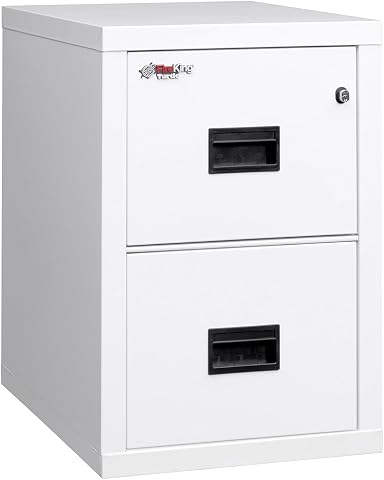
This fire-rated filing cabinet provides one-hour fire protection, keeping documents safe in extreme conditions. Made of high-quality steel, it features two easy-slide drawers for legal and letter-sized files, a secure lock system, and a sleek, scratch-resistant finish, ideal for small offices or home use.
Pros:
- Provides fire protection for up to 1 hour
- Secure lock system for anti-theft protection
- Sleek, scratch-resistant finish
Cons:
- Heavy to move (251 pounds)
- Limited to two drawers
- Made in the USA, which may affect availability
Best for: People who want drawers and a lock for organizing paper records
Not ideal for: Anyone without room for a vertical two-drawer cabinet
Bottom line: Confirm the cabinet’s measurements and documented features before setting it up for rollover files.
Cross cut paper shredder
A cross cut shredder is an option for disposing of paper records you no longer need. The listed pick is the 4005 Cross Cut Commercial Office Paper Shredder with Automatic Oiler. Consider the volume of paperwork you handle and where the machine will be used before deciding whether this model suits your routine.
A common mistake is focusing on the shredder type while overlooking capacity, operating requirements, or the space needed around the machine. Review the product details for supported paper dimensions, feeding guidance, and any stated operating limits. Check what maintenance the automatic oiler requires and how the waste container is accessed. Routine and upkeep affect whether a shredder remains convenient to use.
Consider how often you expect to shred and whether the machine’s size fits the intended room. Follow the manufacturer’s directions for paper loading and maintenance, and keep documents awaiting disposal in a secure place. Before shredding, confirm that the records are no longer needed for your files. A deliberate disposal process helps avoid destroying paperwork you still need while keeping sensitive pages from accumulating unattended.
What to look for:
- Paper dimensions and feeding guidance
- Operating limits stated by the manufacturer
- Maintenance directions for the automatic oiler
- Waste container access and handling
- A footprint that fits the intended location
4005 Cross Cut Commercial Office Paper Shredder with Automatic Oiler, Continuous

This heavy-duty cross-cut shredder is designed for commercial use, handling 37-39 sheets at a time with a large 44-gallon bin. It features automatic oiling, jam prevention, and continuous operation, making it suitable for offices with 20-25 users.
Pros:
- High capacity shredder suitable for large office environments
- Automatic oiler and jam prevention features enhance usability
- Continuous operation allows for efficient shredding
Cons:
- Very heavy and bulky, may require sturdy setup space
- Requires 20AMP power outlet, limiting placement options
- No price information available
Best for: People who expect to dispose of paper records routinely
Not ideal for: Anyone who only needs to destroy occasional pages
Bottom line: Check the operating guidance and maintenance needs against your paperwork volume and available space.
Encrypted USB flash drive
An encrypted USB drive can serve as a portable place for digital copies of records. The listed pick is the Apricorn Aegis Padlock 2TB Hardware-Encrypted Portable External Hard. Confirm the full product details and connection requirements so you know whether it works with the devices and files you use.
A common mistake is treating a drive as the only copy of important information. Plan how you will keep any backup current and where the drive will be stored when not in use. Check the product instructions for setting up and using its hardware encryption, and understand how access is recovered if you forget the credentials. Access planning matters because a protected drive is only useful when you can unlock it when needed.
Consider whether the stated capacity suits the files you intend to keep, and verify connector compatibility with your computer. Keep credentials separate from the drive and avoid storing unnecessary information on it. Periodically confirm that files remain accessible and that your backup routine still matches your records. Secure handling and a tested routine help make portable storage useful over time.
What to look for:
- Connector compatibility with your devices
- Capacity suited to the files you plan to store
- Setup and access instructions for encryption
- A way to manage credentials securely
- A backup routine that keeps copies current
Apricorn Aegis Padlock 2TB Hardware-Encrypted Portable External Hard Drive

This portable 2TB drive uses 256-bit AES XTS hardware encryption and an integrated keypad for PIN-based access. It connects over USB 3.0, requires no software or administrator rights, and supports up to five user PINs plus an administrator PIN.
Pros:
- Hardware encryption with keypad-based PIN access
- Works without software installation or administrator rights
- Compatible with PC, Mac, and USB-enabled operating systems
- Rugged design with epoxy coating and brute-force self-destruct feature
Cons:
- Uses a rotating 5400 rpm hard drive
- Requires PIN entry through the integrated keypad
Best for: People who want a hardware-encrypted portable drive for files
Not ideal for: Anyone who needs automatic cloud access or shared editing
Bottom line: Confirm compatibility and plan secure access and backup before storing important files.
Start with the records you need to protect and the gaps in your current routine. Organize essential papers first, then decide what belongs in a secure cabinet or safe, what can be discarded, and whether digital copies are useful. Prioritize the simplest steps you can maintain, checking product dimensions and instructions before adding equipment.
You do not need to set up every storage option at once. Build a clear, repeatable process for filing, securing, backing up, and disposing of rollover records, then adjust it as your paperwork changes. A little consistent organization can make it easier to find the right information when you need it.