

In risk-off markets, altcoins tend to move together with equities and Bitcoin because investor confidence drops sharply and liquidity dries up. When traders become cautious, they often sell off assets across the board, causing correlations to spike. Altcoins, with their lower trading volumes, are especially vulnerable to large swings and quick moves. This collective behavior reflects broader market fears rather than individual project fundamentals. If you want to understand how this interconnectedness develops, keep exploring the details behind these moves.

Get home office essentials delivered free — and shop member deals
- Fast, free delivery on millions of items
- Access to Prime Big Deal Days deals on October 6–7
- Prime Video, Amazon Music and more included
Key Takeaways
- During risk-off markets, altcoins tend to move in tandem with equities and Bitcoin due to collective investor sentiment.
- Liquidity constraints intensify price drops, making altcoins more volatile and correlated with broader assets.
- Investors shift to safer assets like bonds, causing widespread sell-offs that include altcoins.
- Fear and uncertainty trigger synchronized selling, aligning altcoin movements with traditional markets.
- Market psychology during downturns amplifies correlations as assets react collectively to risk aversion.
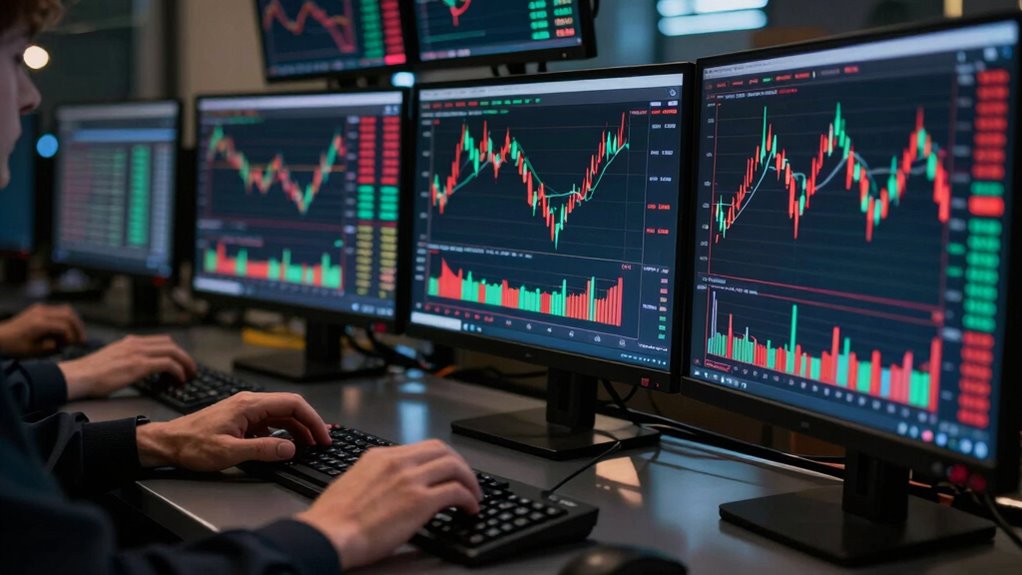
During risk-off market conditions, altcoins often move in tandem with traditional assets like equities and cryptocurrencies such as Bitcoin. When investors become wary, seeking safety rather than growth, the entire financial landscape reacts collectively. This collective movement causes altcoin correlation to spike, as they tend to mirror the broader market sentiment. When fear dominates, traders often withdraw from riskier assets, and altcoins, despite their potential for high returns, are not immune. Instead, they become part of the broader flight to safety, amplifying their price movements in unison with other assets.
One key factor behind this increased correlation is market sentiment shifts. During turbulent times, investor confidence erodes rapidly, prompting a rush to liquidate holdings across the board. This widespread sell-off isn’t selective; it impacts altcoins deeply because traders view them as risky assets akin to equities. As a result, even projects with strong fundamentals see their prices plummet alongside Bitcoin and stocks. The sentiment becomes more about avoiding losses than seeking gains, causing a synchronized decline that temporarily aligns altcoins with traditional markets.
Market sentiment shifts cause rapid sell-offs, aligning altcoins with traditional assets during turbulent times.
Liquidity constraints also play an essential role in this phenomenon. During downturns, liquidity often dries up as traders and institutions become more cautious. When liquidity is scarce, even relatively small sell orders can trigger significant price drops. Altcoins, which generally have lower trading volumes than Bitcoin or major indices, are especially vulnerable. Limited liquidity means prices can swing wildly, and this volatility reinforces their market correlation with broader market movements. When liquidity tightens, the inability to execute large trades smoothly amplifies the price declines during risk-off periods, making altcoins move more in tandem with traditional assets.
Furthermore, in risk-off environments, investors tend to reposition their portfolios into safer assets, like government bonds or cash, leaving little room for alternative investments. This shift reduces the diversity of trading activity and means that altcoins are often caught in the crossfire of broader market panic. The interconnectedness of markets during these periods results in rapid, synchronized price movements, driven by the collective reaction to market sentiment shifts and liquidity constraints. Additionally, the market psychology during crises often intensifies these reactions, leading to even sharper movements.
In essence, the spike in altcoin correlation during risk-off markets isn’t coincidental. It’s rooted in how market sentiment shifts trigger widespread sell-offs, and liquidity constraints exacerbate these movements. When everyone is pulling out of risky assets, altcoins become just another asset class swept up in the storm, reflecting the overall market mood rather than their intrinsic value.
cryptocurrency trading volume monitor
As an affiliate, we earn on qualifying purchases.
As an affiliate, we earn on qualifying purchases.
Frequently Asked Questions
How Do Altcoins Typically Perform During Market Crises?
During market crises, altcoins usually perform poorly as investors seek safety, causing a drop in prices. You’ll notice market liquidity shrinks, making it harder to sell altcoins without losing value. Regulatory changes often add to the downturn, increasing uncertainty and fear. As a result, altcoin prices tend to move in tandem with broader market sentiment, especially in risk-off environments where investors pull back from volatile assets.
What Factors Contribute to Increased Altcoin Correlations?
Like a flock of birds reacting to an approaching storm, altcoin correlations spike due to market liquidity drying up and regulatory impacts tightening. When investors seek safety, they often sell off riskier assets, including altcoins, causing their prices to move together. Reduced liquidity means fewer opportunities for diversification, amplifying these movements. Regulatory fears heighten this effect, pushing correlations higher as traders react uniformly to potential legal and market uncertainties.
Are Certain Altcoins More Affected by Risk-Off Sentiment?
Yes, certain altcoins are more affected by risk-off sentiment, especially those with lower market liquidity and higher regulatory impact. When markets turn risk-averse, these altcoins often see sharper declines because investors withdraw funds quickly, fearing regulatory crackdowns or liquidity shortages. You’ll notice that stablecoins and larger-cap altcoins tend to be less affected, as their liquidity and regulatory standing provide some resilience during market downturns.
How Does Investor Behavior Influence Altcoin Correlation Spikes?
Your investor sentiment drives correlation spikes in altcoins as behavioral biases like herding and fear amplify collective moves. When markets turn risk-off, you tend to follow the crowd, selling off altcoins simultaneously. This herd behavior causes prices to move together, increasing correlation. Your emotional reactions and biases make it easier for altcoins to behave uniformly during downturns, highlighting how investor psychology directly influences these correlation spikes.
Can Correlation Spikes Predict Future Market Downturns?
Correlation spikes can hint at future market downturns, especially when market liquidity dries up and investor sentiment worsens. When altcoins move in sync during risk-off periods, it signals widespread uncertainty, often leading to sharper declines. By monitoring these correlation changes, you can gauge potential downturns early. However, always combine this with other indicators, as correlation alone isn’t foolproof for predicting market shifts.
altcoin liquidity analysis tools
As an affiliate, we earn on qualifying purchases.
As an affiliate, we earn on qualifying purchases.
Conclusion
When markets turn risk-averse, altcoins dance to the same tune, tightening their grip in a synchronized waltz. Their correlation spikes like a rollercoaster cresting at the peak, revealing how interconnected they truly are during stormy times. As the clouds gather and uncertainty looms, you’ll find these digital assets moving in unison—like a flock of birds reacting to the same gust. In such moments, understanding their dance becomes your guiding lighthouse through the fog.
cryptocurrency portfolio diversification guide
As an affiliate, we earn on qualifying purchases.
As an affiliate, we earn on qualifying purchases.
safe investment assets for crypto traders
As an affiliate, we earn on qualifying purchases.
As an affiliate, we earn on qualifying purchases.
Fall Picks
fall essentials
As an affiliate, we earn on qualifying purchases.