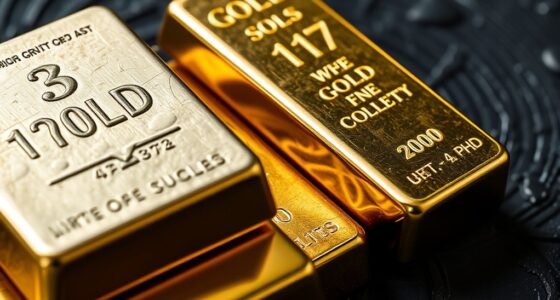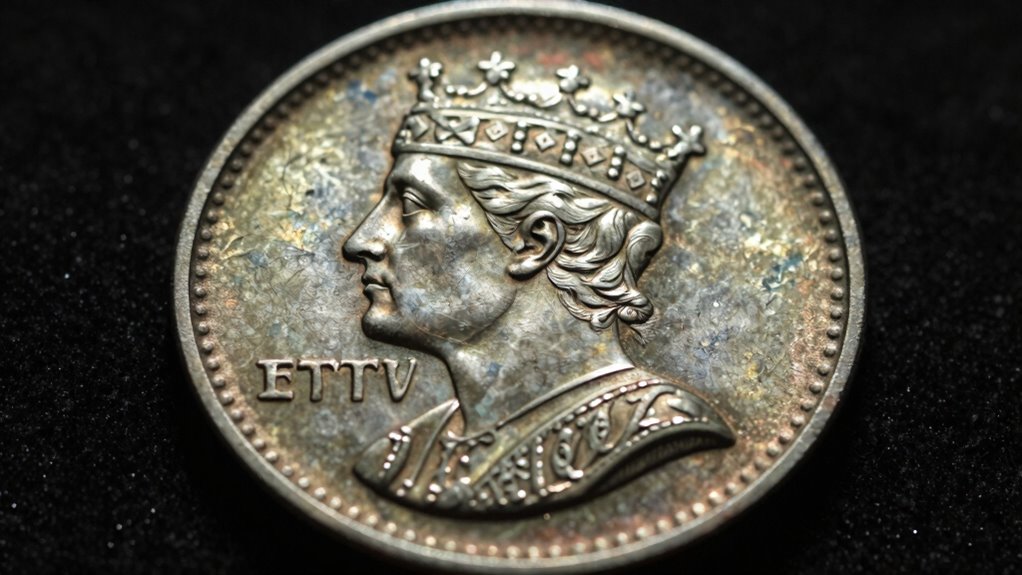

Lighting impacts how you perceive a coin’s color, detail, and surface quality. When light hits the coin directly, it reflects brightly, making the coin look shinier and newer, while diffused light can reveal more surface textures and flaws. Shadows and angles also play a role, emphasizing or hiding engravings. The way light interacts with the surface shapes what you see and interpret. Keep exploring, and you’ll discover how lighting can confuse or clarify what’s truly on the coin.
Key Takeaways
- Lighting alters reflections and highlights, changing how metallic surfaces appear and perceived value.
- Different light angles create shadows and glare, emphasizing or hiding surface details and imperfections.
- Brightness and diffusion affect the visibility of engravings, texture, and surface quality.
- Proper lighting reveals authenticity indicators and surface flaws that influence judgment.
- Variations in lighting can make coins look more or less attractive, impacting perceived condition and worth.
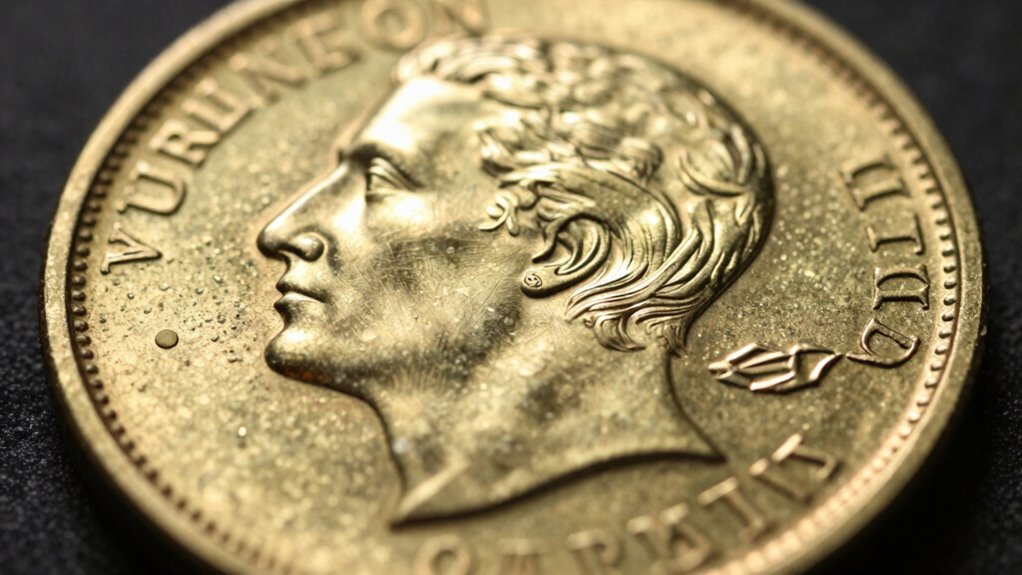
Lighting plays a essential role in how we perceive coins, influencing both their color and perceived value. When you look at a coin, the way light hits its surface can dramatically alter your impression of its appearance. This is because lighting affects how the metal sheen reflects off the coin’s surface, making it seem brighter, duller, or even changing its hue entirely. A well-lit coin can seem shiny and new, revealing a vibrant metallic glow, while poor lighting can make it look tarnished or aged. The quality and angle of the light source matter just as much as the coin itself, shaping your perception in subtle but powerful ways.
Your eyes respond to the metal sheen—the way light bounces off the coin’s surface—highlighting different aspects depending on the lighting conditions. Bright, direct light tends to accentuate the shiny, reflective qualities of the metal, emphasizing smoothness and luster. In contrast, softer or diffused lighting can reduce glare, making the coin appear more subdued and revealing details that might otherwise be hidden. The surface texture also plays an essential role; a coin with a highly polished, smooth surface reflects light uniformly, creating a mirror-like effect. Meanwhile, a coin with a rough or matte finish scatters light in multiple directions, dulling its shine and emphasizing its surface texture.
You might notice that under certain lighting, intricate details like engravings or patterns become more prominent. When light strikes these features at an angle, shadows fall into the crevices, adding depth and contrast that can enhance your perception of the coin’s craftsmanship. Conversely, flat, even lighting can wash out these details, making the coin look flatter and less intricate than it truly is. This shifting play of light and surface texture can lead you to see a coin differently from one moment to the next, depending on the environment. Additionally, the lighting setup can influence how well you can discern the coin’s authenticity and condition, which is especially important for collectors. Proper lighting can also reveal surface imperfections that might otherwise go unnoticed, helping collectors assess a coin’s true condition. Furthermore, understanding the impact of lighting angles can help in making more accurate evaluations of a coin’s features. Recognizing these effects can also aid in detecting counterfeit coins by analyzing inconsistencies in reflectivity and detail.
The perceived value of a coin can change based on how it’s lit. A coin that appears dull and tarnished in poor lighting might look more valuable when illuminated properly, as its metal sheen sparkles and reveals a fresh, attractive surface. This is why collectors often examine coins under specific lighting conditions—so they can accurately judge quality, condition, and authenticity. In essence, lighting doesn’t just reveal what’s physically there; it actively shapes your perception of the coin’s worth, beauty, and craftsmanship. Your eyes interpret these visual cues, but it’s the interplay of light, metal sheen, surface texture, and lighting conditions that truly influences what you think you see.

HMKIS Jewelers Loupe, 2 Pack Magnifying Glass with Light, 30X 60X 90X Jewelers Loop Magnification with 20 Backup Batteries for Coin, Diamonds, Gems, Jewelry, Stamps Close Work
- Versatile Triple Magnification: 30X, 60X, 90X options for detailed inspection
- Multi-purpose Use: Ideal for jewelry, coins, stamps, and more
- Long-lasting Batteries: Includes 20 backup LR1130 and LR44 batteries
As an affiliate, we earn on qualifying purchases.
As an affiliate, we earn on qualifying purchases.
Frequently Asked Questions
How Does Lighting Affect the Perceived Value of a Coin?
Lighting considerably affects how you perceive a coin’s value by impacting surface reflection and shadow depth. Bright, direct light creates sharp reflections, highlighting details and making the coin look more appealing and valuable. Softer or angled lighting reduces reflections and deepens shadows, which can obscure details and diminish perceived worth. You should choose lighting that enhances surface features without causing glare, ensuring the coin’s true condition and value come through clearly.
Can Different Light Sources Reveal Hidden Details on a Coin?
Different light sources can reveal hidden details on a coin by enhancing shadow contrast and reducing glare. For example, angled lighting can highlight fine engravings and surface textures that are otherwise invisible. Studies show that proper lighting reveals up to 30% more detail. You can use different light sources to detect flaws, inscriptions, or mint marks, making your coin examination more thorough and revealing aspects that standard lighting might conceal.
What Lighting Conditions Are Best for Authenticating Coins?
You should use diffuse, neutral lighting with a balanced color temperature, around 5000-6500K, for authenticating coins. This setup reduces harsh shadows and enhances shadow contrast, revealing fine details and surface textures accurately. Avoid overly warm or cool lighting, as it can distort colors and obscure authenticity indicators. Proper lighting helps you see minute features clearly, making it easier to identify genuine coins from forgeries.
How Does Lighting Influence the Color Perception of a Coin’s Metal?
Lighting influences how you perceive a coin’s metal color by causing a color shift, which can alter its apparent hue. Bright, direct light enhances the metal sheen, making the coin appear more lustrous and vibrant. Conversely, softer or angled lighting can dull the sheen and create shadows, affecting your perception of its true color. Proper lighting helps you accurately assess the coin’s authentic metallic tone and detect potential alterations or fakes.
Does Lighting Impact the Perceived Age or Rarity of a Coin?
Lighting can dramatically alter your perception of a coin’s age or rarity, almost like a magic trick. Shadow play and glare effects can hide or highlight details, making a coin look older or rarer than it truly is. Bright lighting might exaggerate wear, while softer light reveals finer details. So, the way you light a coin can deceive your eyes, influencing your judgment of its value and history.

Nazano Magnifying Glass with Light, Ultra-Clear Lightweight Handheld Reading Magnifier with 12 LEDs, Distortion-Free Optical Lens for Seniors, Macular Degeneration, Close Work, Coins & Pill Bottles
- High-Power Magnification: Clear vision with distortion-free optical lens
- 12 LED Lights: Bright, shadow-free illumination for night reading
- Large Optical Glass Lens: Scratch-resistant, 3.15-inch viewing area for comfort
As an affiliate, we earn on qualifying purchases.
As an affiliate, we earn on qualifying purchases.
Conclusion
Think of lighting as the spotlight on a stage—it can completely change how you see the coin’s details and value. Just like a change in spotlight can reveal hidden actors, different lighting reveals or conceals the coin’s features. So, next time you look at a coin, remember that lighting isn’t just a background—it’s part of the story it tells. By adjusting your perspective, you can uncover new details hiding in plain sight.

PULUZ Mini Photo Studio Light Box, Photo Shooting Tent kit, Portable Folding Photography Light Tent with CRI >95 104pcs LED Light & 6 Kinds Double-Sided Color Backgrounds for Small Size Products
- High Brightness: Built-in 104 LED beads for ample lighting
- Easy to Assemble: Unfolds in 3 seconds for quick setup
- High Color Accuracy: CRI >95 for true color rendering
As an affiliate, we earn on qualifying purchases.
As an affiliate, we earn on qualifying purchases.

NUEYiO 10X Rechargeable Magnifier with Light, 4.33 Inch Large Handheld
- High-Quality K9 Optical Lens: Scratch-resistant, clear, durable glass
- Bright LED Illumination: 20 daylight LEDs for clear visibility
- Smart Sensor Switch: Automatic lighting activation for convenience
As an affiliate, we earn on qualifying purchases.
As an affiliate, we earn on qualifying purchases.