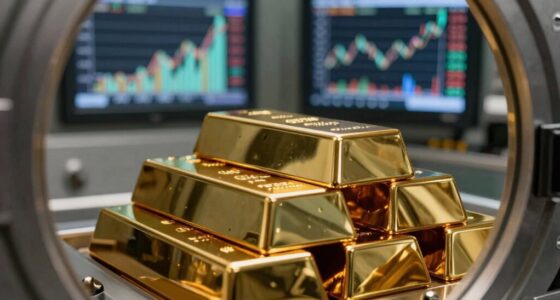

During a recession, you’ll find gold tends to stay stable or increase in value because it’s seen as a safe haven. Silver, on the other hand, is more prone to sharp declines since its demand drops with industrial activity. While gold offers stability amid economic downturns, silver’s performance can be unpredictable and linked to industrial demand. Want to discover how external factors and market sentiment influence these trends? Keep exploring to better understand how to protect your investments.

Get home office essentials delivered free — and shop member deals
- Fast, free delivery on millions of items
- Access to Prime Big Deal Days deals on October 6–7
- Prime Video, Amazon Music and more included
Key Takeaways
- Gold typically rises or remains stable during recessions due to its status as a safe haven.
- Silver’s performance is more volatile, closely tied to industrial demand, which often declines in recessions.
- Investors tend to increase gold holdings when economic conditions worsen, boosting its stability.
- Silver may experience sharp declines if industrial activity drops, but could rebound if economic recovery occurs.
- External factors like government stimulus and market sentiment significantly influence both metals’ prices during recessions.
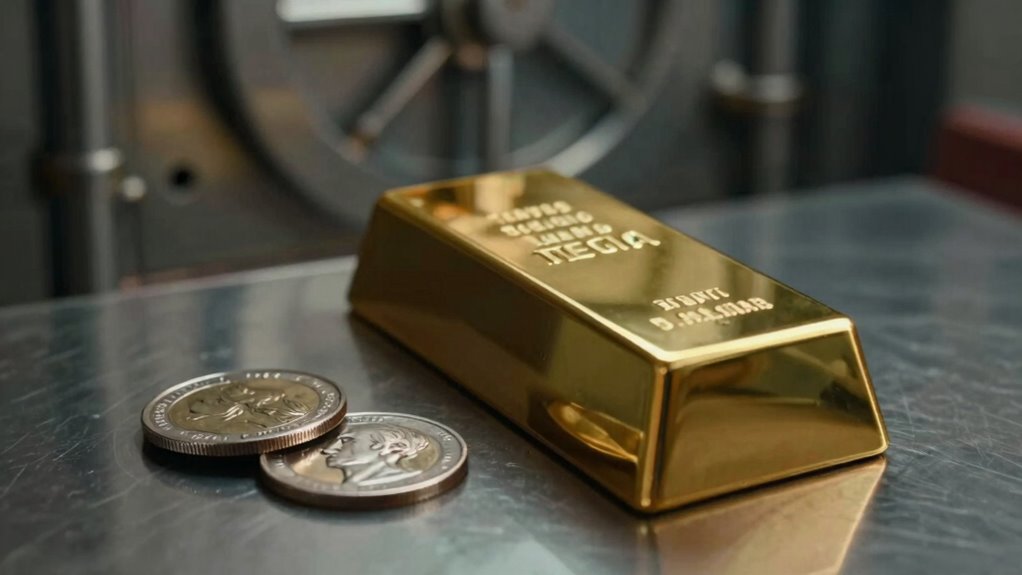
During a recession, the prices of gold and silver often experience significant shifts, influencing how investors approach these precious metals. You might find yourself reconsidering your investment strategies as economic uncertainty grows. Historically, gold tends to be seen as a safe haven during downturns, which means its price often rises or remains stable when the economy falters. Silver, on the other hand, tends to be more volatile and closely tied to industrial demand, making its performance less predictable during recessions. Understanding these historical trends can help you make more informed decisions about allocating your assets.
When economic conditions worsen, many investors increase their holdings in gold because of its reputation as a store of value. This behavior is rooted in history; during past recessions, gold has consistently maintained or increased its value, providing a cushion against economic downturns. You may notice that gold’s price movements tend to be more stable compared to other assets, which is why it’s often included in diversified investment strategies for risk mitigation. Silver, however, has a different profile. Its price can fluctuate sharply based on industrial activity, which often declines during recessions. As a result, silver might experience declines alongside industrial sectors, making it riskier but potentially more lucrative if economic conditions improve rapidly. Recognizing the correlation between industrial demand and silver prices can be crucial for timing your investments. Additionally, understanding the historical performance of precious metals during economic downturns can help in developing a resilient investment plan. Being aware of market sentiment and external factors, such as government stimulus measures or monetary policy, can further refine your approach during economic downturns. Moreover, monitoring global economic indicators can provide insights into potential shifts in precious metal prices.
As an affiliate, we earn on qualifying purchases.
Frequently Asked Questions
How Do Gold and Silver Historically Perform During Previous Recessions?
During previous recessions, precious metals like gold and silver often act as safe havens, with gold typically outperforming due to its stability. You’ll notice market volatility drives investors toward these metals, especially gold, as a store of value. Silver’s performance is sometimes more mixed, influenced by industrial demand. Historically, both metals tend to appreciate during economic downturns, providing a hedge against market uncertainty.
What Are the Primary Factors Influencing Gold and Silver Prices in a Recession?
Ever wonder what drives gold and silver prices during a recession? You’ll find that industrial demand drops, especially for silver, impacting its price. Meanwhile, currency fluctuations can boost gold’s value as investors seek safe havens. These factors interplay, with gold often gaining during economic uncertainty, while silver’s performance depends heavily on industrial activity. Understanding these influences helps you anticipate potential price movements amid economic downturns.
Can Silver Outperform Gold During Economic Downturns?
Yes, silver can outperform gold during economic downturns. Its industrial demand often declines less sharply than gold’s, providing some stability. Additionally, silver acts as a currency hedge, attracting investors seeking to diversify risks. When the economy weakens, you might find silver’s smaller price movements and industrial use make it an attractive option, potentially leading to outperforming gold in certain recession scenarios.
How Do Investor Behaviors Shift Between Gold and Silver in a Recession?
During a recession, you’ll notice investor behaviors shift from shiny allure to safety, favoring gold over silver. Market sentiment becomes cautious, and consumer confidence plummets, making gold the go-to for preserving wealth. Silver, with its industrial ties, takes a backseat, viewed more as a risky gamble than a safe haven. You might laugh, but it’s really about seeking stability amid chaos—gold’s shiny armor, silver’s fleeting sparkle.
What Role Do Central Banks Play in Gold and Silver Markets During Recessions?
During recessions, central bank interventions and shifts in monetary policy considerably influence gold and silver markets. You’ll find central banks may buy gold to stabilize currencies or implement policies that impact precious metal prices. These interventions can boost gold’s appeal as a safe haven. Silver’s response depends more on industrial demand, but monetary policy shifts can also influence its price. Overall, central banks shape market perceptions and investment flows during economic downturns.
As an affiliate, we earn on qualifying purchases.
Conclusion
So, as the economy stumbles, you might find gold shining brightly, a safe haven you can rely on. Yet silver, often overlooked, could surprise you with its resilience or vulnerability. It’s ironic, isn’t it? The very assets that seem most secure might be the ones to watch for unexpected twists. In a recession, your best bet isn’t always what’s shiny or popular — sometimes, it’s the one you least expect.
As an affiliate, we earn on qualifying purchases.
gold and silver investment guide
As an affiliate, we earn on qualifying purchases.
As an affiliate, we earn on qualifying purchases.
Fall Picks
fall essentials
As an affiliate, we earn on qualifying purchases.