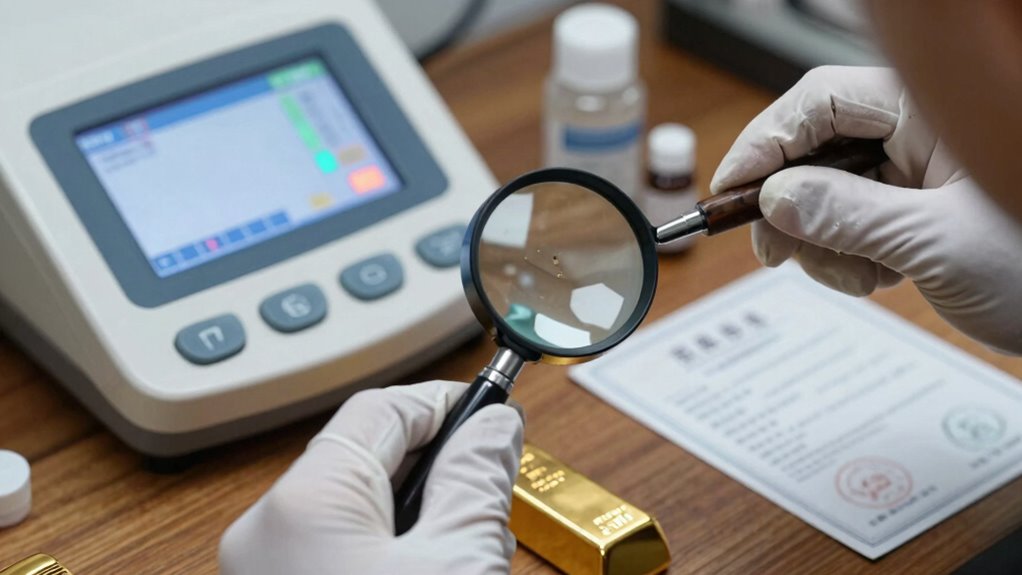

Testing gold checks its purity using chemical or electronic methods, giving you a precise idea of its karat or fineness. Verifying confirms if the gold matches the seller’s documentation, hallmarks, or serial numbers, ensuring honesty in the sale. Authenticating goes deeper, establishing the piece’s true origin, craftsmanship, and legitimacy—often requiring expert appraisal. Understanding these distinctions helps you make smarter choices, and if you keep exploring, you’ll uncover how to evaluate gold thoroughly.
Listen free for 30 days with Audible
Thousands of audiobooks and originals — cancel anytime.
As an affiliate, we earn on qualifying purchases.
Key Takeaways
- Testing determines the gold’s purity or composition using chemical or electronic methods.
- Verifying checks that the gold matches seller-provided documentation, stamps, or serial numbers.
- Authenticating confirms the gold’s genuine origin, provenance, and authenticity through expert appraisal.
- Testing is scientific, verifying is documentary, authenticating is expert-based and contextual.
- Combining all three ensures comprehensive evaluation, reducing fraud and confirming value.
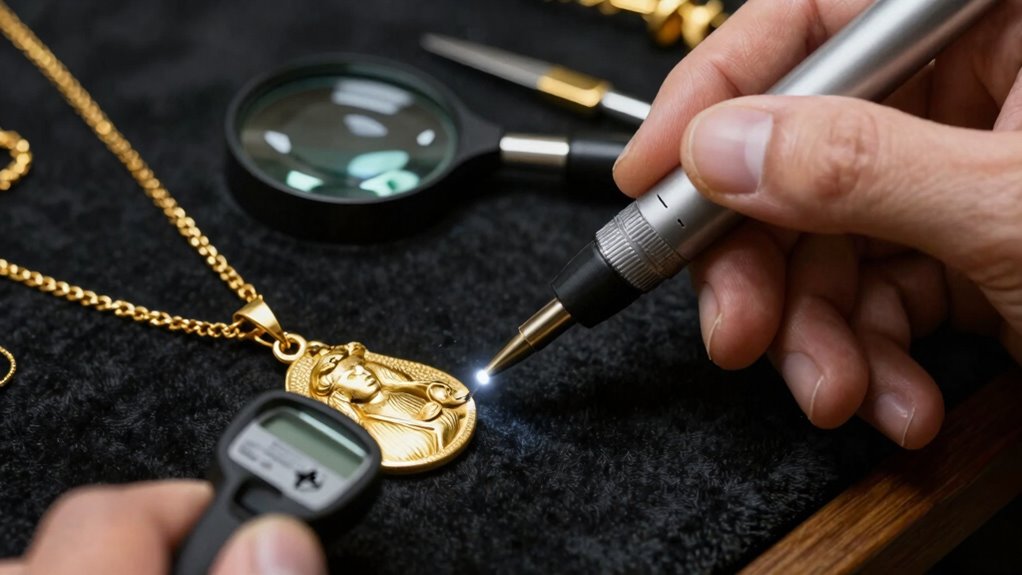
When dealing with gold, understanding the differences between testing, verifying, and authenticating can save you from costly mistakes. These terms might seem interchangeable, but they serve distinct purposes in evaluating gold’s value and confirming its quality. Testing primarily focuses on determining the gold purity, which involves analyzing the metal to establish its karat or fineness level. The testing process often employs chemical or electronic methods to measure the gold’s composition accurately. This step is essential because gold purity directly influences its value and helps you make informed purchasing or selling decisions. When you test gold, you’re effectively conducting a mini certification process to confirm the piece meets specific purity standards. Additionally, proper testing methods can help identify whether gold has been adulterated or mixed with other metals, which is crucial for assessing true value. Understanding assay methods can improve your ability to evaluate gold more effectively, especially when considering different testing techniques and their accuracy.
Verifying gold takes this a step further. It involves confirming that the gold matches the details provided by the seller or manufacturer, such as weight, hallmark, or certification documents. Verification can include inspecting hallmarks or stamps, which are official marks indicating the gold’s purity level, or cross-referencing serial numbers and certificates issued by recognized authorities. While testing provides scientific proof of gold purity, verifying ensures that the gold’s advertised qualities are consistent with its actual characteristics. It’s your way of double-checking that what you’re buying or selling aligns with the documented or claimed standards, reducing the risk of fraud or misrepresentation. Conducting proper verification can also help prevent potential legal issues related to misrepresented items.
Authenticating gold is the most thorough of the three processes. It involves establishing the true provenance and legitimacy of the gold piece, confirming that it’s genuine and not a counterfeit or plated imitation. Authentication often requires expert appraisal, where specialists assess factors beyond purity and markings, such as craftsmanship, origin, and historical significance. This step is especially important for high-value or antique gold items. When you authenticate gold, you’re confirming that it’s not just pure or correctly marked but genuinely what it claims to be—an authentic piece of gold, free from deception or adulteration. Proper authentication can also contribute to establishing trust and provenance, especially in the context of collectibles and heirlooms. Being aware of the authenticity verification process can help you better understand the complexities involved in confirming genuine gold.
As an affiliate, we earn on qualifying purchases.
Frequently Asked Questions
How Often Should I Test My Gold Items?
You should test your gold items at least once a year, especially if you wear them often or suspect they’ve been exposed to elements that could affect their purity. Regular gold cleaning helps maintain their shine, while a jewelry appraisal can confirm their current value and condition. Testing more frequently, like every six months, is wise if you notice any changes in appearance or suspect damage, ensuring your investment stays secure.
Can Fake Gold Pass Verification Tests?
Fake gold generally can’t pass verification tests designed for genuine gold, especially when proper counterfeit detection methods are used. These tests check for specific properties like density, melting point, and chemical composition, which counterfeit gold often lacks or mimics poorly. If you suspect your gold is fake, rely on professional verification rather than just visual inspection, as counterfeit detection techniques are more accurate at identifying genuine versus counterfeit items.
What Tools Are Best for Authenticating Gold at Home?
You can authenticate gold at home using simple tools that reveal its true nature. A magnifying glass helps you inspect for markings, while a gold testing kit, including acid solutions, provides quick results. A digital scale confirms weight and purity, and a magnet test rules out fake metals. These home authentication methods add layers of certainty, but remember, for absolute accuracy, professional testing remains your best option.
Does Gold Purity Affect the Testing Method?
Yes, gold purity affects the testing method because a higher purity gold, like 24K, reacts differently than gold alloys during tests. Gold alloys contain other metals, which can influence testing accuracy, making some methods less precise. When testing, make certain you choose a method suitable for the specific gold alloy you’re examining, as inaccuracies could lead to misjudging the purity level. Always consider the alloy composition for reliable results.
Are There Industry Standards for Gold Verification Accuracy?
In the gold market, industry standards for gold verification accuracy exist, but they can vary depending on testing regulations in different regions. You should guarantee that testing methods meet recognized standards like those set by the International Organization for Standardization (ISO). Reliable verification helps maintain trust and consistency, so always opt for certified laboratories that adhere to strict testing regulations to guarantee the authenticity and purity of your gold.
gold hallmark verification tools
As an affiliate, we earn on qualifying purchases.
As an affiliate, we earn on qualifying purchases.
Conclusion
Now that you understand the difference between testing, verifying, and authenticating gold, you see how each step acts like a safeguard in your jewelry journey. Testing is your initial check, verifying confirms the details, and authenticating seals the deal. Imagine a gold piece—its shine, history, and value—protected by these layers of scrutiny. Without them, it’s like trusting a shadow instead of solid gold. Stay vigilant, and your investment will always shine bright.
professional gold authentication service
As an affiliate, we earn on qualifying purchases.
As an affiliate, we earn on qualifying purchases.
As an affiliate, we earn on qualifying purchases.
Flea & tick season Picks
flea and tick prevention
As an affiliate, we earn on qualifying purchases.